
Small Chairs for Dining Table: A Complete Compact Seating Guide
Small chairs for a dining table solve one of the most common space problems in modern homes. Whether you live in an apartment, have a narrow kitchen nook, or simply want a dining set that does not overwhelm the room, choosing the right compact seating makes the difference between a cramped corner and a comfortable, functional dining area. This guide explains how sizing, clearance, style, and materials work together so you can pick chairs that fit your table and your space with confidence.
Why Small Dining Chairs Matter
Most dining tables are designed to seat a fixed number of people, but the chairs around them often determine how usable the space really feels. Oversized chairs eat into walkways, block traffic flow, and make a small dining area feel crowded even when the table itself fits fine. Compact chairs restore that breathing room. They allow chairs to tuck in fully under the table, keep pathways clear, and let you seat more people around a modest table without sacrificing comfort.
Small chairs also help with visual balance. In a compact room, slimmer silhouettes and open frames keep sight lines clear, which makes the whole space feel larger. If you are planning a compact dining nook, our guide on compact dining nook arrangement pairs naturally with chair selection. If your table is on the smaller side, you may also find useful context in our breakdown of how many people a 60-inch dining table seats, since chair width directly affects seating capacity.
Sizing and Clearance Essentials
Before choosing a style, get the measurements right. Small chairs still need to be comfortable, and the right dimensions depend on both your table and your room. The table below summarizes the key measurements to check.
| Measurement | Recommended Range | Why It Matters |
|---|---|---|
| Seat width | 16–18 inches | Comfortable seating without excess footprint |
| Seat height | 17–19 inches | Matches standard 28–30 inch tables |
| Seat depth | 15–17 inches | Supportive without pushing knees into the table |
| Overall width (with arms) | 20–22 inches | Prevents chairs from crowding each other |
| Clearance behind chair | 30 inches minimum | Allows the chair to slide out comfortably |
| Space between chairs | 6–8 inches | Keeps elbows from bumping during meals |
Clearance behind the chair is the measurement people most often overlook. Even a slim chair needs room to pull out, and in tight rooms an armless or backless design can reduce that requirement. If your dining area sits next to a walkway, our dining table walkway clearance guide and dining table pathway width guide explain how to balance seating with traffic flow. For a full breakdown of chair-to-table proportions, see our dining table chair height guide.
Styles That Save Space
Not all small chairs save space in the same way. The frame design, back height, and presence of arms all affect how much room a chair really takes up. Here are the most effective compact styles.
- Armless chairs: The most versatile compact option. Without arms, chairs tuck in fully and can be pushed flush against the table, keeping the room visually tidy. They also make it easier to fit more chairs around a smaller table.
- Backless stools: Ideal for tucking completely under the table. They work well as occasional seating or for a kitchen counter, but they offer less back support for long meals.
- Low-back designs: A low or mid-height back keeps sight lines open, which helps small rooms feel larger. These are a good compromise between support and a compact footprint.
- Slim-frame spindle and ladder-back chairs: Open frames reduce visual weight without sacrificing structure. These work well in farmhouse and traditional settings.
- Stackable chairs: When you occasionally need extra seats, stackable designs store away easily. Our stackable dining chair guide covers the practical details.
- Upholstered compact chairs: Padded seats and backs can still be small. Look for slim profiles that keep cushioning without adding bulk.
Bench seating is another space-saving approach. A half-bench dining table setup or a wooden bench with a back can seat several people along one side while using less depth than individual chairs. For a broader comparison of seating options, read our dining chair selection guide and dining bench seating guide.
Materials and Durability
Compact chairs take daily use, so material choice matters as much as size. Each material brings different strengths, and the right pick depends on your table and how the room is used.
| Material | Best For | Notes |
|---|---|---|
| Solid wood | Long-term daily use | Durable, repairable, and ages well with care |
| Metal frames | Slim, industrial, or modern looks | Strong with a thin profile; rust-proof finishes help |
| Upholstered seats | Comfort-focused dining | Choose easy-clean fabrics in busy households |
| Rattan and woven | Light, airy interiors | Visually light and comfortable in mild climates |
| Engineered wood | Starter and mid-tier seating | Consistent finish; check joint quality |
If you favor natural materials, our guides on solid oak dining tables and walnut dining tables explain how wood tone and grain pair with chair finishes. For maintenance, the dining table routine upkeep guide and dining table pad protection guide help protect both table and seating over time.
Matching Small Chairs to Your Table
Chairs should feel like part of the same set without looking identical. A few simple rules keep the pairing balanced. Match the chair seat height to the table height first, then consider tone and material. A slim metal chair can lighten a heavy wooden table, while an upholstered compact chair softens a modern glass or marble top. Mixed seating, such as chairs on one side and a bench on the other, can also save space and add visual interest.
Shape matters too. Round and oval tables pair well with curved or rounded-back chairs, while rectangular tables suit straight-backed or ladder-back designs. If you are working with a specific table style, our round dining table guide and rectangular dining table guide offer practical pairing advice. For a coordinated look, our dining table vignette ideas show how chairs fit into a complete tablescape.
Comfort Without Bulk
Small does not have to mean uncomfortable. The key is prioritizing the right features. A gently contoured seat, a slightly angled back, and adequate seat depth all contribute more to comfort than extra width. Cushioned seats help for longer meals, and a backrest that supports the lower back makes a noticeable difference during dinner parties.
For households that host often, consider a mix: compact upholstered chairs for everyday seating and a few stackable or folding chairs for overflow. Our folding dining table guide and extendable dining table guide explain how flexible furniture pairs with compact seating to handle both daily use and larger gatherings.
Quality Tiers Explained
Small dining chairs are available across a range of quality tiers. Understanding what each tier typically offers helps you set realistic expectations. The table below uses neutral tier descriptors rather than specific figures.
| Tier | Typical Characteristics | Best For |
|---|---|---|
| Entry-level | Simpler joints and finishes; lighter frames | Occasional seating and starter setups |
| Mid-range | Solid construction and better upholstery options | Everyday family dining |
| Premium | Hardwood frames, refined finishes, reinforced joints | Long-term daily use |
| Luxury | High-grade materials and detailed craftsmanship | Design-focused dining rooms |
Mid-range models usually offer smoother mechanisms and more durable finishes than entry-level options, while premium and luxury tiers focus on craftsmanship and material quality. For help weighing these choices, our dining table buying mistakes and first dining table checklist guides are useful companions.
Recommended Small Chairs for Dining Tables
⚠️ AFFILIATE DISCLOSURE: This website contains affiliate links. As an affiliate Associate, we earn from qualifying purchases. If you make a purchase through these links, we may receive a small commission at no additional cost to you. Read our full affiliate policy.

Karl home Dining Chairs Set of 4, PU Leather & High Back, Black | Black Kitchen Chairs with Padded Seats & Foot Cap Protection for Dining Kitchen Living Room, 300Lbs Capacity, Space‑Saving
Check price on Amazon
DUMOS Dining Chairs Set of 2, Mid Century Modern Chair Round Upholstered Curved Backrest, Kitchen Vanity Living Room Chairs with Black Metal Legs, Green
Check price on Amazon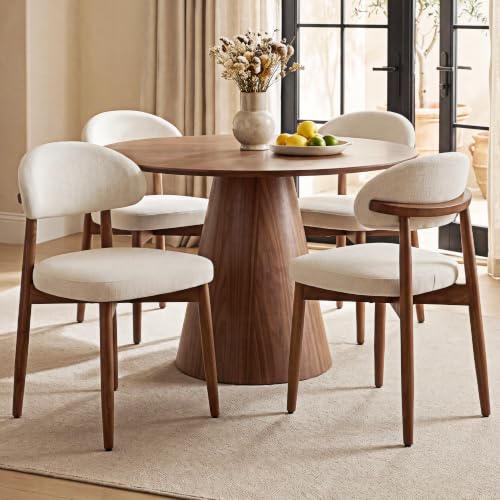
GRUSIGN Dining Chairs Set of 4,Upholstered Wooden Kitchen Chairs,Beige | Ergonomic Curved Backrest, Solid Wood Legs, Soft Fabric Seat, Mid Century Modern, for Dining Kitchen Living Room, Beige
Check price on Amazon
Signature Design by Ashley Berringer Dining Chairs Set of 2, Rustic Brown | Wood Dining Chairs, Kitchen Chairs Set of 2, Cushioned Microfiber Seat, Spindle Back, Saber Legs
Check price on Amazon
VASAGLE Dining Chairs Set of 4, Upholstered Kitchen Chairs, PU Leather | Steel Legs, Curved Backrest, for Dining Room, Caramel Brown and Ink Black ULDC090KN03-2J
Check price on AmazonFrequently Asked Questions
How wide should small chairs for a dining table be?
A compact dining chair typically measures around 16 to 18 inches wide at the seat. This leaves enough room for comfortable seating while keeping walkways clear and allowing more chairs to fit around a smaller table.
How much clearance do I need between small dining chairs and the wall?
Plan for at least 30 inches of clearance behind the chair so it can slide out smoothly when someone sits or stands. In tighter rooms, armless or backless designs can reduce the needed clearance.
Are armless chairs better for small dining tables?
Armless chairs are generally the better fit for compact tables because they tuck in further and reduce the overall footprint. They also allow chairs to be pushed in fully, which keeps the dining area looking tidy in small rooms.
What seat height matches a standard dining table?
For a standard dining table around 28 to 30 inches tall, look for a seat height of roughly 17 to 19 inches. This leaves comfortable legroom and keeps the chair proportioned to the table surface.