
Round Marble Top Dining Table 6 Seater: The Complete Buyer's Guide
A round marble top dining table for six combines elegant natural stone with sociable seating. Learn how to evaluate marble quality, base construction, dimensions, and styling so you can choose the right table for your dining room with confidence.
VIEW RECOMMENDED TABLESWhy a round marble top 6-seater stands out: A circular top removes sharp corners, improves conversation flow, and lets everyone at the table see and reach the centre. Combined with the cool, luxurious surface of marble, this configuration works equally well in formal dining rooms, open-plan kitchens, and apartment dining areas.
Recommended Round Marble Top Dining Tables for 6
⚠️ AFFILIATE DISCLOSURE: This website contains affiliate links. As an affiliate Associate, we earn from qualifying purchases. If you make a purchase through these links, we may receive a small commission at no additional cost to you. Read our full affiliate policy.

Tribesigns 47” Sintered Stone Dining Table, Solid Wood Round Kitchen Table for 4-6, Round Dinner Table for Kitchen, Dining Room, Living Room, White Marble Finish
Check price on Amazon
Marble-Look Round Dining Table for 4-6, 45" Modern Farmhouse Circle Kitchen Table with 1" Thickened MDF Top & Stable Pedestal for Dining Room,Living Room,Apartment,Restaurant
Check price on Amazon
Ownkoti 53" Round Dining Table for 6, Sintered Stone Top Solid Wood Hourglass Base, Snowy White+Brown (Table Only)
Check price on Amazon
MELAABUU 47" Round Faux Marble Dining Table for 4-6, Modern White Marble Top Kitchen Table for 6, Luxury Circle Dining Room Tables with Gold X-Shape Pedestal Base
Check price on Amazon
IBF White Marble Round Dining Table, Modern Wood Dinner Tables, 47 Inch | Farmhouse Circle Dining Table for 4-6 with Wood Top, Round Kitchen Table Pedestal Base for Dining Room, Living Room,Office
Check price on Amazon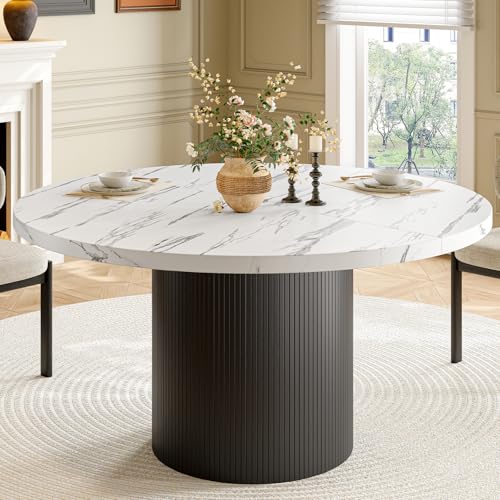
ONBRILL 47 Inch Round Dining Table for 4-6, Marble Texture | Circle Kitchen Table with Fluted Base, Modern Farmhouse Dinner Tables for Kitchen, Living Room
Check price on Amazon
SSLine 7-Piece Round Faux Marble Dining Table Set for 6,Gold Twisted Base | Modern White Marble Kitchen Table and Beige Velvet Chair Set of 6,Luxury 47" Circle Dining Room Table Set|Gold Pedestal Base
Check price on Amazon
Round Dining Table Set for 6, 7-Piece 47.2" Faux Marble Table Set | 6 Gray Upholstered Chairs, White Engineered Wood Pedestal Table for Dining Room, Kitchen, Breakfast
Check price on AmazonWhat Makes a Round Marble Top 6-Seater Worth Considering?
A round marble top dining table with seating for six sits at the intersection of two design priorities: sociable, space-efficient geometry and a premium natural stone surface. The circular shape means there is no head of the table, so every diner enjoys a comparable position, and the absence of corners makes the table easier to navigate in tighter rooms. If you are weighing this shape against a more traditional layout, our comparison of round vs rectangular dining tables explains the trade-offs in seating, room flow, and visual balance.
Marble brings a distinct character that few other surfaces match. Each slab carries its own veining pattern, so no two tables look identical. The stone is naturally cool to the touch, which makes it pleasant for dining in warmer climates, and its polished finish reflects light to brighten the surrounding space. That said, marble is a porous natural material that requires sealing and mindful daily care, which is why understanding the surface before you commit is essential. Our guide to marble vs granite dining tables breaks down durability and maintenance differences in detail.
For a six-person setting, the size and proportions matter more than any single feature. A round top needs enough circumference to seat six comfortably without elbows colliding, and the base must be stable enough to support the weight of solid stone. In the sections below, we walk through the dimensions, base styles, marble grades, and care routines that define a well-specified table for this seating capacity.
Key Specifications at a Glance
Choosing the Right Diameter for Six Diners
Why 54 to 60 inches Is the Sweet Spot
A round table that seats six comfortably typically measures between 54 and 60 inches across. At 54 inches, the circumference is roughly 170 inches, which provides about 28 inches of edge space per person — enough for a standard place setting without crowding. At 60 inches, the circumference grows to about 188 inches, giving each diner closer to 31 inches of personal space and a more generous centre area for serving dishes.
Going smaller than 54 inches generally forces diners to overlap elbows or place settings, while going larger than 60 inches makes the table harder to reach across and may overwhelm a smaller dining room. If your room is on the compact side, our guide to compact dining nook arrangements shows how to position a round table without blocking circulation.
Clearance and Room Planning
Beyond the top diameter, plan for chair pull-out and walkway space. A common rule is to allow at least 36 inches between the table edge and any wall or furniture behind the chairs, so diners can push back and stand up without obstruction. In open-plan layouts, the table also needs a clear path around it for foot traffic. Our dining table pathway width guide covers the measurements in more depth and helps you avoid a cramped arrangement.
For rooms where the table sits against a wall or in a bay window, a round top is more forgiving than a rectangular one because there are no corners to navigate. This is one reason the shape appears so often in apartment dining areas and breakfast nooks.
Base Styles and Structural Considerations
Marble is heavy, so the base is not a cosmetic afterthought — it is the component that determines stability, legroom, and long-term durability. Most round marble-top tables for six use one of three base types, and each has a different impact on how the table feels in use.
| Base Type | Best For | Legroom | Stability |
|---|---|---|---|
| Single pedestal | Compact rooms, apartment dining | Excellent all around | Good on level floors |
| Double pedestal | Larger tops, formal dining rooms | Good, with a central column pair | Very high |
| Four-leg frame | Traditional and farmhouse interiors | Moderate; legs at corners | Very high |
| Trestle base | Rustic and industrial styling | Open in the centre | High, with wide footprint |
Why Pedestal Bases Suit Round Tops
A single pedestal is the most natural pairing for a round marble top because it keeps the underside clear, allowing chairs to be placed evenly around the circumference without a leg interrupting anyone's knees. For a six-seater, the pedestal must be wide enough at the floor to resist tipping, especially when someone leans on the edge. Mid-range and premium models often use a weighted base plate or a spreading foot design to improve stability without adding visual bulk.
Double-pedestal bases are more common under larger tops and provide extra support for thicker stone slabs. If you plan to use heavy dining chairs or expect the table to see frequent entertaining, a double-pedestal or four-leg frame is generally the more robust choice. Entry-level tables sometimes use lighter metal or composite bases; these can work well in low-traffic settings but may feel less planted under a solid marble slab.
Understanding Marble Grades and Finishes
Natural Marble vs Engineered Stone
The term "marble top" covers a spectrum of materials. Genuine natural marble is quarried stone, cut and polished into a slab, and prized for its unique veining. Engineered marble, sometimes called cultured marble, combines crushed stone with resin binders; it offers more uniform colour and can be more resistant to staining, but it lacks the depth and individuality of natural stone. Both can look elegant in a dining room, but they behave differently over time and require different care routines.
Within natural marble, quality is often described using relative tier language rather than absolute grades. Entry-level marble slabs may show more filler or inconsistent veining, while premium and luxury slabs are selected for tight grain, dramatic veining, and uniform colour. The thickness of the slab also matters: a 3 cm top is standard for dining tables, while thinner tops may need a backing to prevent flexing.
Polished, Honed, and Matte Finishes
Finish affects both the look and the maintenance of a marble top. A polished finish is glossy and reflective, showing veining with high contrast, but it can reveal scratches and water marks more readily. A honed finish is matte and softer in appearance, hiding minor surface imperfections and offering a more contemporary feel. Matte and brushed finishes sit between the two and are increasingly popular in modern and Scandinavian-inspired interiors.
Whichever finish you choose, sealing is essential. Marble is porous, and spills from wine, citrus, or oil can penetrate the surface if it is left unsealed. A routine of resealing every six to twelve months, combined with prompt cleanup, keeps the surface looking its best. Our dining table material care guide explains sealing schedules and safe cleaning products for stone surfaces.
Advantages and Trade-Offs
Strengths of a Round Marble Top 6-Seater
- Sociable circular layout with no head of the table
- No sharp corners, which is safer for households with children
- Natural stone surface that is cool to the touch and light-reflective
- Each slab has a unique veining pattern, so the table is one of a kind
- Works in both formal dining rooms and open-plan kitchen areas
- Visually lighter than a rectangular table of comparable seating capacity
Points to Weigh Before Buying
- Marble is porous and requires sealing and careful spill management
- Natural stone is heavy, so assembly and moving need planning
- Polished surfaces can show etching from acidic foods and drinks
- A six-seater round top needs a room with adequate clearance around it
- Solid marble tops are typically found in mid-range and premium tiers
Pairing Chairs with a Round Marble Table
Chair Width and Count
For six diners around a 54–60 inch round top, chairs should generally measure between 16 and 20 inches wide at the seat. Wider chairs reduce the number that fit comfortably, while very narrow chairs can feel insubstantial next to a heavy stone top. Armless chairs are usually the safer choice because arms add width and can prevent chairs from tucking in neatly around a curve.
Material contrast is worth considering: upholstered chairs soften the hard, cool surface of marble, while cane or woven-back chairs add texture. Metal-framed chairs introduce an industrial note that pairs well with darker marble veining. If you are still deciding on the overall aesthetic, our modern dining table styling guide illustrates how different chair silhouettes change the character of a marble table.
Height Compatibility
Standard dining tables sit at 28 to 30 inches, and chairs should have a seat height of roughly 17 to 19 inches so there is about 10 to 12 inches of clearance between the seat and the underside of the top. This gap allows diners to cross their legs and pull close to the table without their knees hitting the apron or base. If you are mixing and matching chairs from different sources, check these numbers before committing.
Styling a Round Marble Dining Table
A marble top acts as a neutral canvas, which makes it easy to shift the mood of the room through centrepieces, linens, and lighting. The reflective surface responds well to warm textures, so natural materials like linen, rattan, and wood help balance the stone's coolness. Our dining table vignette ideas show how to layer objects without overcrowding the surface.
Centrepieces and Everyday Decor
Because a round table offers a true centre point, a single focal arrangement works better than a long linear runner. A low bowl of fruit, a cluster of candles, or a small vase of seasonal stems keeps sightlines open across the table. For a more polished look, a circular tray corrals smaller objects and makes it easy to clear the surface before meals. If you enjoy changing decor with the seasons, our floral centerpiece ideas offer arrangements scaled appropriately for round tops.
Colour Palettes That Complement Marble
White and grey marble veining pairs naturally with neutral palettes, but it also supports bolder choices. Warm woods, terracotta, and olive green create an earthy contrast, while black accents and brass hardware add a more dramatic, contemporary edge. If you are building a colour scheme from scratch, our guides to the neutral dining table palette and the bold dining table palette provide starting points for both directions.
Care and Maintenance Essentials
Daily Habits That Protect the Surface
Marble rewards consistency. Wipe spills promptly with a soft, damp cloth and avoid acidic cleaners, which can etch the polished surface. Use coasters under glasses and trivets under hot dishes; sudden heat can cause thermal shock in natural stone. Placemats also reduce the risk of scratches from plates and cutlery during everyday use.
Sealing is the single most important maintenance step. A quality penetrating sealer creates a barrier that slows absorption and gives you time to clean up spills before they set. Reseal according to the manufacturer's guidance, typically every six to twelve months depending on use. For a full routine, see our surface care guide, which covers stone-safe products and seasonal deep-cleaning steps.
Assembly, Moving, and Long-Term Durability
Solid marble tops are heavy, so plan assembly with a second person and protect floors with a moving blanket during setup. Most tables ship with the top and base in separate pieces; attach the base first, then lift the top into place with two people. Our dining table setup guide walks through the sequence safely.
Over the long term, a well-sealed marble top can remain a focal point for many years. Minor surface marks can often be polished out by a stone specialist, and the table's structural life depends largely on the base. Check that the frame or pedestal is rated for the weight of the stone and that fixings can be re-tightened if the table develops any movement. If you ever need to make a claim, our guide to the warranty claim process explains what documentation to keep.
Buying Checklist for a Round Marble 6-Seater
- Confirm the top diameter is between 54 and 60 inches for comfortable six-person seating
- Check that the base is rated for the weight of a solid stone top
- Decide between natural marble and engineered stone based on care preference
- Choose a finish — polished for drama, honed or matte for a softer look
- Measure clearance around the table, allowing at least 36 inches for chair pull-out
- Select armless chairs around 16–20 inches wide for even spacing
- Factor in sealing products and coasters from day one
- Review delivery details — stone tops often require two-person handling
Frequently Asked Questions
What diameter round table seats six comfortably?
A diameter of 54 to 60 inches is the practical range. At 54 inches, each diner gets roughly 28 inches of edge space, while 60 inches provides closer to 31 inches. Tables below 54 inches tend to feel cramped for six place settings, and tables above 60 inches can be difficult to reach across and may dominate a smaller room.
Is natural marble suitable for everyday family dining?
Yes, with the right routine. Marble is durable as a stone, but it is porous and can stain or etch if spills are left sitting. Sealing the top and wiping up wine, citrus, and oil promptly keeps it looking good. Many families use marble tables daily; it simply requires more mindful cleanup than sealed wood or glass. Our material care guide covers the essentials.
Do I need a pedestal base or can I use a four-leg frame?
Both can work. A pedestal is often preferred for round tops because it keeps legroom clear all the way around, which matters when six people are seated. A four-leg frame offers excellent stability but places legs near the corners, which can interfere with chairs. Check that the base is specifically rated for the weight of the stone top, regardless of style.
How often should a marble dining table be resealed?
Most manufacturers recommend resealing every six to twelve months, depending on how heavily the table is used. A simple water-bead test — a few drops of water should bead on the surface rather than soak in — can tell you when it is time to reapply. Always use a penetrating sealer suitable for natural stone.
Can a round marble table work in a small dining room?
It can, provided the room allows for clearance around the edge. A round top uses space more efficiently than a rectangular one of similar seating capacity because there are no corners to bump into, but you still need room for chairs to pull out. For tighter layouts, our compact dining nook guide shows how to position a round table without blocking movement.
How does this compare with granite or glass tops?
Marble is softer and more porous than granite, so it is more susceptible to etching from acids, but it typically offers more dramatic veining. Glass is easier to clean and reflects light, but it shows smudges and can feel less substantial. Our comparison of marble vs granite and wood vs glass dining tables explains the differences in more detail.
Final Thoughts
A round marble top dining table for six is a distinctive choice that rewards a little research. The circular form encourages conversation and suits a range of room layouts, while natural stone brings a tactile, light-reflective quality that is hard to replicate. Focus on the details that matter most: a top diameter between 54 and 60 inches, a base rated for stone weight, a finish that matches your maintenance preferences, and a care routine that includes regular sealing. With those pieces in place, the table becomes a long-term centrepiece for everyday meals and special occasions alike.
If you are still exploring broader options, browse our highest-rated dining tables or see what the editor's choice dining tables list highlights for this category.