
Replacement Pedestal for Dining Table: The Complete Buyer's Guide
Restore the stability, safety, and style of your dining table with a properly matched replacement pedestal. Learn how to identify the right base type, take accurate measurements, and install it securely.
Why a replacement pedestal matters: A dining table pedestal carries the full weight of the tabletop and everything placed on it. When the base cracks, wobbles, or loses its footing, the entire table becomes unsafe. Replacing just the pedestal is a smart, focused repair that extends the life of a table you already love, rather than sending a perfectly good top to the landfill.
This guide walks you through every decision point, from diagnosing whether a replacement is truly needed to matching the new pedestal to your existing tabletop and installing it with confidence.
Signs You Need a Replacement Pedestal
Not every wobble means the pedestal is beyond repair. Before ordering a replacement, run through this diagnostic checklist. If you notice two or more of these symptoms, a new pedestal is usually the most reliable solution.
- Persistent wobble after tightening: If the table still rocks after you have tightened every bolt and checked the floor level, the column or base plate may be warped.
- Visible cracks or splits: Cracks in a wooden column or a cracked cast-metal base plate compromise structural integrity and should never be ignored.
- Stripped or spinning mounting screws: When the screws that attach the pedestal to the tabletop no longer grip, the mounting plate or the pedestal flange is damaged.
- Bent or dented column: A bent metal column or a heavily dented tube weakens the load-bearing capacity of the base.
- Uneven base contact: If the base rocks on a flat floor because one foot or edge sits higher, the base plate is likely deformed.
- Rust, corrosion, or rot: Heavy corrosion on metal or soft, crumbling wood at the base means the material has lost its strength.
If your table is a compact design with a single central support, review the specifics of a small dining table with two chairs to understand how pedestal sizing scales with table size before you commit to a replacement.
Pedestal Base Types Explained
Pedestal bases come in several structural families. Each has a distinct footprint, stability profile, and best use case. Matching the base type to your tabletop shape and room layout is the single most important decision in the replacement process.
Single Column with Round Base
The classic pedestal design. A single central column rises from a round, weighted base plate. This type offers generous legroom on all sides, which makes it ideal for round and square tops. It works best for tables seating four to six people. Larger tops may need a wider base footprint to prevent tipping when weight is applied to the edge.
Single Column with Spread Legs
Instead of a solid disc, the base splits into three or four splayed feet. This design distributes weight across a wider area and often looks more sculptural. Spread-leg pedestals are excellent for oval and rectangular tops where a round disc would protrude awkwardly. The open feet also make floor cleaning easier.
Double Pedestal
Two columns support a long tabletop, connected by a stretcher beam or a shared base frame. Double pedestals are the standard choice for large rectangular and oval tables seating eight or more. They prevent the sagging that a single central column would cause on a long span.
Trestle-Style Base
A trestle base uses two A-frame or upright supports joined by a horizontal beam. It is a close relative of the double pedestal but often more open and architectural. Trestle bases suit rustic, farmhouse, and industrial interiors. If you are drawn to that aesthetic, the English beam dining table style shows how a beam-and-trestle construction reads in a real dining room.
Bar and Counter Height Pedestals
Taller pedestals for bar-height and counter-height tables use the same structural principles but require a heavier base and a thicker column to resist the higher center of gravity. If your table is a tall design, review the characteristics of a bar-type dining table to understand the stability demands specific to elevated tables.
Pedestal Materials Compared
The material of the pedestal determines its weight, durability, and how well it matches your tabletop. Use the table below to compare the main options across practical criteria.
| Material | Tier Positioning | Best For | Key Considerations |
|---|---|---|---|
| Solid Hardwood | Mid-range to premium | Wooden tops, traditional and farmhouse styles | Warm appearance, repairable, requires periodic oiling or sealing |
| Steel (Powder-Coated) | Essential to mid-tier | Modern, industrial, and glass tops | Heavy-duty and stable, rust-proof finish available, minimal maintenance |
| Cast Aluminum | Mid-range | Outdoor and lightweight indoor tables | Corrosion-resistant, lighter than steel, less resistant to heavy impact |
| Cast Iron | Premium | Heavy stone and large wooden tops | Extremely stable, very heavy, needs protective floor pads |
| Engineered Composite | Entry-level to mid-tier | Contemporary and minimalist interiors | Consistent finish, moldable shapes, check load rating carefully |
For stone tops, a heavier base is non-negotiable because the top itself carries significant mass. If your table features a stone surface, the guidance on an extendable dining table with a stone top highlights how weight distribution changes when a tabletop is extended, which directly affects the base you should choose.
How to Measure for a Replacement Pedestal
Accurate measurements are the difference between a pedestal that bolts straight on and one that requires drilling new holes. Take all five measurements below before you shop.
- Tabletop width or diameter: Measure across the widest point of the top. This determines the minimum base footprint you need for safe stability.
- Bolt hole spacing: Flip the tabletop upside down and measure the distance between the mounting holes on the existing plate, both center-to-center and diagonally. Record the thread size if visible.
- Target table height: Standard dining height is around 30 inches from floor to tabletop surface. Measure your current height so the replacement preserves it.
- Base footprint diameter: Measure the widest span of the existing base. A replacement should match or slightly exceed this for comparable stability.
- Column diameter and height: Measure the central column's thickness and its length from base to mounting plate. These determine the visual proportion and load capacity.
Matching the Pedestal to Your Tabletop
A replacement pedestal must satisfy three compatibility requirements: bolt pattern, weight capacity, and visual proportion. Miss any one of these and the result is either an unstable table or an awkward-looking one.
Bolt Pattern Compatibility
The mounting plate on the new pedestal must align with the existing holes in your tabletop, or the plate must be large enough to drill new holes safely away from the old ones. When in doubt, choose a pedestal with a universal or oversized mounting plate that offers multiple hole positions.
Weight Capacity
Estimate the weight of your tabletop and add a generous margin for dishes, centerpieces, and the occasional person leaning on the edge. A pedestal rated well above the top's weight will resist tipping and last longer. Heavy stone tops demand cast iron or heavy-gauge steel bases.
Visual Proportion
A slim column under a massive top looks fragile, while a chunky base under a delicate top looks clumsy. Aim for a base footprint roughly one-half to two-thirds the width of the tabletop. Round tops pair naturally with round bases, while rectangular tops suit spread legs or double pedestals.
Color and finish also matter. A white or silver finish can transform the look of a table entirely. The silver and white dining table style illustrates how a light-toned base and top combination reads in a bright dining room.
Step-by-Step Installation
Installing a replacement pedestal is a manageable project for a confident DIYer. Work with a helper and allow about an hour for the swap.
- Clear and protect the workspace. Remove everything from the table and lay a moving blanket or thick cardboard on the floor to protect both the tabletop and your floor.
- Flip the tabletop. With a helper, carefully turn the table upside down so the underside mounting plate faces up. Rest it on the protective layer.
- Remove the old pedestal. Unscrew the bolts holding the pedestal to the tabletop. Keep the hardware organized; you may need to match thread sizes.
- Inspect the mounting plate. Check the tabletop's mounting plate for cracks, stripped threads, or loose inserts. Repair or reinforce it before attaching the new base.
- Test-fit the new pedestal. Align the new mounting plate with the existing holes. Confirm the bolt pattern matches before fastening anything.
- Fasten securely. Insert bolts with washers and tighten in a crisscross pattern to distribute pressure evenly. Do not overtighten; snug is enough to compress the plate without cracking the wood.
- Add floor protection. Attach felt pads or rubber feet to the underside of the new base to protect flooring and improve grip.
- Flip and test. With your helper, turn the table upright and press down firmly on each edge to check for wobble. Adjust the leveling feet if the base has them.
Safety and Stability Checks After Installation
Once the new pedestal is attached, run through these checks before returning the table to daily use.
- Edge-load test: Press firmly on each edge of the tabletop. The base should stay planted with no lifting on the opposite side.
- Wobble test: Rock the table gently from corner to corner. Any movement indicates an uneven base or loose bolts.
- Bolt re-check: Re-tighten all bolts after the first week of use, as new hardware can settle.
- Floor contact: Confirm all feet touch the floor evenly. Use leveling glides if the floor is slightly uneven.
- Child safety: For households with young children, verify the table cannot tip when a child leans on the edge. A wider base footprint is the best safeguard.
If your table has a cloth cover or runner that hides the base, check underneath periodically. A dining table cloth cover can mask early signs of instability, so inspect the pedestal directly every few months.
Ready to Restore Your Dining Table?
Browse our curated selection of replacement pedestals and bases matched to popular tabletop sizes and styles.
Explore Replacement PedestalsRecommended Replacement Pedestals for Dining Tables
⚠️ AFFILIATE DISCLOSURE: This website contains affiliate links. As an affiliate Associate, we earn from qualifying purchases. If you make a purchase through these links, we may receive a small commission at no additional cost to you. Read our full affiliate policy.

Flash Furniture 18" Round Restaurant Table Base | Table Height, Durable Construction, Commercial Use
Check price on Amazon
Leinuosen 2 Pack Restaurant Table Base, 5" x 22" Cast Iron T-base, 28" Tall | 500 Lbs Capacity, Cast Iron, Table Pedestal Base Only, Fits 20-30" Tops, Anti-wobble, for Dining Cafe Bar Indoor & Outdoor
Check price on Amazon
sumatos Metal Table Base,Modern Coffee Table Legs 28 Inch, Dining Table Legs for Glass, Marble, and Wood Table Tops, Heavy Duty Desk Legs Furniture Legs for Home,Kitchen,Office (Black)
Check price on Amazon
Leinuosen 2 Pack Restaurant Table Base, 22"x22" Cast Iron X-Base, 28" Tall | 500 Lbs Capacity, Cast Iron, Table Pedestal Base Only, Fits 20-30" Tops, Anti-wobble, for Dining Cafe Bar Indoor & Outdoor
Check price on Amazon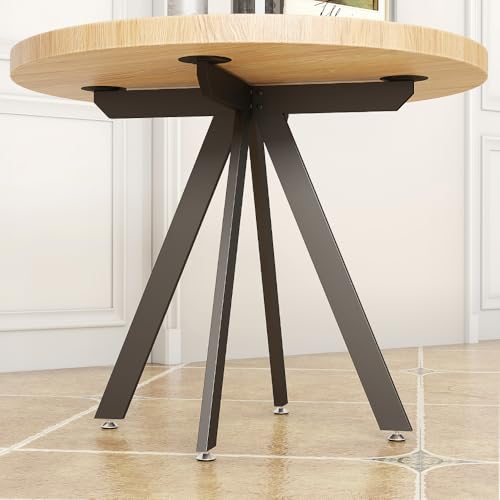
KaKaBB 28 Inch Metal Round Table Legs, Heavy Duty Round Table Base for Marble, Wood, Glass Top, Desk Legs with Suction Cups (+ Shape, 28Inch)
Check price on Amazon
Leinuosen 2 Pack Cast Iron Round Pedestal Table Base, 28" Tall, 18" Dia | 500 Lbs Capacity, Fits 20-30" Tabletop, 3" Dia Column, for Restaurant, Cafe, Dining Room, Complete Hardware Included
Check price on Amazon