
Reclaimed Wood Trestle Dining Table: The Complete Buyer's Guide
A reclaimed wood trestle dining table combines salvaged timber character with a classic trestle base for a warm, structural centerpiece. This guide explains construction, wood traits, sizing, finishes, and care so you can choose with confidence.
Why this guide matters: If you are researching a reclaimed wood trestle dining table, you already know the look you want. What you likely need is clarity on how these tables are actually built, what separates a solid piece from a compromised one, and how to plan the table around your room and household.
A trestle base replaces four corner legs with two A-frame or pedestal supports joined by a stretcher. On reclaimed wood, that structure is especially valuable because it leaves the full table edge free for seating and lets the salvaged timber top do the visual work. Understanding the joinery, the wood's history, and the finish system is what turns a beautiful idea into a table that lasts.
What Defines a Reclaimed Wood Trestle Dining Table
A reclaimed wood trestle dining table is defined by two elements working together. The first is the tabletop, milled from salvaged lumber such as old barn beams, factory flooring, warehouse joists, or dismantled structural timber. The second is the trestle base, a support structure built from two vertical trestles connected by a horizontal stretcher, rather than four individual legs.
Reclaimed timber is valued because it is usually older growth wood with tighter grain, higher density, and natural patina that new lumber cannot replicate. Nail holes, saw marks, weathered edges, and color variation are part of the material's identity, not defects. The trestle base complements this by providing a strong, open silhouette that keeps sightlines clear and allows chairs to be placed anywhere along the table's length.
If the live edge character of salvaged timber appeals to you, our guide to a solid live edge dining table explains how natural edges are stabilized and finished for daily use. For a broader look at how reclaimed tops are paired with different bases, see the natural wood top dining table overview.
How Trestle Bases Are Constructed
The trestle base is the structural heart of the table, and its quality determines stability, longevity, and how well the table handles daily use. A well-built trestle base typically includes the following components:
- Two vertical trestles: A-frame or pedestal supports positioned inward from each end of the tabletop.
- A connecting stretcher: A horizontal beam tying the two trestles together, which prevents side-to-side sway and is essential on longer tables.
- Feet or foot rails: Broad contact points that distribute weight and protect flooring.
- Top attachment hardware: Figure-eight fasteners, Z-clips, or slotted brackets that allow the wood top to expand and contract without splitting.
Pay close attention to how the base connects to the top. Wood moves with seasonal humidity, and a top that is rigidly screwed down can crack. Quality builders use hardware that permits movement. Similarly, through-tenon joinery, wedged mortise-and-tenon joints, and reinforced bolts are signs of a serious build, while glued butt joints and thin brackets are warning signs.
For a deeper comparison of base styles, including pedestal and trunk-inspired supports, our tree trunk dining table base guide explains how organic bases differ in stability and maintenance from traditional trestles.
Stability Check: The Stretcher Test
When evaluating any trestle table, look for a structural stretcher connecting the two base assemblies. On long tables without one, the base can rack side to side when someone leans on an end. A visible, well-secured stretcher is one of the clearest indicators of a properly engineered trestle design.
Understanding Reclaimed Wood Character
Reclaimed wood is not a single material. It is a category that includes several distinct sources, each with its own grain, hardness, and visual signature. Knowing the source helps you predict how the table will look and age.
| Reclaimed Source | Typical Character | Best For |
|---|---|---|
| Old barn beams | Dense grain, deep weathering, nail holes, and saw marks | Rustic and farmhouse interiors |
| Factory or warehouse flooring | Hard, tight grain with industrial patina and occasional bolt holes | Industrial and loft-style dining rooms |
| Structural joists and rafters | Long lengths, strong grain lines, and minor checking | Large family tables with fewer seams |
| Salvaged decking and siding | Weathered surface, lighter density, more visible texture | Casual, textured tabletop surfaces |
Expect natural variation in color, grain, and texture across the top. That variation is the reason many buyers choose reclaimed wood in the first place. What you should not accept are structural defects: large loose knots, deep splits that are not stabilized, soft or rotting sections, or excessive cupping. A reputable builder will fill, stabilize, or reject compromised boards before assembly.
Sizing a Trestle Table for Your Room
Trestle tables are often chosen for their generous seating, so sizing deserves careful attention. Unlike a four-leg table, a trestle base frees the corners, which means you can seat people along the full length without legs interrupting legroom.
| Seating Goal | Typical Table Length | Room Length Guidance |
|---|---|---|
| 4 to 6 people | Around 60 to 72 inches | Allow roughly 36 inches of clearance on all sides |
| 6 to 8 people | Around 72 to 96 inches | Keep at least 30 inches behind pulled-out chairs |
| 8 to 10 people | Around 96 to 108 inches | Confirm the stretcher design supports the span |
As a working rule, allow about 24 inches of table width per seated person and roughly 36 inches of clearance around the table for comfortable chair movement. In tighter rooms, 30 inches is workable but leaves less room to walk behind occupied chairs. If your dining area is compact, compare trestle options with a 62 inch round dining table, which can offer similar seating with a different footprint.
Also consider ceiling height and visual weight. A heavy reclaimed top on a chunky trestle base reads as a substantial piece of furniture. In rooms with low ceilings, a slimmer trestle profile keeps the space feeling open.
Finish Options and What They Mean for Durability
The finish on a reclaimed wood table does more than set the look. It determines how resistant the surface is to spills, heat, and daily wear, and how easy the table is to maintain over time.
- Hardwax oil: Penetrates the wood, leaves a natural matte feel, and can be spot-repaired locally. Requires periodic re-oiling but is forgiving for family use.
- Polyurethane: Forms a protective film with strong resistance to moisture and abrasion. Offers a more uniform sheen but is harder to repair if scratched.
- Conversion varnish or lacquer: Common on premium and commercial-grade pieces, providing a durable, smooth surface suited to heavy use.
- Soap finish: A traditional Scandinavian approach that keeps the wood looking raw and light. It requires consistent maintenance and is less resistant to stains.
For a reclaimed table, a penetrating oil finish is often the most practical choice because it preserves the tactile character of the salvaged timber and allows localized repairs. Whatever the finish, ask how it should be maintained and whether the builder supplies touch-up products.
Quality Tiers: What Separates One Table From Another
Reclaimed wood trestle tables span a wide range of construction quality. Rather than evaluating them by numbers, compare them by tier and engineering. The descriptors below reflect relative market positioning and build approach.
Starter Tier
Often uses thinner reclaimed veneers over engineered cores or lighter reclaimed stock. Bases may rely on simple bolted joints. Suitable for occasional use and lighter households, but inspect joinery and top attachment carefully.
Balanced Tier
Solid reclaimed tops with reinforced trestle bases, proper stretchers, and movement-friendly top hardware. A solid choice for daily family dining and the most common sweet spot for durable reclaimed construction.
High-End Tier
Thick, carefully selected reclaimed slabs, through-tenon or wedged joinery, and premium finishes. Built for long-term use with better grain matching and more refined detailing.
Flagship Tier
Custom or limited-production pieces using exceptional salvaged timber, hand-finished surfaces, and heirloom-grade joinery. Typically made to order and designed to be passed down.
Within any tier, the most important question is whether the construction matches the intended use. A balanced-tier table with a genuine stretcher and solid top hardware will usually outperform a higher-tier design that was assembled hastily.
Matching the Table to Your Interior Style
Reclaimed wood trestle tables sit naturally in rustic, farmhouse, industrial, and modern-rustic interiors, but they can also anchor a minimalist room when the surrounding palette is restrained. The key is contrast and balance.
In a modern dining room, a reclaimed trestle table can soften hard surfaces and add warmth. Pair it with simple seating and a neutral wall palette so the table remains the focal point. For layout and styling direction, our modern dining room table ideas collection covers how to integrate a heavy wood table into a contemporary scheme.
In farmhouse or industrial settings, the table can be paired with mixed seating, such as a bench on one side and chairs on the other. If you are planning a mixed seating arrangement, the Duncan Phyfe dining table chairs guide offers useful perspective on chair proportions and compatibility.
If your dining area opens to an outdoor space, consider how indoor and outdoor tables relate visually. Our 48 inch rectangle outdoor dining table guide discusses how to coordinate materials and silhouettes across connected spaces.
Care and Maintenance for Reclaimed Wood
Reclaimed wood is durable, but it still needs consistent care to stay stable and attractive. The main risks are moisture, heat, and abrasive cleaning.
- Dust regularly with a soft, dry cloth to prevent grit from dulling the finish.
- Wipe spills promptly with a barely damp cloth, then dry the surface immediately.
- Avoid harsh cleaners such as ammonia-based sprays, which can strip oil finishes and dry the wood.
- Use coasters and trivets to protect against heat rings and condensation.
- Re-oil or re-wax oiled finishes every six to twelve months, depending on use and humidity.
- Control indoor humidity to reduce seasonal movement, especially in dry winter months.
Because reclaimed wood often has visible grain texture and small filled areas, routine care should be gentle. Avoid soaking the surface or leaving standing water near seams and joints.
Before You Commit: A Quick Pre-Purchase Checklist
Confirm the top is solid reclaimed wood, not a veneer. Check that the trestle base includes a stretcher. Ask how the top is attached and whether the hardware allows wood movement. Confirm the finish type and maintenance requirements. Measure your room clearance, not just the table footprint. Verify that any natural cracks or knots are stabilized. Finally, ask about the wood's source and how it was dried and prepared.
Frequently Asked Questions
Is a reclaimed wood trestle dining table durable enough for daily family use?
Yes. Reclaimed wood is typically older, denser, and more dimensionally stable than newly milled lumber. When paired with a well-built trestle base and a proper protective finish, it can handle years of daily family meals.
How much clearance do I need around a trestle dining table?
Plan for roughly 36 inches of clearance on all sides to pull chairs out comfortably, with a minimum of about 30 inches in tighter rooms. Trestle bases eliminate corner legs, so chairs can tuck in freely along the full length of the table.
Are trestle bases stable for long tables?
A properly engineered trestle base with a connecting stretcher is very stable, even on longer tables. Without a stretcher, long trestle tables can develop side-to-side sway, so always confirm the base includes a structural tie between the two trestles.
How do I care for a reclaimed wood tabletop?
Dust regularly with a soft cloth, wipe spills promptly, and avoid harsh chemical cleaners. Re-oil or re-wax oiled finishes every six to twelve months depending on use, and keep the table away from direct heat sources and prolonged moisture.
Recommended Reclaimed Wood Trestle Dining Tables
⚠️ AFFILIATE DISCLOSURE: This website contains affiliate links. As an affiliate Associate, we earn from qualifying purchases. If you make a purchase through these links, we may receive a small commission at no additional cost to you. Read our full affiliate policy.

DM Furniture Rustic Farmhouse Dinning Table, Reclaimed Solid Wood Kitchen & Dining Room Table for 4-6 People, 59" Wooden Rectangular Kitchen Table with Trestle Base for Dining/Kitchen Room, Walnut
Check price on Amazon
DM Furniture 76" Reclaimed Wood Trestle Dining Table for 6-8 Natural | FSC, Dining Room, Kitchen, Restaurant, Baluster Legs, Vintage Farmhouse style, Anti-wobble Stretcher, Floor-protective Pads
Check price on Amazon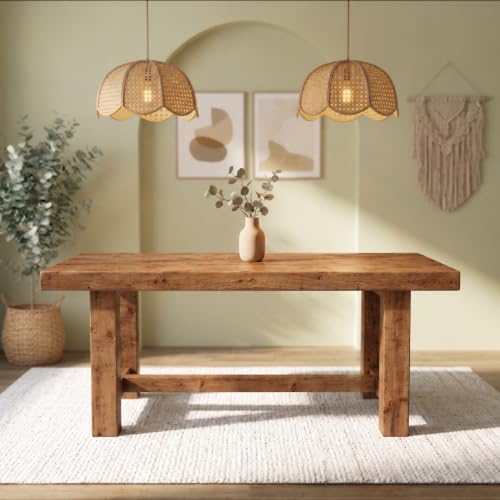
TRIBEWOOD 63-Inch Solid Wood Rectangular Dining Table for 4-6 People | Farmhouse Kitchen Table with Trestle Base, Real Wood Dining Tables for Dining Room,Apartment ,Elegant Details, Easy Assembly
Check price on Amazon
DM Furniture 76" Reclaimed Wood Dining Table for 6-8 Weathered Brown | FSC, Dining Room, Kitchen, Restaurant, Baluster Legs, Vintage Farmhouse style, Anti-wobble Stretcher, Floor-protective Pads
Check price on Amazon
Signature Design by Ashley Extendable Dining Room Table, Seats 8 | Wood, Acacia Veneer, Engineered Wood, Rectangular Farmhouse Style, 2 Extension Leaves, Moriville Series
Check price on Amazon
Jofran Madinson Country Pine Wood Rectangle Extension Dining Table, Rustic Farmhouse Kitchen Table for Dining Room, Distressed Finish, Barnwood Brown
Check price on Amazon
Signature Design by Ashley Valebeck Extendable Dining Table, Farmhouse | Seats Up to 8 with 16.5 in Removable Leaf, Rustic Two-Tone Pine Wood, Veneer and Engineered Wood, Sturdy Trestle Base
Check price on AmazonReady to Choose Your Reclaimed Wood Trestle Dining Table?
Use the criteria above to compare construction, base stability, wood character, and finish. When you find a table that matches your room and household, you will have a centerpiece built to last for years of shared meals.
Explore Options