
Rattan Chairs for Dining Table: The Complete Buying & Styling Guide
Rattan dining chairs bring warmth, texture, and a relaxed natural character to any dining room. This guide walks you through materials, frame construction, comfort, sizing, care, and styling so you can choose a set that looks beautiful and holds up to everyday meals.
Explore Recommended ChairsWhy rattan chairs work so well at a dining table: Rattan and cane seating is lightweight enough to move easily, visually airy enough to keep compact dining rooms from feeling crowded, and textured enough to soften the hard lines of wood, glass, or marble tables. The right set balances a supportive frame with a breathable woven seat that stays comfortable through long dinners.
What Are Rattan Dining Chairs?
Rattan chairs are seats built from rattan, a fast-growing climbing palm native to Southeast Asia, or from cane, the peeled outer skin of the rattan vine. The material is steamed and bent into curved frames and woven into open or tight patterns. When people talk about "rattan chairs for dining tables," they usually mean one of three constructions: a solid rattan frame with a woven seat and back, a hardwood or metal frame wrapped with cane webbing, or a fully synthetic rattan weave over a metal armature.
This variety matters because the frame, not the weave, carries most of the structural load. A beautifully woven seat on a flimsy frame will wobble and loosen; a modest weave on a solid frame can last for years. Understanding that distinction is the single most useful thing you can learn before shopping.
Natural Rattan vs Synthetic Rattan
The first decision most buyers face is whether to go with natural or synthetic rattan. Both can look excellent at a dining table, but they behave differently in real homes.
| Feature | Natural Rattan / Cane | Synthetic Rattan |
|---|---|---|
| Appearance | Warm, organic tone with a natural patina that deepens over time | Uniform, consistent color; can closely mimic natural weave |
| Moisture resistance | Moderate; needs protection from spills and humidity swings | High; engineered to resist moisture and warping |
| UV resistance | Can fade or dry in strong direct sun | UV-stabilized versions resist fading well |
| Feel and flex | Slight natural flex that adds comfort | Firmer and more rigid |
| Best suited to | Climate-controlled indoor dining rooms | Humid rooms, sunrooms, covered patios |
| Care level | Moderate; keep dry and conditioned | Low; wipe clean |
For a standard indoor dining room, natural cane is often the more refined choice. If your dining area opens onto a patio, sits in a humid climate, or receives strong afternoon sun, a synthetic weave with UV stabilization will hold up better. You can read more about pairing seating with the right table in our guide to a four-legged dining table.
Frame Construction: The Part That Decides Durability
Rattan chairs are sold at several quality tiers, and the frame is where that difference shows most clearly. Rather than comparing figures, it helps to understand what each tier typically delivers.
Entry-Level Tier
Lightweight frames, often softwood or thin tubular metal, with looser weaving. Suitable for occasional seating and light use, but expect more wobble and faster wear under daily dining.
Mid-Range Tier
Solid hardwood or reinforced metal frames with tighter, more consistent cane webbing. This is the sweet spot for most households and offers a good balance of durability and comfort.
Premium Tier
Kiln-dried hardwood frames, hand-finished joints, and densely woven cane with reinforced seat rails. Built for daily family use and designed to stay stable over many years.
Luxury Tier
Handcrafted frames with premium joinery, curated natural fibers, and refined finishing. These chairs function as statement furniture and are often made in small batches.
When inspecting a chair, look at the joints where the legs meet the seat rail. Tight, reinforced joints and a visible brace are signs of a well-built chair. A woven seat that sags noticeably when pressed is a warning sign regardless of how attractive the weave looks.
Frame materials to look for
- Solid hardwood: The most durable option for daily dining; heavier but very stable.
- Rattan pole frame: Authentic and lightweight, but needs careful handling and a dry environment.
- Powder-coated steel or aluminum: Common with synthetic weaves; rust-proof finishes are essential for longevity.
- Bentwood or plywood: Found in some mid-range designs; adequate but check for splitting at stress points.
Comfort: What to Check Before You Commit
Woven seats are breathable and naturally springy, but they are not padded. Comfort depends on a few measurable details:
- Seat height: Around 17 to 19 inches from floor to seat top pairs well with standard 28 to 30 inch dining tables. Counter-height setups need chairs around 24 to 26 inches.
- Seat depth: Roughly 16 to 18 inches suits most adults; deeper seats need a backrest angle that supports the spine.
- Back height: Low-back and mid-back rattan chairs feel airier; high-back versions offer more support for long meals.
- Cushion option: A thin tie-on seat pad can transform a firm weave into an all-evening seat without hiding the rattan look.
- Armrests: Armless chairs tuck fully under the table and suit compact rooms; armchairs feel more lounge-like but need more clearance.
If you are building a compact dining nook, armless rattan chairs combined with a small rectangular dining table set for four keep the space feeling open and easy to navigate.
Matching Rattan Chairs to Your Dining Table
The best pairing depends on table shape, material, and the visual weight of the room.
By table shape
- Rectangular tables: Rattan chairs with straight backs and a slim profile line up neatly along the long sides. Allow at least 24 inches of table width per chair.
- Round tables: Curved-back rattan chairs echo the table's shape and improve conversation flow. A round dining table with six chairs works especially well with cane seating.
- Oval tables: Rattan armchairs with gently curved backs soften the oval outline. Consider a small oval dining table with leaf if you host occasionally.
- Square tables: Choose four matching rattan chairs with compact footprints so each side stays usable.
By table material
- Wood: The most classic pairing. Rattan adds texture to a plain wood surface. A white solid wood dining table with natural cane chairs creates a bright, coastal feel.
- Marble and stone: Rattan softens the coolness of stone. A round marble dining table for four with cane chairs is a balanced, elegant combination.
- Metal and glass: Rattan introduces warmth to industrial or modern settings and prevents the room from feeling cold.
- Pine and rustic wood: Rattan complements the grain of a knotty pine dining room table for a relaxed farmhouse look.
If you plan to extend your dining outdoors, a square outdoor dining table for four or a metal outdoor dining table set pairs best with synthetic rattan chairs that resist weather.
Sizing and Spacing Your Dining Set
Rattan chairs are often slightly wider than minimal wooden chairs because of their curved backs and armrests. Plan for a minimum of 24 inches of table edge per chair, and leave 36 inches of clearance between the table edge and walls or other furniture so chairs can slide out comfortably. In tighter rooms, choose armless chairs and a pedestal or trestle table to free up legroom. A 24 inch round dining table works well in breakfast nooks with two to three rattan chairs.
Care and Maintenance for Rattan Dining Chairs
Rattan is forgiving but not indestructible. A simple routine keeps the weave tight and the finish intact:
- Dust weekly with a soft brush or a vacuum fitted with an upholstery attachment.
- Wipe spills immediately with a slightly damp cloth and dry the surface right away.
- For deeper cleaning, use a mild soap solution and a soft brush, then dry thoroughly in a shaded, ventilated area.
- Keep chairs out of direct sun and away from radiators or air-conditioning vents to prevent drying and cracking.
- Apply a rattan-specific conditioner or a light coat of natural oil once or twice a year for natural rattan.
- Use felt pads under the legs to protect flooring and reduce wear on the frame.
- In humid climates, run a dehumidifier or keep chairs in a climate-controlled room to prevent mold in the weave.
Styling Rattan Chairs in Your Dining Room
Rattan chairs are versatile enough to fit several design styles, but they read best when they are not fighting the rest of the room:
- Coastal and breezy: Pair natural cane chairs with a light wood or white table, linen runner, and woven pendant light.
- Modern organic: Combine rattan chairs with a marble or black wood table, matte ceramics, and a single sculptural centerpiece.
- Farmhouse: Use rattan chairs with a pine or reclaimed wood table, vintage crockery, and soft cotton napkins.
- Scandinavian: Choose pale rattan frames with slim legs and pair with light oak and muted textiles.
- Industrial: Contrast synthetic rattan chairs with a black metal table and warm Edison-style lighting.
Keep the palette restrained. Rattan already adds a lot of texture, so a single accent color and one natural fiber element such as a jute rug or linen runner is usually enough.
Buying Checklist: Rattan Chairs for a Dining Table
- Confirm seat height matches your table height.
- Check that the frame is solid hardwood or reinforced metal for daily use.
- Press the woven seat; it should flex slightly but not sag.
- Verify joints are tight and reinforced at the seat rails.
- Choose natural rattan for climate-controlled rooms, synthetic for humid or sunlit spaces.
- Measure your table edge per chair: at least 24 inches each.
- Leave 36 inches of clearance for chair pull-out.
- Decide between armless (compact) and armchair (lounge feel) designs.
- Confirm the finish is sealed and suitable for indoor use.
- Plan a simple care routine from day one.
Common Mistakes to Avoid
- Buying on looks alone: A beautiful weave on a weak frame will not survive daily family meals.
- Ignoring seat height: Mismatched chair and table heights cause discomfort and poor posture.
- Overcrowding the table: Rattan chairs are often wider than expected; measure before ordering a set.
- Placing natural rattan in direct sun or near heat: This accelerates drying and cracking.
- Skipping cushions: A thin seat pad can dramatically improve comfort for long dinners.
- Mixing too many weaves: Pick one dominant weave pattern and let it lead the room.
Recommended Rattan Chairs for Dining Tables
⚠️ AFFILIATE DISCLOSURE: This website contains affiliate links. As an affiliate Associate, we earn from qualifying purchases. If you make a purchase through these links, we may receive a small commission at no additional cost to you. Read our full affiliate policy.

Zesthouse Natural Rattan Dining Chairs Set of 2, Modern Cesca Kitchen Chair | Mid Century Modern Dining Chairs with Solid Wood Back & Cane Mesh, Upholstered Faux Leather Chairs with Chrome Base, Brown
Check price on Amazon
ROCITY Rattan Dining Chairs Set of 4 Beige Linen Fabric Dining Room Chairs Natural Wooden Kitchen Chairs Farmhouse Boho
Check price on Amazon
Rattan Dinner Chairs Set of 4 with Faux Leather Cushion | TYBOATLE Modern Dining Room Chairs w/Adjustable Foot Pads, Kitchen Boho Chairs Mid Century Upholstered, White
Check price on Amazon
MALOL Rattan Dining Chairs Set of 4, Mid Century Modern Dining Room Chairs,Aemless Kitchen Chairs, Farmhouse Accent Chair, Walnut
Check price on Amazon
Rattan Dining Chairs Set of 4, Modern Upholstered PE Wicker Kitchen Chair | Metal Legs, Ergonomic Curved Backrest, Mid Century boho, Hand-woven dining chairs, Dining Rooms, Kitchens and Living Rooms
Check price on Amazon
HNY Mid Century Modern Rattan Dining Chairs Set of 6, Linen Upholstered Kitchen & Dining Room Chairs with Ergonomic Curved Back, Solid Wood Frame, Farmhouse Accent Chairs for Home, Apartment, Beige
Check price on Amazon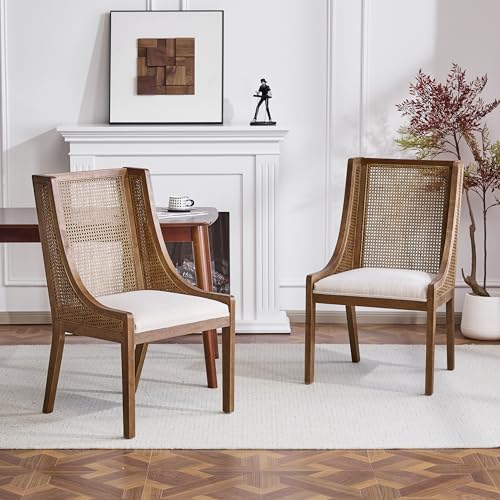
Christopher Knight Home Yone Dining Chairs Set of 2, Modern Dining Chair with Fabric Upholstery, Rubberwood Frame Kitchen Chairs with Cane Webbing, Extra Seat for Dining Room, Beige + Brown
Check price on AmazonFrequently Asked Questions
Are rattan chairs durable enough for daily dining use?
Yes. Well-made rattan dining chairs with a solid hardwood or metal frame and tightly woven cane are durable enough for daily use. Natural rattan flexes slightly under weight, which actually reduces stress on the weave, while quality synthetic rattan is engineered to resist moisture and UV exposure.
What is the difference between natural rattan and synthetic rattan?
Natural rattan is a climbing palm woven from real vines, offering warmth and a unique patina over time. Synthetic rattan is made from extruded polymer strands that mimic the look while resisting moisture, fading, and cracking, making it better suited to humid rooms or covered outdoor dining areas.
How do I clean rattan dining chairs?
Dust weekly with a soft brush or vacuum using the upholstery attachment. Wipe with a barely damp cloth and mild soap for deeper cleaning, then dry immediately. Avoid soaking the weave and keep chairs out of direct sun and away from radiators to prevent drying and cracking.
Do rattan chairs work with a rectangular dining table?
Absolutely. Rattan chairs pair well with most table shapes. For a rectangular table, choose chairs with a modest footprint so you can tuck them in. If your dining room is compact, a round table with rattan chairs can improve flow and conversation.
Can rattan chairs be used outdoors?
Natural rattan should stay indoors or in fully covered, dry areas. Synthetic rattan chairs with a rust-proof metal frame are suitable for covered patios and sunrooms, where they resist moisture and UV fading.
How many rattan chairs fit around a dining table?
Allow at least 24 inches of table edge per chair. A typical rectangular table for four fits four armless rattan chairs comfortably, while a round table can sometimes seat six if the chairs have slim backs and no armrests.
Ready to Choose Your Rattan Dining Chairs?
Use the checklist above to narrow down your frame, weave, and comfort preferences, then explore the recommended chairs to find the set that fits your dining room.
View Recommended Chairs