
Plywood Dining Table: The Complete Buying & Construction Guide
Everything you need to know about plywood dining tables — how they are built, how durable they really are, how veneer finishes change the look, and how to choose the right engineered-wood table for your dining room.
Explore Recommended TablesWhy this guide matters: A plywood dining table is one of the most misunderstood pieces of furniture in the market. Many shoppers assume engineered wood means lower quality, but a well-built plywood table can be more dimensionally stable than solid wood. This guide explains the construction, the grades, the veneer options, and the practical trade-offs so you can make a confident, informed decision before you buy.
What Is a Plywood Dining Table?
A plywood dining table is a table whose top and often its structural panels are built from plywood — an engineered wood product made by gluing together multiple thin layers (called plies or veneers) of wood. Each layer is rotated 90 degrees relative to the one below it, and the whole stack is bonded under heat and pressure. This cross-grain construction is what gives plywood its signature strength and stability.
The visible surface of most plywood dining tables is a decorative veneer — a thin slice of real wood, or a printed and laminated finish — applied over the plywood core. This means the table you see can look like oak, walnut, or marble while the underlying structure remains an engineered panel. Understanding this distinction between the core and the surface is the key to evaluating any plywood table.
If you are comparing this material against other engineered options or solid timber, it helps to think of plywood as a middle ground: more stable than solid wood, more structurally sound than particleboard or MDF, and lighter than both. For a broader look at how table types differ in build and purpose, see our guide to organic dining table designs, which often use layered and composite construction for sculptural shapes.
How Plywood Dining Tables Are Constructed
The quality of a plywood dining table is largely determined by three factors: the plywood core grade, the number and thickness of the plies, and the quality of the surface veneer. Here is how each element affects the final product.
Core Grade
Furniture-grade plywood uses void-free cores with consistent glue lines. Lower grades may contain internal gaps that weaken the panel over time.
Ply Count
More plies generally mean a denser, more stable panel. A 5-ply or 7-ply top resists warping better than a 3-ply panel of the same thickness.
Surface Veneer
A thick real-wood veneer can be sanded and refinished. Thin or printed veneers cannot and should be treated as a sealed surface.
Edge Banding
Quality tables band the edges with matching veneer or solid wood, hiding the ply layers and protecting the edges from moisture and chipping.
Two construction styles dominate the market. The first is a veneer-faced plywood top, where the core is plywood and the top surface is a real wood veneer. The second is a laminate or melamine-faced top, where the plywood core is covered with a printed, resin-based finish. The first looks and feels like wood and can be refinished; the second is more resistant to stains and daily wear but cannot be sanded. Both are legitimate choices depending on how you use the table.
Plywood vs Solid Wood vs MDF: A Practical Comparison
Shoppers often ask how plywood compares to solid wood and MDF. The honest answer is that each material solves a different problem. The table below summarizes the trade-offs without any reference to numbers, so it stays useful regardless of market conditions.
| Factor | Plywood | Solid Wood | MDF |
|---|---|---|---|
| Dimensional stability | High — cross-layered plies resist warping and seasonal movement | Moderate — expands and contracts with humidity | High — but can sag under heavy loads over long spans |
| Refinishing potential | Limited to thick real-wood veneers | Excellent — can be sanded and refinished many times | Very limited — surface is a laminate or paint film |
| Weight | Lighter than solid wood and MDF of equal thickness | Heaviest | Heaviest per panel |
| Moisture resistance | Good when edges are sealed and glue lines are water-resistant | Good, but prone to movement and cracking | Poor — swells and crumbles when wet |
| Typical market tier | Mid-range to premium depending on veneer quality | Premium to luxury | Entry-level to mid-range |
| Best for | Stable, well-priced tables with a natural wood look | Long-term heirloom pieces and refinishing projects | Painted finishes and shaped designs |
The takeaway is simple: if you want a table that resists seasonal movement and stays flat over time, plywood is a strong choice. If you want a table you can sand and refinish repeatedly across decades, solid wood remains the benchmark. Many buyers end up preferring plywood for its stability and consistency, especially in homes with fluctuating humidity.
How Durable Is a Plywood Dining Table?
Durability is the most common concern, and the answer is more nuanced than a simple yes or no. A plywood dining table is durable when three conditions are met: the core is furniture-grade, the edges are properly sealed, and the surface finish matches the way the table is used.
- Warping and splitting: Plywood outperforms solid wood here. The cross-grain construction distributes stress in multiple directions, so the top stays flat even when humidity changes.
- Surface wear: This depends on the finish. A real-wood veneer with a quality lacquer or oil finish handles daily meals well but will show scratches over time. A laminate finish resists scratches and stains more effectively but cannot be repaired if damaged.
- Edge integrity: The weakest point of any plywood table is the edge. Well-banded edges with matching veneer or solid-wood trim protect against moisture and chipping. Unsealed edges are vulnerable.
- Structural longevity: A plywood top paired with a solid hardwood frame or a reinforced metal base will last for many years of normal family use.
For a detailed look at protecting your table over its lifespan, our wrap-around bench dining table guide discusses how seating layouts and daily traffic affect surface wear, and the same principles apply to any plywood table used in a busy dining room.
Veneer Finishes: What You Are Actually Getting
The surface veneer is where most of the visual character of a plywood table comes from, and it is also where quality varies most. There are three common categories.
Real wood veneer is a thin slice of actual timber glued to the plywood core. It carries genuine grain, texture, and tone variation. Thicker veneers can be lightly sanded and refinished, which makes them the most repairable option. This is the finish to look for if you want a natural wood dining table without the movement of solid timber.
Engineered veneer is a reconstituted wood product that mimics natural grain with consistent patterns. It is more uniform than natural veneer and often used in mid-range tables where a clean, predictable look is desired.
Laminate or printed veneer is a resin-based film printed with a wood or stone pattern. It is the most stain- and scratch-resistant option and is common in family and rental settings. It cannot be sanded or refinished, so it should be treated as a sealed surface.
If you are drawn to a specific wood tone, our guide to walnut round pedestal dining tables shows how veneer tone and grain direction influence the overall character of a table, which is useful when comparing veneer samples.
Pros and Cons of Plywood Dining Tables
Every material involves trade-offs. Here is a balanced summary to help you decide whether plywood fits your home.
Pros
Dimensionally stable, resists warping, lighter than solid wood and MDF, consistent surface quality, and available in a wide range of veneer looks across mid-range and premium tiers.
Cons
Limited refinishing on thin veneers, vulnerable edges if not sealed, and quality varies significantly between entry-level and premium construction.
The pros tend to dominate for households in humid climates or homes with fluctuating indoor temperatures, where solid wood may move. The cons matter most if you plan to sand and refinish the table yourself over many years, in which case a solid wood top is the better long-term match.
How to Choose the Right Plywood Dining Table
Use this practical checklist to evaluate any plywood table before you commit.
- Inspect the edge banding. Look for a continuous, well-fitted band with no gaps or lifting. This is the single best visual indicator of build quality.
- Ask about the core grade. Furniture-grade plywood with a void-free core is what you want. Avoid panels with visible internal gaps at the edges.
- Check the veneer type. Confirm whether the surface is real wood veneer, engineered veneer, or laminate, and whether it can be refinished.
- Test stability. A quality table should sit flat with no rocking. Check the frame joints and the base for wobble.
- Match the finish to your household. Busy families with young children often do better with a laminate or a sealed lacquer finish; design-focused rooms can lean toward real wood veneer.
- Consider the shape and room flow. A narrow or round top can make a small dining room feel larger. Our narrow live-edge dining table guide explores how slim profiles and organic edges change the feel of a space.
For rooms with tall ceilings or open-plan layouts, a taller table can change the visual balance. The high-rise dining table guide explains how table height interacts with room proportions, which is worth reviewing before you finalize your choice.
Plywood Dining Table Care and Maintenance
A plywood table is easy to maintain when you respect its two weak points: moisture at the edges and heat on the surface.
- Wipe spills promptly. Do not let water sit on the surface or along the edges, where it can wick into the ply layers.
- Use coasters and placemats. Heat and moisture are the two most common causes of surface damage on veneer tables.
- Keep the table away from direct heat. Do not place hot pans directly on the surface, and avoid positioning the table next to a radiator or heating vent.
- Dust with a soft cloth. A slightly damp microfiber cloth is enough for routine cleaning. Avoid abrasive cleaners on veneer surfaces.
- Inspect the edges seasonally. If you notice lifting or chipping, address it early with a matching edge repair product before moisture gets in.
For outdoor or semi-outdoor settings, plywood is generally not the right material unless it is specifically rated for exterior use. If you are planning an outdoor dining area, our wood round outdoor dining table guide covers materials that handle weather far better than standard plywood.
Who Is a Plywood Dining Table Best For?
Plywood tables suit a wide range of households. They are a strong fit for:
- Homes in humid or variable climates where solid wood tends to move.
- Buyers who want a natural wood look without the weight and movement of solid timber.
- Families who want a stable, well-built table in the mid-range to premium tier.
- Design-conscious buyers who want specific veneer tones and grain patterns.
They are a weaker fit for buyers who plan to sand and refinish the table multiple times over decades, or for outdoor use. In those cases, solid wood or weather-rated materials are the better match.
If you are building a larger dining setup, the oval extendable dining table that seats twelve guide shows how engineered and solid tops are combined with extension mechanisms for large gatherings, which is useful context if you are weighing a plywood top against an extendable design.
Common Mistakes to Avoid
- Judging by the surface alone. A convincing veneer can hide a weak core. Always ask about the plywood grade and ply count.
- Ignoring the edges. Unsealed or poorly banded edges are the most common failure point on plywood tables.
- Assuming all plywood is the same. Entry-level construction and premium construction differ dramatically in stability and longevity.
- Refinishing a thin veneer. Sanding through a thin veneer ruins the surface. Confirm the veneer type before attempting any repair.
- Placing the table near heat or moisture. Even the most stable plywood panel will suffer if it is exposed to constant steam or direct heat.
Ready to Compare Plywood Dining Tables?
Review our curated selection of plywood and veneer dining tables, each chosen for stable construction, quality edge banding, and finish options suited to real homes.
View Recommended TablesRecommended Plywood Dining Tables
Below is a curated set of plywood and veneer dining tables selected for their construction quality, surface finish, and suitability for daily family use. Each option is described by its market tier and best use case rather than by any numeric figure, so the comparison stays useful over time.
Top Plywood & Veneer Dining Tables to Consider
⚠️ AFFILIATE DISCLOSURE: This website contains affiliate links. As an affiliate Associate, we earn from qualifying purchases. If you make a purchase through these links, we may receive a small commission at no additional cost to you. Read our full affiliate policy.

Garvee 78.7″ Dining Table for 8-10 People, Large Kitchen Table (Only Table) | Brown Industrial Dinner Table with Heavy-Duty Steel Frame and High-Density MDF Thick Tabletop for Kitchen, Dining Room
Check price on Amazon
Garvee 71" Wood Dining Table for 2/4/6/8, Large Rectangular Kitchen Table | Anti-Collision Curved Corner Dinner Table with Recessed Footrest for Dining Room, Study & Home Office, Walnut Brown & Black
Check price on Amazon
Plank+Beam Classic 72 Inch Dining Table, Rectangular, Pecan Wirebrush | Non-Toxic Finishes, Versatile Design, Farmhouse Design, Elegant Details, Easy Assembly, Quick Setup, Solid Wood
Check price on Amazon
ONBRILL 47 Inch Round Dining Table for 4-6,Square Pedestal Base,Walnut | Circle Kitchen Table with Thickened Tabletop, Modern Dining Room Tables, Dinner Tables for Kitchen Small Space (Table Only)
Check price on Amazon
Drop Leaf Folding Dining Table with Storage, Wheels, Space Saving, Walnut | Foldable Design, 18mm Thick Plywood, 300lbs Capacity, Locking Wheels, Farmhouse, for Living Room Kitchen Small Spaces, Walnut
Check price on Amazon
IRONCK 47" Round Dining Table for 4-6 People, Walnut | Wood Kitchen Table with Pedestal Base, Circle Dinner Table for Dining Room, Kitchen
Check price on Amazon
Christopher Knight Home Ace 70.28'L Solid Wood Dining Table for 6-8 People, Rubber Wood Dining Room Table, Minimalist Modern Rectangular Kitchen Table, Easy Assembly Dining Room Furniture, Natural
Check price on Amazon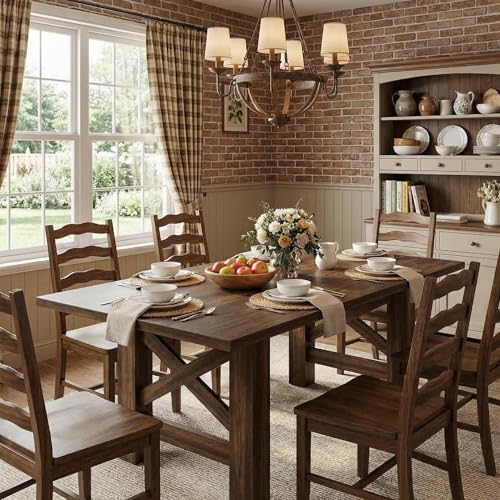
Garvee Wood Farmhouse Dining Table for 6-8, Heavy Duty Large Kitchen Table, 70.87" Long Rectangular Dining Room Tables with Strong Legs, Thickness Tabletop, for Big Family, Dinette, Walunt
Check price on AmazonFrequently Asked Questions
Is a plywood dining table durable?
Yes. Quality plywood dining tables are durable because plywood is made from multiple cross-layered veneers glued together, which resists warping and splitting better than solid wood in humid conditions. The durability depends heavily on the core grade, the number of plies, and the surface veneer finish.
What is the difference between plywood and solid wood dining tables?
Solid wood is a single piece of timber, while plywood is an engineered panel made of layered wood veneers. Plywood is more dimensionally stable and resists warping, whereas solid wood offers natural grain throughout and can be sanded and refinished many times over its lifespan.
Can plywood dining tables be refinished?
It depends on the veneer thickness. Tables with a thicker veneer can usually be lightly sanded and refinished once or twice. Tables with a very thin or printed veneer cannot be sanded without damaging the surface, so they should only be cleaned and touched up.
How do I protect a plywood dining table surface?
Use coasters, placemats, and felt pads under heavy items. Wipe spills promptly, avoid prolonged moisture, and keep the table away from direct heat sources. A protective table pad helps prevent scratches and heat marks during daily use.
Is plywood heavier or lighter than solid wood?
Plywood is generally lighter than solid wood of the same thickness because it is built from thin layered veneers rather than a single dense timber block. This makes plywood tables easier to move and reposition.
Does plywood warp in humid climates?
Plywood is more resistant to warping than solid wood because its cross-grain construction distributes stress in multiple directions. However, unsealed edges and prolonged moisture exposure can still cause damage, so proper edge sealing and prompt spill cleanup remain important.
Final Thoughts
A plywood dining table is a smart, stable choice for many homes — especially when the core is furniture-grade, the edges are properly sealed, and the surface finish matches the way you actually live. The key is to look past the veneer and evaluate the construction: the ply count, the core grade, the edge banding, and the finish type. Do that, and you will end up with a table that looks good, stays flat, and serves your family for years.
If you are still comparing options, our guides to rustic bar-height dining tables and outdoor fire dining tables explore how different materials and builds suit different rooms and lifestyles. And if you are planning a large gathering space, the oval extendable dining table for twelve guide is a useful next step.