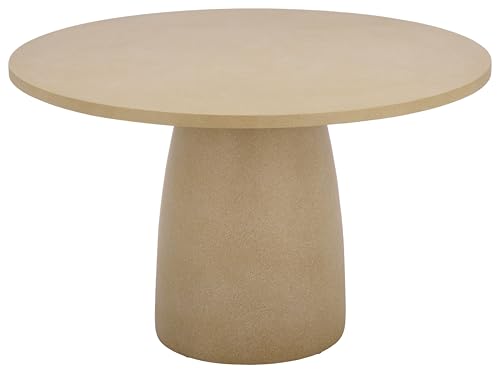
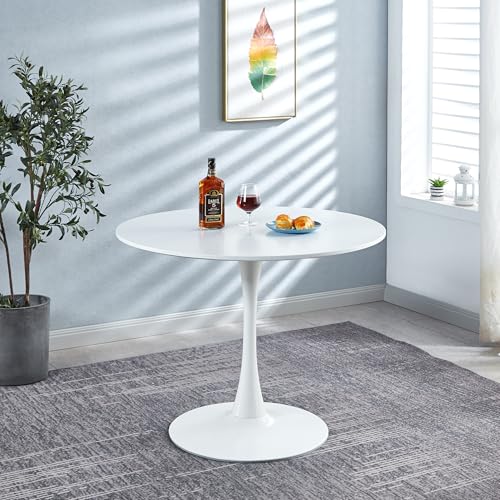
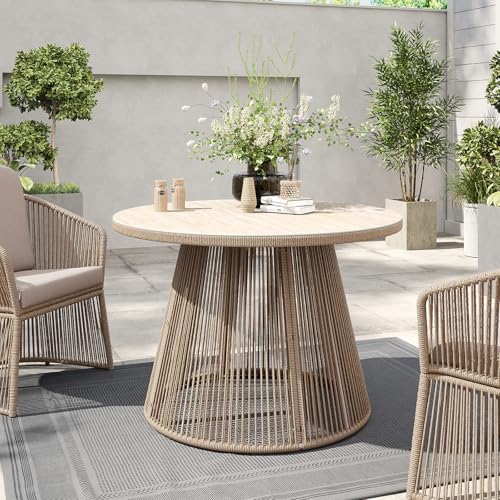
What Is an Outdoor Pedestal Dining Table?
An outdoor pedestal dining table is a patio or garden table supported by a central column base instead of four separate legs. The tabletop sits on top of a single column that connects to a widened foot — either a flat plate, a cross-shaped base, or a disc — which spreads the load across the ground. Pedestal designs are common in café settings, bistro patios, and residential decks because they offer a clean silhouette and genuinely usable legroom.
Outdoor versions differ from indoor pedestal tables in three important ways: the materials are treated for moisture and UV exposure, the base is typically heavier or designed to be weighted, and many include a center umbrella hole so a patio umbrella can pass through the table without a separate stand. If you are still deciding between a pedestal table and a traditional four-leg table, the practical difference is mostly about seating flexibility and how the table behaves on uneven or sloped surfaces.
Pedestal Base Types for Outdoor Use
The base is the single most important part of an outdoor pedestal table. It determines stability, wind resistance, and how well the table handles a patio that is not perfectly level. Here are the main types you will encounter:
| Base Type | Best For | Stability Notes |
|---|---|---|
| Single column with flat plate | Small round tables, 2–4 seats | Simple and stable on flat patios; needs a wide foot for larger tops |
| Cross-shaped base | Round and square tables, 4–6 seats | Spreads weight in four directions; resists tipping on uneven pavers |
| Double-column base | Rectangular tables, 6–8 seats | Two columns support longer tops without a center sag; more stable in wind |
| Weighted disc base | Umbrella tables, windy patios | Heavy foot plate doubles as umbrella weight; excellent wind resistance |
| Cast-iron pedestal | Commercial-grade patios, café setups | Heavy-duty and low-maintenance; resists movement but is harder to relocate |
As a rule of thumb, the wider and heavier the base relative to the tabletop, the more stable the table will feel. A single narrow column under a wide round top is the least stable configuration and is best reserved for small bistro tables. For larger tops, look for a cross base or a double-column design. If you plan to use an umbrella, choose a base specifically rated to hold an umbrella weight plate — an umbrella that is not properly weighted can tip the entire table in a gust.
Materials That Survive the Outdoors
Outdoor furniture lives a harder life than indoor furniture. Sun, rain, temperature swings, and moisture all work on the materials simultaneously. The best outdoor pedestal tables use materials that are either naturally weather-resistant or treated with a durable finish. Here is how the main options compare:
Powder-Coated Aluminum
Aluminum is the most popular frame and base material for modern outdoor pedestal tables. It does not rust, it is light enough to move for cleaning or rearranging, and powder coating adds a hard, chip-resistant color layer. Aluminum bases are usually hollow, so they rely on a wide footprint for stability rather than sheer weight. They are an excellent fit for balconies and decks where you may need to shift the table seasonally.
Stainless Steel and Cast Iron
Stainless steel offers high-grade corrosion resistance and a clean modern look, while cast iron delivers the heaviest, most grounded feel. Cast-iron pedestal bases are common in commercial-grade café furniture because they resist movement and handle constant use. Both are heavier than aluminum, which means better wind resistance but more effort to reposition. If your patio is exposed to strong wind, a cast-iron or weighted steel base is a smart choice.
Teak and Hardwood
Teak is naturally rich in oils that repel moisture and resist rot, making it one of the best wood choices for outdoor tops. It weathers to a soft silver-gray over time unless oiled. Other hardwoods can work outdoors if they are properly sealed, but they require more maintenance than teak. Wood tops pair beautifully with metal pedestal bases and give a warm, natural look to a patio.
High-Density Polyethylene (HDPE)
HDPE is a recycled plastic material that resists moisture, UV fading, and insects without any sealing or painting. It is a low-maintenance option for coastal or humid climates. HDPE tops are usually paired with aluminum or steel pedestal bases and are a solid choice if you want an outdoor table that needs almost no upkeep.
Stability on Uneven Patios and Decks
Outdoor surfaces are rarely perfectly level. Pavers settle, deck boards flex, and grass is never flat. A pedestal table handles uneven ground differently from a four-leg table: a four-leg table will wobble if one leg is short, while a pedestal table distributes weight through a single base that can rock if the foot plate is too narrow or the ground is sloped. The fix is usually a wider foot plate or adjustable glides on the base.
When evaluating stability, check these points:
- Base footprint: The wider the foot relative to the top, the less likely the table is to tip. A cross base or wide disc is more forgiving than a narrow column.
- Adjustable glides: Small leveling feet under the base let you compensate for a slightly uneven patio without shimming the table.
- Weight: Heavier bases resist wind and accidental bumps. If the base is hollow aluminum, look for a design that accepts a weight plate or sand fill.
- Tabletop overhang: A top that overhangs the base too far creates leverage. Keep the overhang moderate for better balance.
If your patio has a noticeable slope, place the table on the flattest section and use leveling glides to fine-tune. For an umbrella table, always use a base rated for the umbrella's size — the umbrella acts like a sail in the wind, and the base is what keeps everything upright.
Choosing the Right Size and Seating Capacity
Pedestal tables come in round, square, and rectangular shapes, and each shape changes how many people you can seat comfortably. As a general guideline, allow at least 24 inches of table edge per person so elbows and plates do not collide.
| Shape | Typical Size | Comfortable Seating | Best For |
|---|---|---|---|
| Round | 36–42 inch diameter | 2–4 people | Small patios, balconies, bistro setups |
| Round | 48–60 inch diameter | 4–6 people | Family patios, conversation-friendly dining |
| Square | 40–48 inch | 4 people | Compact decks, corner patios |
| Rectangular | 60–72 inch | 6 people | Longer patios, double-column base |
| Rectangular | 72–84 inch | 6–8 people | Large outdoor entertaining areas |
Round pedestal tables are the most popular outdoor choice because they seat people evenly and feel social. If you are working with a narrow patio, a rectangular table with a double-column base can fit along a wall while still seating six. If you need a more compact arrangement, a small elegant dining table style can guide your sizing decisions, and if you are comparing open-base options, a round rattan dining table offers a different material and aesthetic worth considering.
Umbrella Compatibility and Wind Considerations
One of the biggest advantages of a pedestal table is that it can support a center umbrella without a separate stand. The umbrella pole passes through a hole in the tabletop and anchors to a base plate or weight underneath. This keeps the umbrella centered over the table and frees up floor space around the chairs.
However, an umbrella turns the table into a sail. In windy conditions, an unweighted umbrella can tip the table or, worse, lift it. Before buying, confirm three things:
- The tabletop has a pre-drilled umbrella hole sized for your pole diameter.
- The pedestal base is rated to hold an umbrella weight plate or accepts a separate umbrella base.
- The base weight is proportional to the umbrella canopy size — larger canopies need heavier bases.
If your patio is exposed to strong wind, consider a table with a heavier cast-iron or weighted disc base, and take the umbrella down when it is not in use. For more on matching table height to seating, the bar stool height dining table guide explains how table and seat heights interact, which is useful if you are mixing pedestal tables with bar-height stools.
Pedestal vs. Four-Leg Outdoor Tables
Both styles have a place on a patio, and the right choice depends on how you use the space. Here is a side-by-side comparison to help you decide:
| Factor | Pedestal Table | Four-Leg Table |
|---|---|---|
| Legroom | Open on all sides; chairs tuck in freely | Legs at corners can block chair placement |
| Stability on flat ground | Excellent with a wide, heavy base | Excellent; weight distributed at four points |
| Stability on uneven ground | Good with leveling glides; can rock on narrow bases | Wobbles if one leg is short; easy to shim |
| Umbrella support | Center hole is standard; base doubles as weight | Requires separate umbrella stand |
| Cleaning underneath | Easy — single column to sweep around | Harder — four legs to navigate |
| Visual footprint | Light and airy | More traditional and grounded |
For most residential patios, a pedestal table is the more flexible choice because it opens up seating on every side and simplifies umbrella use. Four-leg tables still make sense if you want a very traditional look or if your patio is perfectly level and you prefer the visual weight of corner legs.
Setup and Placement Tips for Your Patio
Once you have chosen a table, placement matters as much as the table itself. A few practical guidelines will keep your outdoor dining area comfortable and safe:
- Leave walkway clearance: Plan for at least 36 inches of clearance between the table edge and walls, railings, or planters so chairs can pull out and people can walk behind them.
- Choose the flattest spot: Pedestal tables perform best on level ground. If your patio slopes, place the table on the flattest section and use leveling glides.
- Consider sun and shade: Position the table where it gets a balance of sun and shade, or use an umbrella to control exposure during meals.
- Protect the surface underneath: On a wood deck, use felt pads or glides under the base to prevent scratches and moisture trapping.
- Anchor in windy areas: If your patio is exposed, use a weighted base or a table with a built-in umbrella weight plate, and secure the umbrella when not in use.
If you are rethinking how your patio connects to the rest of your home, the outdoor coffee to dining table guide covers convertible setups that blur the line between lounge and dining spaces. For a coordinated look, a faux wood outdoor dining table set pairs a pedestal table with matching chairs in a weather-resistant finish.
Care and Maintenance for Outdoor Pedestal Tables
Outdoor tables need periodic attention to stay in good condition, but the routine is simple. The exact steps depend on the material:
- Powder-coated aluminum and steel: Wipe with mild soap and water, rinse, and dry. Touch up any chips in the coating to prevent corrosion.
- Cast iron: Wipe down regularly and apply a protective coating if the finish shows wear. Keep the base dry to prevent rust spots.
- Teak and hardwood: Clean with a soft brush and mild soap. Oil once or twice a year if you want to maintain the golden color; let it weather naturally if you prefer the silver-gray patina.
- HDPE: Wash with soap and water; no sealing or painting required.
- Glass and stone tops: Use a non-abrasive cleaner and avoid harsh chemicals that can dull the surface.
During off-season months, cover the table or store it in a sheltered area if possible. Even weather-resistant materials last longer when protected from prolonged moisture and direct sun. Check the base and glides periodically for looseness, and tighten any hardware as needed.
Common Buying Mistakes to Avoid
Most outdoor pedestal table disappointments come down to a few avoidable mistakes. Watch out for these:
- Choosing a base that is too light for the top: A wide top on a narrow column can tip. Match base weight and footprint to tabletop size.
- Ignoring wind exposure: If your patio is windy, prioritize a heavy base and an umbrella weight plate, or skip the umbrella altogether.
- Overlooking umbrella hole size: Confirm the hole diameter matches your umbrella pole before buying.
- Skipping walkway clearance: A table that fits the patio but leaves no room for chairs and foot traffic will feel cramped.
- Buying untreated wood for a wet climate: Choose teak, HDPE, or sealed hardwood if your area gets frequent rain.
- Forgetting about storage: If you plan to move the table seasonally, a lighter aluminum model is easier to handle than cast iron.
How to Choose the Right Tier for Your Needs
Outdoor pedestal tables are available across a range of market positions, and the right tier depends on how much use the table will see and how exposed your patio is. Instead of focusing on any single number, think about the tier that matches your situation:
- Entry-level tier: Best for light use on covered patios or balconies. These tables typically use lighter aluminum bases and simpler tops. They are a solid choice if you need a table for occasional meals and can store it during harsh weather.
- Mid-range tier: The most balanced option for most households. You get heavier bases, better powder coatings, and more material variety. Mid-range models usually offer smoother umbrella integration and more stable cross or double-column bases than entry-level tables.
- Premium tier: Built for frequent use and exposed patios. Expect cast-iron or reinforced steel bases, teak or high-grade tops, and better wind resistance. Premium tables are a long-term investment for households that dine outdoors regularly.
- Luxury and commercial-grade tier: Designed for high-traffic patios, restaurants, and resort settings. These tables emphasize heavy-duty construction, commercial-grade finishes, and maximum stability. They are the right fit if the table will be used daily by many people.
Within each tier, look for the features that matter most to your patio: base weight, umbrella compatibility, material weather resistance, and seating capacity. A well-specified mid-range table often delivers a better experience than an entry-level table that is too light for an exposed patio.