
Oak Pedestal Dining Table: The Complete Buying & Style Guide
An oak pedestal dining table combines the warmth and durability of solid oak with a base that opens up legroom and keeps chairs comfortable on every side. This guide explains pedestal base types, seating clearance, oak grades and finishes, stability checks, and styling ideas so you can choose with confidence.
Explore Recommended TablesWhat Is an Oak Pedestal Dining Table?
An oak pedestal dining table is built from oak wood and supported by a central column or base assembly instead of four corner legs. The tabletop is typically round, oval, or square, though rectangular versions with double pedestals are also common. Because the support sits beneath the center of the table, diners gain unobstructed legroom and chairs can be tucked or angled more freely.
Oak itself is one of the most trusted hardwoods for dining furniture. Its tight grain structure handles daily use well, it takes stains and oils evenly, and its characteristic grain pattern gives each table a distinct visual identity. That combination of a forgiving material and a space-friendly base is why pedestal oak tables remain a staple in both compact apartments and formal dining rooms.
Pedestal Base Styles Explained
The base is the defining feature of this table style, and it directly affects stability, seating capacity, and visual weight. These are the main configurations you will encounter:
Single Column Pedestal
One central column on a wide foot. Best for round or square tables seating two to four. Compact footprint and the cleanest look.
Double Pedestal
Two columns supporting a longer top. Distributes weight better on oval and rectangular tables seating six or more.
Trestle Base
Twin upright supports connected by a stretcher beam. Very stable and visually architectural; suits farmhouse and rustic rooms.
Flared or Sculpted Column
Turned or tapered columns that widen at the foot. Adds traditional character and pairs well with classic and transitional interiors.
When comparing bases, look at the foot width relative to the tabletop. A foot that is too narrow for the top creates a tipping risk when weight is placed on the edge. A well-proportioned pedestal should extend close to the outer edge of the tabletop footprint. For oval and elongated tops, a double pedestal or trestle base is generally the safer structural choice.
Sizing and Seating Clearance
Pedestal tables are often chosen for smaller rooms, so getting the dimensions right matters more than with any other style. Use the reference points below as a starting framework, then confirm against your actual room measurements.
| Seating | Typical Top Shape | Practical Notes |
|---|---|---|
| 2 people | Round, compact | Single column pedestal works well; ideal for breakfast nooks and small kitchens. |
| 4 people | Round or square | Single pedestal still comfortable; confirm the foot does not crowd chair legs. |
| 6 people | Oval or rectangular | Double pedestal or trestle base recommended for even weight distribution. |
| 8+ people | Long oval or rectangular | Trestle or double pedestal with a central stretcher for maximum rigidity. |
For room clearance, plan for roughly 24 to 30 inches from the table edge to the nearest wall or furniture so chairs can pull out without scraping. Main walkways behind seated guests need closer to 36 inches. Because a pedestal base removes corner legs, chairs can often slide in at an angle, which buys back a few inches in tight spaces.
Understanding Oak Grades and Construction
Not all oak tables are equivalent. The two main variables are the wood itself and how the tabletop is built.
Solid Oak vs. Oak Veneer
Solid oak tops are milled from full-thickness wood and can be sanded and refinished multiple times over their life, making them a long-term investment. Veneered tops place a thin layer of oak over a stable engineered core; they are dimensionally stable and consistent in appearance, but refinishing options are limited. Both are legitimate choices — the right one depends on how much restoration flexibility you want.
Grain and Character
Oak is graded partly by how much natural character it shows. Clear grades have minimal knots and uniform grain, while rustic and character grades embrace knots, mineral streaks, and color variation. Character grades hide everyday scratches and dents far better than pristine surfaces, which is worth considering for a family table.
Base Construction
Inspect how the column connects to the top and the foot. Bolted steel plates, threaded inserts, and reinforced corner blocks are signs of durable construction. Cheaper builds rely on glue and short screws, which loosen over time under the lateral forces of chairs and elbows. A table with a solid, well-reinforced base will stay rock-steady for years.
Choosing the Right Oak Finish
Finish determines both the look and the maintenance routine. Oak accepts a wide range of treatments, and each behaves differently in daily use.
| Finish | Appearance | Best For |
|---|---|---|
| Natural oil | Warm, matte, grain-forward | Rooms that want a relaxed, tactile look; easy spot repair. |
| Hardwax oil | Satin sheen, water-resistant | Families needing a balance of protection and natural feel. |
| Lacquer | Smooth, uniform, low maintenance | Busy households that want wipe-clean convenience. |
| Whitewashed or limed | Light, airy, Scandinavian | Bright rooms and coastal or minimalist interiors. |
| Stained dark | Rich, dramatic, formal | Traditional and moody dining rooms; hides grain variation. |
Oiled finishes are the most forgiving for repair, since a fresh coat blends into existing areas. Lacquered finishes are the most forgiving for cleaning, since they resist water rings and stains. If you like the raw, unfinished look, our guide to a raw wood dining table explains what to expect and how to protect an untreated surface.
How to Check Stability Before You Commit
A pedestal table is only as good as its base. These checks separate well-engineered tables from ones that will wobble within a year:
- Press the edge: Apply downward pressure on the tabletop edge. A well-built pedestal should resist tipping with minimal movement.
- Look at the foot: A wide, heavy foot or a weighted base plate is the primary defense against tipping.
- Inspect the column joint: Metal brackets, bolts, or threaded inserts are preferable to screws driven directly into end grain.
- Check leveling hardware: Adjustable feet are a small feature that makes a large difference on uneven floors.
- Test the stretcher: On trestle and double-pedestal designs, a central beam should feel rigid, not springy.
If the table is an extendable model, extend it fully and repeat the tests. Leaf mechanisms add weight and leverage, so the base must be engineered to handle the longer span. Our cherry extendable dining table guide covers how extension systems interact with base design in more detail.
Styling an Oak Pedestal Table
The pedestal base creates a visual open space beneath the table, which changes how you should style the surrounding room. A few principles make the most of it:
Chairs and Seating
Because there are no corner legs to navigate, you can mix chair styles more freely. Upholstered chairs soften the oak's grain, while slatted wooden chairs keep the look cohesive. Benches work well on the long side of oval and rectangular pedestal tables, especially in farmhouse and rustic settings.
Rugs and Flooring
Choose a rug large enough that chairs stay on it even when pulled out — a common mistake is a rug that is too small, which causes chairs to catch on the edge. A rug also protects hardwood floors from the pedestal foot and adds warmth to a room where the table itself has an open base.
Centerpieces and Lighting
Pedestal tables suit a low, wide centerpiece that does not block sightlines across the table. A pendant light centered over the pedestal reinforces the symmetry of the design and creates a natural focal point. For a more polished, coordinated setup, see our guide to a modern dining room table with chairs.
Material Pairings
Oak pairs naturally with linen, wool, leather, and matte ceramics. Metallic accents work best in warm tones — brass and bronze complement oak's undertones better than cool chrome. If you want to push the table toward a more industrial or statement look, a copper dining table offers a contrasting direction worth comparing.
Who Should Choose an Oak Pedestal Table?
This table style suits a specific set of needs. It is a strong fit if you:
- Want maximum legroom and comfortable seating on every side
- Have a compact or medium dining room where corner legs feel obstructive
- Prefer a natural hardwood that ages gracefully and can be refinished
- Host frequently and want a table that transitions from daily meals to dinner parties
It may be a weaker fit if you regularly seat eight or more at a rectangular table without a double pedestal or trestle base, or if you prefer the visual rhythm of traditional four-leg furniture. In those cases, a leg-based design or a dark stained dining table with a classic silhouette may feel more appropriate.
Comparing Oak Pedestal Tables by Tier
Rather than focusing on absolute figures, it helps to understand how tables differ across market tiers. The table below describes what typically separates each tier in terms of construction and finish quality.
| Tier | Typical Construction | Best For |
|---|---|---|
| Entry-level | Oak veneer tops, simpler base joints, basic hardware | First apartments, occasional dining, lighter daily use |
| Mid-range | Solid oak tops or thick veneer, reinforced base plates, better finishes | Family homes needing a durable everyday table |
| Premium | Solid oak throughout, engineered pedestal with metal reinforcement, refined finishes | Long-term use and frequent hosting |
| Luxury | Hand-selected oak, custom base geometry, artisan finishing | Design-led dining rooms and statement interiors |
Mid-range models usually offer the best balance for most households: the base hardware is more robust than entry-level builds, and the finish quality holds up better over years of daily use. Premium and luxury tiers add refinement and longevity, but the practical difference in day-to-day durability narrows as you move up.
Routine Care for Oak Pedestal Tables
Oak is forgiving, but a few habits keep it looking its best for decades:
- Dust weekly with a soft cloth to prevent grit from dulling the finish
- Wipe spills promptly, especially on oiled surfaces where liquids can penetrate
- Use coasters and placemats under hot dishes and glasses
- Reapply oil or wax on oiled finishes according to the maker's schedule
- Keep the table away from radiators, direct sun, and rapid humidity changes
- Check base hardware periodically and tighten bolts as needed
For a broader maintenance framework, our care and maintenance hub covers seasonal routines, stain removal, and repair techniques for wood tables.
Frequently Asked Questions
What is an oak pedestal dining table?
An oak pedestal dining table is built from oak wood and rests on a central pedestal base rather than four corner legs. The pedestal may be a single column, a double column, or a trestle design, and it frees up legroom around the entire perimeter of the table.
Are pedestal bases stable enough for large families?
Yes, when properly engineered. A wide, weighted foot and a reinforced column connection are the key indicators of stability. Double-pedestal and trestle designs distribute weight more evenly and are typically the better choice for longer tables seating six or more.
How much clearance do I need around an oak pedestal table?
Plan for roughly 24 to 30 inches from the table edge to the nearest wall or furniture so chairs can pull out comfortably. Main walkways need closer to 36 inches so people can pass behind seated guests.
Does oak need special care?
Oak is a dense, durable hardwood that responds well to routine care. Dust regularly, wipe spills promptly, use coasters and placemats, and reapply oil or wax on oiled finishes as recommended. Keep the table away from direct heat and prolonged humidity swings.
Can a pedestal table be extended?
Yes. Many pedestal tables include leaf extension systems, but the base must be engineered to handle the additional length and leverage. Extend the table fully during inspection and test for wobble before committing.
Ready to Choose Your Oak Pedestal Table?
You now have the framework: match the base style to your seating count, confirm clearance in your room, choose a finish that fits your maintenance routine, and verify stability before you commit. Browse our recommended oak pedestal tables to compare real options that fit each tier.
View Recommended TablesRecommended Oak Pedestal Dining Tables
⚠️ AFFILIATE DISCLOSURE: This website contains affiliate links. As an affiliate Associate, we earn from qualifying purchases. If you make a purchase through these links, we may receive a small commission at no additional cost to you. Read our full affiliate policy.

LITTLE TREE Round Dining Table for 4-6 People, 47 Inches Dining Room Table with Wooden Pedestal Base, Circle Kitchen Tables for Dining Room, Kitchen, Living Room, Oak
Check price on Amazon
VASAGLE 47-Inch Round Dining Table for 4-6 People, Pedestal Kitchen Table | Contemporary, with Wooden Pedestal Base and 3-Height Adjustable Storage Shelf, Thickened Tabletop, Oak Beige
Check price on Amazon
HULALA HOME Round Dining Table for 4, 42” Farmhouse Oak Wood Dining Room Kitchen Table Top with Pedestal Base, Rustic Dinner Table for Living Room, Apartment, Nature
Check price on Amazon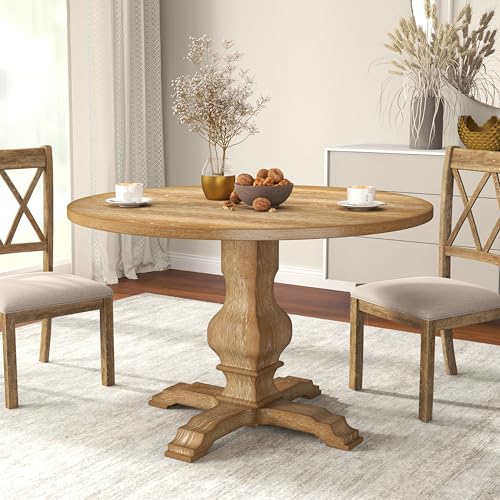
Roundhill Furniture Havre Pedestal Base Round Dining Table, Oak
Check price on Amazon
T4TREAM 47" Fluted Round Dining Table for 4-6, Natural Oak | round dining table, engineered wood construction, reeded pedestal base, mid-century modern, seats 4
Check price on Amazon
East West Furniture AVT-OAK-TP Avon Modern Kitchen Table - an Oval Dining Table Top with Butterfly Leaf & Pedestal Base, 42x60 Inch, Oak
Check price on Amazon