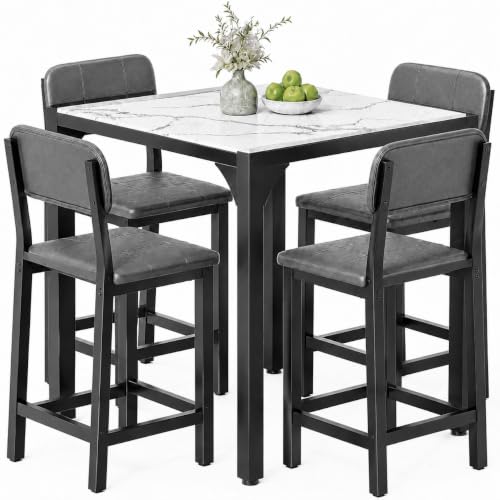
What Makes Grey Marble a Distinctive Dining Surface
Marble is a metamorphic stone formed when limestone recrystallizes under heat and pressure. Grey marble varieties — often quarried in Italy, Spain, Turkey, and parts of Asia — get their color from mineral inclusions such as graphite, pyrite, and iron oxides. The result is a surface with soft cloudy movement, subtle veining, and a natural depth that changes with the light throughout the day.
Compared with white marble, grey marble tends to show fewer dramatic veins and more uniform tonal variation. That quieter character makes it a versatile choice for dining rooms that already have patterned rugs, artwork, or wall treatments. It also tends to be more forgiving of everyday smudges and water marks than very light stone, though it still benefits from proper sealing and prompt cleanup.
Popular Grey Marble Varieties for Dining Tables
- Carrara grey: A classic Italian stone with soft grey veining on a lighter background. It suits both traditional and contemporary interiors.
- Fior di Bosco: A grey marble with a slightly warmer undertone and fine white veining, often chosen for elegant dining sets.
- Bardiglio: A deeper grey marble with distinct veining, well suited to statement tables and darker dining rooms.
- Pietra grey: A dense, uniform grey stone with minimal veining, popular for minimalist and modern dining designs.
- Grey Emperador: A darker grey-brown marble with dramatic veining, often used for luxury-tier table tops.
Each variety behaves slightly differently in terms of porosity, hardness, and stain resistance. If you are comparing stone options more broadly, the marble dining table guide covers the full range of marble types and their practical trade-offs.
Grey Marble Top vs. Full Marble Table: What to Expect
A "grey marble top dining table" usually refers to a table where the top slab is marble and the base is made from wood, metal, or a composite material. This construction offers the visual impact of stone while keeping the overall weight and structural demands more manageable than a solid marble table.
Marble Top vs. Solid Marble
A marble-topped table typically uses a thinner slab — often 2 cm to 3 cm thick — supported by a reinforced frame or apron. A solid marble table uses a thicker block and a heavier base. Marble tops are generally easier to move, more adaptable to different base styles, and more common in residential dining rooms. Solid marble tables are heavier, more permanent, and often associated with high-end or commercial-grade furniture.
If you prefer a fully stone-built table, look for descriptions that specify a solid marble slab. If you want flexibility in base design and easier handling, a marble-topped table is the more practical route. For a broader look at stone dining tables and matching chairs, see the stone dining table and chairs overview.
Choosing the Right Slab Thickness and Edge Profile
Slab thickness affects both the visual weight of the table and its durability. Common options for dining tables include:
- 2 cm slab: A lighter look, often paired with a reinforced frame. Suitable for everyday dining when properly supported.
- 3 cm slab: A balanced choice that feels substantial without being overly heavy. Common in mid-range and premium tables.
- 4 cm and above: A thicker, more monumental appearance, typically found in high-end tier and luxury tables.
Edge Profiles That Suit Grey Marble
The edge profile shapes how the table reads in the room. Popular options include:
- Straight polished edge: Clean and modern, ideal for contemporary dining rooms.
- Beveled edge: Adds a subtle decorative line and softens the transition from top to side.
- Bullnose edge: Rounded and comfortable, a good choice for family dining tables.
- Ogee edge: A traditional, sculpted profile that suits classic and transitional interiors.
- Live edge or rough edge: Less common with marble but available for rustic or organic design themes.
The dining table edge profile guide explains how each profile affects comfort, safety, and style — useful if you are deciding between a crisp modern look and a softer traditional finish.
Base Styles That Pair Well With a Grey Marble Top
The base you choose determines the table's visual weight, seating flexibility, and overall style. Grey marble tops pair well with several base families:
Pedestal Bases
A pedestal base keeps the leg area open, which makes seating easier and gives the table a sculptural presence. Grey marble on a pedestal base reads as elegant and contemporary. Explore pedestal dining table and four chairs configurations if you want a coordinated set.
Trestle and A-Frame Bases
Trestle bases add a slightly rustic or architectural character. They work well when the marble top has a softer, cloudier pattern. A barn dining table set with a stone top can blend farmhouse warmth with stone elegance.
Metal Bases
Blackened steel, brass, and chrome bases create strong contrasts with grey marble. A hairpin leg dining table with a marble top is a popular choice for modern and industrial interiors. For a more polished look, a glass and chrome dining table style base translated into metal can work with a stone top as well.
Wood Bases
Solid wood bases — especially oak, walnut, and ash — warm up the cool tone of grey marble. A wooden dining table and four chairs arrangement can be adapted with a marble top for a mixed-material look. If you prefer a darker palette, a dark brown pedestal dining table base with a grey marble top creates a refined contrast.
Sizing a Grey Marble Top Dining Table for Your Room
Marble tops are heavy, so sizing should be decided before purchase. Consider both the table dimensions and the clearance around it.
Seating Capacity Guidelines
| Seating | Recommended Top Size | Best For |
|---|---|---|
| 2 people | Round 30–36 in or square 30–32 in | Compact dining nooks, kitchens, apartments |
| 4 people | Rectangle 48–60 in or round 42–48 in | Standard family dining, small dining rooms |
| 6 people | Rectangle 60–72 in or round 54–60 in | Everyday family meals, modest entertaining |
| 8 people | Rectangle 72–96 in or round 60–72 in | Larger dining rooms, frequent hosting |
Allow at least 36 inches of clearance between the table edge and walls or other furniture to pull chairs in and out comfortably. For tighter spaces, consider a small dining table for patio style footprint or a dining table option for small spaces that uses a pedestal base to reduce leg obstruction.
Shape Considerations
Round and oval tops soften the visual weight of stone and improve flow in smaller rooms. A round marble dining table with chairs is a natural fit for square rooms and breakfast nooks. Rectangular tops maximize seating along walls and suit longer dining rooms. If you need flexibility for occasional guests, an 48-inch extendable round dining table can work with a marble-look top in some designs.
Sealing, Care, and Everyday Protection
Marble is porous, and grey varieties are no exception. Sealing is the most important maintenance step. Most marble tops come factory-sealed, but reapplication is typically needed every 6 to 12 months depending on use.
Sealing Basics
- Use a penetrating stone sealer, not a surface film product.
- Clean the surface thoroughly and let it dry before sealing.
- Apply a thin, even coat and buff off excess after the recommended dwell time.
- Test in an inconspicuous area first, especially on honed or matte finishes.
Daily Care
- Wipe spills promptly — especially wine, citrus, oil, and colored sauces.
- Use coasters and trivets for hot dishes and wet glasses.
- Clean with a pH-neutral stone cleaner and a soft cloth.
- Avoid acidic cleaners, vinegar, lemon, and abrasive pads.
- Use felt pads under decorative objects that could scratch the surface.
For a deeper routine, the marble dining table sealing guide covers sealant types, frequency, and troubleshooting. The dining table stain removal guide is useful for oil, wine, and water marks, while the dining table routine upkeep guide outlines a simple weekly and monthly schedule.
Strengths of Grey Marble Tops
- Cool, neutral tone that pairs with many color palettes
- Natural veining adds depth without overwhelming the room
- Hides subtle smudges better than very light stone
- Works with wood, metal, and upholstered seating
- Adds a refined, timeless character to dining spaces
Practical Considerations
- Requires sealing and prompt spill cleanup
- Heavy — needs a sturdy base and careful moving
- Can chip at edges if struck hard
- Cool surface — consider placemats for long meals
- Natural variation means each slab is unique
Styling a Grey Marble Top Dining Table
Grey marble is a neutral canvas. The styling approach depends on whether you want the stone to recede or stand out.
Color Palettes
- Warm neutrals: Pair with oak, rattan, linen, and soft beige upholstery to soften the stone.
- Monochrome: Combine with charcoal, black metal, and white ceramics for a modern, gallery-like look.
- Jewel tones: Deep green, navy, and burgundy chairs add richness against grey stone.
- Pastels: Soft blush, sage, and powder blue create a lighter, more relaxed dining mood.
Centerpieces and Table Linens
Keep centerpieces low enough for conversation. A simple runner, a bowl of fruit, or a small vase of seasonal branches often works better than a tall arrangement. The dining table centerpiece guide and dining table runner guide offer practical layout ideas. For a layered look, the dining table placemat guide explains how to mix textures without competing with the stone.
Chairs and Seating
Upholstered chairs soften the hardness of stone, while metal or wood chairs emphasize the table's architectural quality. A dining chair selection guide can help you balance comfort, style, and proportion. If you prefer bench seating on one side, the dining bench seating guide covers clearance and cushion considerations.
Grey Marble Top Dining Table Tiers: A Relative Comparison
Rather than focusing on specific figures, it helps to understand how grey marble tables differ across market tiers. The table below uses universal quality descriptors to compare construction and finishing expectations.
| Tier | Slab & Construction | Best For |
|---|---|---|
| Entry-level | Thinner veneer or composite core with a marble-look surface; simpler base construction | Occasional dining, rental spaces, first apartments |
| Mid-range | Genuine marble top around 2 cm, reinforced frame, dependable sealing | Everyday family dining, balanced durability and style |
| Premium | 3 cm marble slab, refined edge profiles, solid wood or heavy metal base | Frequent hosting, design-focused dining rooms |
| Luxury | Thick book-matched slab, hand-finished edges, custom base joinery | Statement dining rooms, long-term investment furniture |
| Commercial-grade | Dense slab, reinforced understructure, high-durability finish | Restaurants, hospitality spaces, heavy daily use |
Within each tier, the quality of the base and the sealing process often matter as much as the stone itself. A well-supported mid-range table with a solid frame can outperform a poorly finished higher-tier slab in everyday use.
Common Buying Mistakes to Avoid
- Ignoring base compatibility: A heavy marble top needs a base rated for its weight. Check the manufacturer's pairing recommendations.
- Skipping the moisture test: Before sealing, confirm the stone's porosity so you choose the right sealer type.
- Choosing thickness by look alone: A thin slab can be durable if properly supported, but it needs a well-engineered frame.
- Overlooking edge safety: Sharp edges look crisp but can be uncomfortable in family dining. Bullnose or eased edges are safer for daily use.
- Placing near heat sources: Marble can crack or discolor near radiators, fireplaces, or prolonged direct sun. Use window treatments where needed.
- Using the wrong cleaners: Acidic products etch the surface. Stick to pH-neutral stone cleaners.
The dining table buying mistakes guide covers additional pitfalls that apply across table types, including proportion errors and delivery planning.
Frequently Asked Questions
Yes, with proper sealing and routine care. Grey marble is durable and practical when spills are wiped promptly and hot items are placed on trivets. Families with young children may prefer a bullnose edge and a matte or honed finish to reduce visible scratches.
Most residential dining tables benefit from resealing every 6 to 12 months. High-use tables, or those near a kitchen with frequent spills, may need sealing more often. A simple water-bead test can indicate when reapplication is due.
Small chips at the edge can often be repaired by a stone specialist using color-matched epoxy. Larger chips or cracks may require more involved restoration. Prompt repair helps prevent moisture from entering the stone.
Marble is softer than granite or quartz, so it can scratch if abrasive items are dragged across it. Using placemats, felt pads, and a cutting board reduces the risk. Honed finishes tend to hide fine scratches better than polished surfaces.
Upholstered chairs in warm neutrals or jewel tones soften the stone, while metal or wood chairs emphasize its architectural quality. The key is to match chair height to table height and leave enough clearance for comfortable seating.
Most interior marble tops are not designed for full outdoor exposure. If you want a stone-look table for a patio, look for weather-rated stone or a porcelain composite designed for outdoor use. A covered porch offers more protection but still requires care.
A 2 cm marble top on a 72-inch table can weigh well over 100 pounds before the base is added. Always check the total weight and plan delivery and placement accordingly. Two people are usually needed for assembly and repositioning.
Yes. Grey marble pairs naturally with medium and dark wood tones, and it also works with lighter oak and ash floors. The contrast is softer with warm woods and more graphic with dark floors. Rugs can bridge the transition between stone and wood.