
Extra Tall Dining Table: The Complete Buyer's Guide
Everything you need to know about extra tall and high-top dining tables — heights, stability, seating pairing, materials, and styling — so you can choose an elevated dining setup with confidence.
EXPLORE RECOMMENDED TABLESWhy an extra tall dining table? Extra tall dining tables sit noticeably higher than standard and counter-height models. They are a smart fit for open-plan kitchens, breakfast bars, standing-friendly social spaces, and rooms where you want to visually separate the dining zone without adding walls. This guide explains the practical heights, structural requirements, stool pairing, and material choices that make an extra tall table comfortable and safe for everyday use.
What Counts as an Extra Tall Dining Table?
Dining tables are usually grouped by the distance from floor to tabletop. Understanding where extra tall models sit in that spectrum is the first step toward choosing the right one for your room and your household.
| Table Category | Typical Height Range | Best For |
|---|---|---|
| Standard dining table | 28–30 inches | Traditional dining rooms with standard chairs |
| Counter-height table | 34–36 inches | Casual kitchens and multipurpose family spaces |
| Bar-height table | 40–42 inches | Social dining, breakfast bars, and standing-friendly setups |
| Extra tall / specialty table | Above 42 inches | Standing dining, specialty commercial-style spaces, and viewing-height setups |
When most people search for an extra tall dining table, they mean a bar-height or elevated model in the 40 to 42 inch range. True specialty tables above that height exist, but they require careful stool selection and are usually reserved for standing-desk-style dining or homes with particularly tall users. For a more detailed height breakdown, see our guide on tall dining table height.
Why Choose an Extra Tall Dining Table?
Elevated dining tables are more than a design statement. They solve practical layout problems and change the way a room feels and functions.
- Visual separation without walls: A taller table creates a distinct dining zone inside an open-plan kitchen or living area without blocking sightlines.
- Standing-friendly socializing: Guests can gather, lean, and chat comfortably — ideal for entertaining or casual meals.
- Better views: In rooms with scenic windows, an elevated table lets seated guests enjoy the view above lower furniture or window sills.
- Space efficiency: Tall tables often pair with compact stools that tuck underneath, freeing up walkway space.
- Accommodates tall users: For households with above-average-height family members, an extra tall table can reduce the hunched posture common at standard-height tables.
Stability and Construction: What to Check
The higher a table stands, the more leverage it has to wobble. Extra tall dining tables therefore demand sturdier construction than standard-height models. When comparing options, focus on these structural details:
Base and Frame Design
- Wide pedestal bases: A broad, weighted pedestal lowers the center of gravity and resists tipping better than narrow legs.
- Cross-braced legs: X-braces or H-stretchers near the floor stiffen the frame and stop side-to-side sway.
- Reinforced aprons: Thicker aprons distribute weight more evenly across the top, especially important on long rectangular tables.
- Metal frames: Steel and aluminum frames offer high stiffness-to-weight ratios, which is why commercial-grade bar tables often use them.
Materials and Weight
Heavier tabletops — stone, solid hardwood, and thick engineered wood — add stability but require a base rated for the load. Glass tops are lighter and visually airy, but they need a well-engineered frame to prevent flex. A pedestal model with a weighted foot, such as a dark brown pedestal dining table, is a good example of how mass low in the structure improves steadiness.
Floor Protection and Leveling
Look for adjustable leveling glides on the feet. Extra tall tables amplify any unevenness in the floor, and small wobbles become noticeable quickly. Levelers also protect flooring and make it easier to stabilize the table after assembly.
Choosing the Right Seating for an Extra Tall Table
Seating is where most extra tall table setups succeed or fail. Standard dining chairs are too low, and mismatched stool heights create awkward posture. Pair your table with stools designed for its height tier.
| Table Height | Recommended Seat Height | Seat-to-Table Clearance |
|---|---|---|
| 40 inches | 28–30 inches (bar stools) | 10–12 inches |
| 42 inches | 30–32 inches (tall bar stools) | 10–12 inches |
| Above 42 inches | 32–34 inches (extra tall stools) | 10–12 inches |
Also consider footrests. On tall stools, a footrest reduces pressure on the legs and helps guests sit for longer meals. Backless stools save visual space, while low-back or full-back stools add comfort for longer dining sessions. If you are comparing fixed and adjustable options, an adjustable height dining table can bridge two height tiers and simplify stool matching.
Space Planning for Elevated Dining
Extra tall tables take up roughly the same footprint as standard tables, but the vertical volume changes how a room feels. Keep these spacing guidelines in mind:
- Walkway clearance: Leave at least 36 inches between the table edge and nearby walls or counters for comfortable circulation.
- Stool pull-out space: Allow 24 to 30 inches behind each stool so guests can slide in and out without squeezing.
- Lighting height: Pendant lights over a tall table should hang higher than over a standard table — typically 30 to 36 inches above the tabletop.
- Open sightlines: Because tall tables sit at eye level for standing guests, avoid placing them directly in front of focal points you want visible from the kitchen.
For rooms with limited floor area, consider a tall square model that seats a small group efficiently — a tall square dining table that seats 8 shows how vertical design can maximize seating in a compact footprint. If you are weighing standard versus tall configurations for a tight room, our roundup of dining table options for small spaces is a useful companion read.
Materials and Finishes for Extra Tall Tables
Material choice affects weight, stability, maintenance, and style. Here is how common options perform on elevated tables:
- Solid hardwood: Dense woods such as oak and walnut add mass and a premium feel. They resist flex well but are heavy to move — a solid wood drop leaf dining table shows how hardwood construction can stay practical in flexible layouts.
- Marble and stone: Stone tops bring luxury and weight that steadies tall frames. They need sealing and careful handling during moves. A round marble dining table with chairs illustrates how stone can anchor an elevated-looking dining zone.
- Glass: Tempered glass keeps tall tables visually light and easy to clean. Choose thicker glass and a rigid frame. A tall glass dining table is a good reference for how transparency changes the perceived height of a room.
- Metal and composite: Powder-coated steel and aluminum offer durable, low-maintenance surfaces that suit commercial-grade or outdoor-adjacent setups.
Finish matters too. Matte and oiled finishes hide fingerprints better on frequently touched edges, while gloss finishes reflect light and can make a tall table feel more dramatic. For outdoor-adjacent spaces, weather-resistant coatings extend lifespan — see how a small dining table for patio balances durability with compact size.
Styling an Extra Tall Dining Table
Elevated tables photograph beautifully, but they also sit closer to eye level, which changes how decor reads. Keep these styling principles in mind:
- Low-profile centerpieces: Because the tabletop is higher, tall vases can block sightlines. Choose low bowls, candle clusters, or a slim runner instead.
- Scale your stools visually: Slim-leg or open-frame stools keep the base from feeling crowded. Upholstered stools add warmth but should remain proportional.
- Anchor with a rug: A rug defines the dining zone and softens footfall around tall stools. Ensure the rug extends at least 24 inches beyond the table edge on all sides.
- Lighting as a feature: A linear pendant or a pair of pendants hung higher above the table emphasizes the elevated design and provides task light.
If you are building a cohesive look, our guide to modern glass extendable dining tables shows how contemporary lines and reflective surfaces work together in open-plan rooms.
Who Should Consider an Extra Tall Dining Table?
An extra tall table is not a universal fit, but it excels in specific situations:
- Open-plan homes where you want a dining zone that reads distinctly from the living area without physical barriers.
- Entertaining-focused households that prefer standing or leaning socializing over formal seated dinners.
- Tall households where standard-height tables cause knee discomfort or hunched posture.
- Kitchen-adjacent dining where a bar-height table doubles as a prep and gathering surface.
- Rooms with a view where elevated seating improves sightlines through windows.
Conversely, households with young children or elderly family members may prefer standard or counter-height tables for ease of access. For a middle-ground option, an extendable high top dining table combines elevated seating with flexible capacity.
Common Mistakes to Avoid
- Mismatched stool heights: Buying standard bar stools for a table above 42 inches leaves guests too low and uncomfortable.
- Ignoring stability: Choosing a tall table with a narrow base to save space often results in wobble and safety concerns.
- Overlooking lighting: Reusing standard pendant heights over a tall table can cause glare or blocked sightlines.
- Skipping the footrest: Backless or footrest-free stools on tall tables cause leg fatigue during longer meals.
- Underestimating clearance: Tight walkways around a tall table feel more cramped because the tabletop is at eye level when standing.
Comparing Extra Tall Dining Tables by Build Tier
Instead of focusing on numbers, compare models by their relative position in the market. The tier system below helps you align construction quality with your intended use.
| Tier | Typical Characteristics | Best For |
|---|---|---|
| Entry-Level | Lighter frames, basic bracing, simpler finishes | Occasional use, secondary dining zones, first-time buyers |
| Mid-Range | Reinforced aprons, better hardware, more stable bases | Daily family use and regular entertaining |
| Premium | Solid hardwood or stone tops, engineered bases, refined finishes | Primary dining tables in design-focused homes |
| Luxury | Flagship materials, precision joinery, bespoke detailing | Statement dining spaces and long-term investments |
As a general pattern, mid-range models usually offer noticeably smoother assembly tolerances and stiffer frames than entry-level options, while premium and luxury tiers add material richness and finer finishing. Matching the tier to how often and how heavily the table will be used is the most reliable way to choose well.
Recommended Extra Tall Dining Tables
⚠️ AFFILIATE DISCLOSURE: This website contains affiliate links. As an affiliate Associate, we earn from qualifying purchases. If you make a purchase through these links, we may receive a small commission at no additional cost to you. Read our full affiliate policy.

71-87 Inch Extendable Dining Room Table, Rustic Wooden Kitchen Table 6-10 | STHOUYN Expandable Dining Table, Farmhouse Rustic Style, Rectangular Wooden Top, Seats 6-10, Brown Kitchen or Dining Room
Check price on Amazon
Dining Table Set for 4,Kitchen Table and Chairs for 4, Round Dining Room Table with Upholstered Chairs, 5 Piece Space Saving Circle Wood Kitchen & Dining Room Dinner Dinette Table Set (Vintage, 42In)
Check price on Amazon
Garvee 78.7″ Dining Table for 8-10 People, Large Kitchen Table (Only Table) | Brown Industrial Dinner Table with Heavy-Duty Steel Frame and High-Density MDF Thick Tabletop for Kitchen, Dining Room
Check price on Amazon
DUMOS Dining Table Set for Kitchen, Apartment and Corner Grey 3 Pack | Space-Saving Ideal, Easy Clean, Scratch Resistant, Robust Iron Frame, Anti-slip Feet Pad, Living Room, Patio
Check price on Amazon
Plank+Beam Classic 72 Inch Dining Table, Rectangular, Pecan Wirebrush | Non-Toxic Finishes, Versatile Design, Farmhouse Design, Elegant Details, Easy Assembly, Quick Setup, Solid Wood
Check price on Amazon
Garvee 71" Wood Dining Table for 2/4/6/8, Large Rectangular Kitchen Table | Anti-Collision Curved Corner Dinner Table with Recessed Footrest for Dining Room, Study & Home Office, Walnut Brown & Black
Check price on Amazon
Tribesigns 63" Dining Table for 4 to 6, White and Gold Kitchen Table | Modern Large Rectangular Dinner Table Kitchen & Dining Room Furniture with Faux Marble Tabletop and Geometric Legs
Check price on Amazon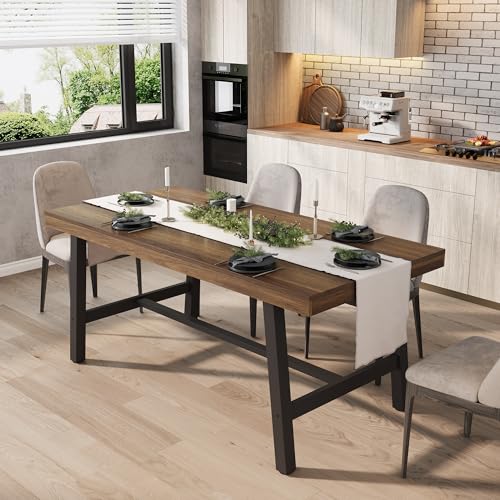
GarveeHome Industrial Dining Table for 4-6 People, 63" Long Large Kitchen Table with Sturdy Metal Frame, Rectangular Counter for Dinner, Kitchen, Dining Room (Brown, 63" Non-extendable)
Check price on AmazonFrequently Asked Questions
What height qualifies as an extra tall dining table?
Standard dining tables sit around 28 to 30 inches high. Counter-height tables measure roughly 34 to 36 inches, while extra tall or bar-height dining tables typically rise from 40 to 42 inches. Anything above that range is generally considered a specialty extra tall table, often paired with adjustable or tall stools.
How much legroom should an extra tall dining table provide?
Aim for at least 12 inches of clearance between the seat of your stool and the underside of the tabletop, plus 15 to 18 inches of knee room. Extra tall tables often need deeper aprons or open-frame bases to keep legs comfortable.
Are extra tall dining tables stable enough for daily use?
Yes, provided the base is engineered for the increased height. Look for wide pedestal footprints, cross-braced legs, or reinforced metal frames. High tables benefit from a lower center of gravity, so heavier bases and floor-level stretchers improve stability considerably.
What stool height pairs with an extra tall dining table?
Bar-height stools usually measure 28 to 30 inches from floor to seat and pair with 40 to 42 inch tables. For taller specialty tables, extra tall stools in the 30 to 34 inch range work best. Always leave about 10 to 12 inches between seat and tabletop.
Can an extra tall dining table work in a small room?
Yes, especially when paired with backless or slim stools that tuck underneath. The vertical design draws the eye upward and can make a compact room feel more open. Just maintain at least 36 inches of walkway clearance and choose a footprint that leaves room for stools to pull out.
Ready to Choose Your Extra Tall Dining Table?
Use the recommended tables above to compare build tiers, then match your choice to the height, seating, and stability needs covered in this guide.
VIEW RECOMMENDED TABLES