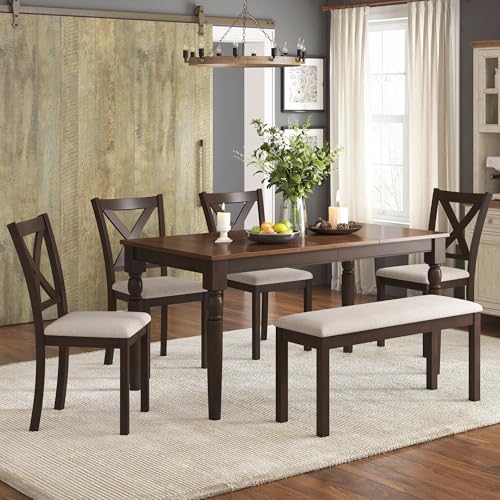
What Is a Wood Dining Table with Bench?
A dining table with bench wood setup pairs a solid or engineered wood tabletop with one or more long wooden benches used as seating. Instead of four individual chairs on the long sides, a bench runs the full length of the table, creating a clean, unified silhouette. Many families add chairs at the head and foot of the table so the set mixes bench seating with conventional chairs.
This combination is popular in farmhouse, rustic, Scandinavian, and modern-minimal interiors because it solves two common problems at once: it maximizes seating in a compact footprint, and it gives the dining area a relaxed, communal character. If you are planning a full room refresh, our broader guide to dining room table sets with six chairs shows how bench-and-chair combinations scale up to larger families.
Why Choose a Bench Over Chairs?
Benches are not just a stylistic choice. They change how a dining space functions day to day. Here is what you gain when you choose a bench instead of a full chair set:
- Space efficiency: A bench tucks completely under the table, so the footprint stays tight even in narrow rooms.
- More seating per side: A bench that is 60 to 72 inches long can seat two to three adults, which is more than two chairs on the same span.
- Cleaner visual line: The horizontal line of the bench grounds the table and makes the room feel calmer.
- Kid-friendly: Children slide along a bench easily, and there are no individual chair legs to trip over.
- Design flexibility: A bench can double as a hallway seat or a window bench when the table is not in use.
If you need a set that seats a larger group, our guide to a large wood dining table that seats eight explains how bench length and table dimensions work together at bigger sizes.
Wood Species: Which One Belongs in Your Home?
The wood species determines hardness, grain character, color, and how the set ages. Each option below is described by its position in the market so you can align the choice with your expectations.
| Wood Type | Market Tier | Best For | Notes |
|---|---|---|---|
| Oak | Mid-range to premium | Busy family homes | Hard, dense grain; holds up to daily wear and resists dents well. |
| Walnut | Premium to luxury | Formal dining rooms | Rich chocolate tone with smooth grain; needs gentle care to avoid fading. |
| Teak | Premium | Humid climates | Natural oils resist moisture; ideal for coastal or tropical settings. |
| Mango Wood | Entry-level to mid-range | Eco-conscious buyers | Fast-growing and renewable; distinctive grain with a warm, rustic look. |
| Pine | Entry-level | Starter homes and rentals | Soft and light; best for lighter use and painted or distressed finishes. |
For a deeper look at the most popular option, our solid oak pedestal dining table guide explains how oak behaves in a pedestal configuration, which is a common pairing for bench seating in open-plan rooms.
Sizing the Set: Table, Bench, and Seating Capacity
Getting the dimensions right is the single most important step. A bench that is too short leaves awkward gaps, and a bench that is too long blocks the table ends. Use these practical rules when planning:
- Bench length: Allow 24 inches of bench length per adult. A 60-inch bench seats two comfortably, a 72-inch bench seats three.
- Seat depth: 14 to 16 inches is the sweet spot. Deeper than 17 inches and shorter adults will struggle to reach the table.
- Seat height: For a standard 30-inch table, the bench seat should sit at 17 to 19 inches, leaving 10 to 12 inches of clearance between seat and tabletop.
- Table overhang: A 12 to 15 inch overhang on the long side lets bench users sit with their knees under the table.
- End chairs: If you add chairs at the head and foot, leave at least 12 inches of clearance behind them for pulling out.
For counter-height rooms, the math changes. Our guide to a solid wood dining table at counter height explains how to pair a taller bench with a counter-height tabletop.
Bench Styles That Pair With Wood Tables
Not every bench suits every table. The right match depends on the tabletop shape, the room's architecture, and how you want the space to feel.
Backless bench
The most versatile and the most space-efficient. A backless bench slides fully under the table, so the dining area looks tidy between meals. It is the classic choice for farmhouse and rustic setups and works especially well in narrow rooms where every inch counts.
Bench with backrest
Better for long dinners and for older family members who need support. A backrest bench feels more like a sofa seat and is often chosen for open-plan kitchens where the dining bench doubles as extra living-room seating.
Upholstered bench
A wood frame with a cushioned seat and back adds softness to a hard-edged wood table. It is a strong pick for formal dining rooms and for anyone who finds a bare wooden seat uncomfortable over a two-hour meal.
Storage bench
A bench with a lift-up seat or drawers stores linens, board games, or serving pieces. This is a smart choice for compact apartments where every piece of furniture needs to earn its floor space.
Corner bench (L-shaped)
An L-shaped corner bench wraps around two sides of the table and turns a dining nook into a cosy banquette. This works best with square or round tables. Our 60-inch square dining table guide shows how a square top pairs with a corner bench.
Table Shapes and Bench Pairings
The shape of the tabletop dictates which bench arrangement feels natural.
- Rectangular tables: The classic pairing. Benches run along both long sides, with chairs at the ends. This is the most common bench dining setup.
- Square tables: A bench on one side and two chairs on the other, or a corner bench wrapping two sides.
- Round tables: Benches are less common here because the curve leaves gaps, but a curved bench can work beautifully. Our 40-inch round pedestal dining table guide covers compact round options.
- Glass tables: A wood bench under a glass top creates a striking contrast. See our guide to a rectangular tempered glass dining table for pairing ideas.
Finish and Style Directions
The finish decides whether the set reads as rustic, modern, or formal. Consider these directions:
- Natural oil finish: Highlights the grain and feels warm. Best for oak, walnut, and teak.
- Matte lacquer: Protects the wood and gives a clean, contemporary look. Easy to wipe down.
- Distressed or whitewashed: Emphasises texture and suits farmhouse and coastal interiors.
- Two-tone: A dark tabletop with a lighter bench base (or the reverse) adds visual interest without clutter.
If you like the contrast of mixed materials, our rectangular counter-height glass dining table guide explores how wood benches pair with glass tops at taller heights.
Comfort and Ergonomics: The Details That Matter
A bench can be supremely comfortable or surprisingly awkward, and the difference comes down to a few measurable details.
- Seat depth of 14 to 16 inches supports the thighs without cutting into the back of the knees.
- Seat height of 17 to 19 inches for a 30-inch table keeps the forearms level with the tabletop.
- A slight seat bevel (a gentle downward slope at the front edge) reduces pressure on the legs during long meals.
- A backrest is worth considering if anyone in the household is over 60 or has back issues.
- Cushions add comfort but raise the effective seat height, so account for that when sizing.
Durability and Everyday Care
Wood is forgiving but not indestructible. A bench dining set sees daily use, so a little routine care goes a long way.
- Wipe spills promptly with a soft, slightly damp cloth, then dry immediately.
- Use coasters and placemats to protect the finish from heat and moisture rings.
- Re-oil or re-wax oiled finishes once or twice a year to keep the grain sealed.
- Keep the set away from direct sunlight and heating vents to prevent uneven fading and cracking.
- Check the bench joints every few months and tighten any bolts or screws that have loosened.
For a complete maintenance routine, our dining table care and maintenance hub covers everything from seasonal deep cleaning to scratch touch-ups.
Common Mistakes to Avoid
- Buying a bench that is too deep. Anything over 17 inches makes it hard for shorter adults to sit back comfortably.
- Ignoring the table overhang. A short overhang means bench users cannot tuck their knees under the table.
- Mismatching wood tones. A bench in a very different wood tone from the table can look accidental rather than intentional.
- Skipping the end chairs. Without chairs at the ends, the set feels incomplete and the table looks under-seated.
- Overlooking storage. If the room is small, a storage bench is a smarter pick than a plain backless bench.
Who Should Buy a Wood Table with Bench?
This setup suits specific households better than others. Consider a bench dining set if you:
- Have a family with children who need easy, safe access to the table.
- Entertain often and want flexible seating that can squeeze in an extra guest.
- Live in a compact home where a bench that tucks under the table saves walkway space.
- Prefer a relaxed, informal dining atmosphere over a formal chair-only setup.
- Want a piece that can double as extra seating in an open-plan living area.
If you prefer a fully coordinated set with matching chairs, our guide to a dining table with chairs and bench set covers the hybrid approach that many families choose.
Extendable and Flexible Options
If your guest count changes from week to week, an extendable table paired with a bench gives you the best of both worlds. When the leaves are stored, the set is compact; when guests arrive, the table stretches and the bench slides along to seat more people. Our guide to an Amish dining table with self-storing leaves explains how a self-storing leaf mechanism keeps the extra surface out of the way when it is not needed.