
Dining Table Sofa Bench: The Complete Buying and Pairing Guide
Discover how a sofa bench transforms dining seating into a comfortable, space-smart, and sociable experience for everyday meals and gatherings.
START READINGWhy a sofa bench deserves a place at your table: A dining table sofa bench blends the relaxed comfort of living-room seating with the shared, communal feel of a dining bench. For households that entertain often, have children, or simply want a more inviting dining room, a sofa bench can be the single upgrade that changes how the room feels and functions.
What Is a Dining Table Sofa Bench?
A dining table sofa bench is a long upholstered seat designed to sit alongside a dining table. Unlike a plain wooden bench, a sofa bench includes cushioned padding and often a low backrest, delivering the comfort of a compact sofa while retaining the clean, space-efficient profile of a bench. It is the natural bridge between dining seating and lounge seating.
Most sofa benches seat two to three adults comfortably. They are commonly paired with rectangular and oval tables, placed on the long side facing a row of chairs or a matching bench on the opposite side. This mixed seating arrangement is popular because it breaks the visual repetition of a full chair set and creates a friendlier, more relaxed dining atmosphere.
Sofa benches also solve a familiar problem: dining chairs can feel formal and rigid, especially in open-plan kitchens and living areas. A bench invites people to linger, makes room for an extra guest, and visually softens the dining zone. If you are furnishing a compact apartment, a bench tucked under the table also frees up floor space between meals — a strategy explored in our guide to small apartment dining tables.
Sofa Bench vs. Standard Dining Bench vs. Dining Chairs
Before committing to a seating plan, it helps to understand how the three main options differ in comfort, footprint, and flexibility.
| Seating Type | Comfort Profile | Space Behavior | Best For |
|---|---|---|---|
| Sofa bench (upholstered) | High — cushioned seat, optional backrest | Fixed footprint, tucks neatly under the table | Families, entertainers, relaxed dining rooms |
| Standard wooden bench | Moderate — firm, supportive | Very compact, slides fully under the table | Casual farmhouse and rustic setups |
| Dining chairs | Moderate to high — individual support | Flexible, but each chair needs clearance | Formal dining rooms, mixed guest counts |
A sofa bench generally offers the most comfort per linear foot of seating. A plain wooden bench is the most space-efficient. Chairs remain the most flexible for rearranging. Many well-designed dining rooms combine all three: a sofa bench on one long side, chairs on the other, and end chairs for the heads of the table.
Types of Dining Table Sofa Benches
Sofa benches come in several constructions, each suited to a different room and lifestyle. Use the tier descriptors below as a general guide to market positioning rather than an absolute ranking.
Upholstered Backless Bench
The most common sofa bench style. It has a thick padded seat but no backrest, so it slides completely under the table and keeps sightlines open. Backless benches are ideal for open-plan rooms where you want the dining area to feel uncluttered. Look for a mid-range or premium model with high-density foam and a reinforced frame for daily use.
Upholstered Bench with Backrest
This style behaves almost like a small sofa. The backrest adds comfort for longer meals and gives the dining room a lounge-like character. Because the backrest adds height and depth, measure carefully: a bench with a backrest cannot slide fully under the table and needs more clearance behind it. This style is a strong choice for a dedicated dining room or a large kitchen with an island-style layout, such as those discussed in our island-style dining table guide.
Storage Sofa Bench
A bench with a lift-up seat or drawers underneath. It is a smart pick for smaller homes because it hides table linens, board games, or seasonal decor. Storage benches are typically a bit heavier, so confirm the hinge quality and that the bench height still works with your table. Pair one with a table that also offers built-in storage — our guide to a dining table with storage drawers shows how the two work together.
Corner and L-Shaped Sofa Bench
An L-shaped bench wraps around two sides of the table, creating a cozy banquette effect. This is a highly efficient layout for a corner or a small dining nook, and it pairs naturally with a corner dining table arrangement. Corner benches maximize seating in tight footprints but are less flexible if you like to rearrange furniture.
Convertible and Multi-Use Benches
Some benches double as a low console or a window seat. These hybrid pieces suit studio apartments and multi-purpose rooms. If your dining area shares space with a living zone, a convertible bench keeps the room adaptable.
How to Pair a Sofa Bench with the Right Dining Table
The bench–table relationship matters more than the bench alone. Three measurements drive a successful pairing: table height, bench seat height, and clearance.
Match Seat Height to Table Height
Standard dining tables are around 30 inches high. A sofa bench seat should sit roughly 17 to 19 inches from the floor, leaving about 10 to 12 inches between the seat and the table apron. This is the same comfort zone that applies to chairs, explained in detail in our ideal height for a dining table guide. If you choose a counter-height table, the bench must be a matching counter-height bench; standard dining benches will feel far too low.
Choose a Bench Length Proportional to the Table
As a rule, a bench should span about two-thirds to three-quarters of the table's length, or roughly 24 inches of seat width per person. On a 60-inch rectangular table, a 48- to 54-inch bench seats two to three people comfortably. Oversized benches crowd the ends and block chair placement.
Respect Clearance Behind and Around the Bench
Leave 12 to 15 inches between the table edge and the bench seat for legroom, and 30 to 36 inches of walkway behind the bench. If the bench has a backrest, add its depth to the behind-bench clearance. In tight rooms, a backless bench is the safer choice because it disappears under the table between meals.
Coordinate Materials and Finishes
A sofa bench does not need to match the table exactly, but it should share a visual language. An upholstered bench in a neutral fabric works with a solid wood folding dining table or a faux marble oval dining table alike. For a warmer, more textured look, consider a bench paired with a barnwood dining table set or a boho farmhouse dining table. Keep leg finishes consistent — for example, a gold dining table pairs well with benches that have slim metal legs in a similar tone.
Sofa Bench Seating Layouts That Work
How you arrange the bench changes the entire feel of the room. These are the four layouts that consistently perform well in real homes.
One Bench, Chairs Opposite
The classic setup: a sofa bench on the long side facing the room, with dining chairs on the opposite side. It balances comfort and formality and works in almost any rectangular dining room. This is the easiest starting point if you are upgrading from an all-chair set.
Bench + Bench
Two facing benches create a pub-like, communal feel and allow the table to be pushed against a wall when not in use. A bench-and-bench layout works best with backless designs and is popular in farmhouse and cottage interiors, such as those built around a cottage dining table set.
Sofa Bench + Chairs + End Chairs
A bench on one side, two chairs on the other, and a chair at each end. This maximizes seats around a 60-inch rectangular table or larger and is the most flexible arrangement for households that host mixed groups.
Bench in a Corner Nook
An L-shaped bench in a corner, with chairs on the open sides, turns a forgotten corner into a breakfast nook. This is an efficient solution for a small dining room table and pairs especially well with a drop-leaf square dining table that can expand when guests arrive.
Choosing Upholstery: Fabric, Leather, and Performance Textiles
The upholstery determines how the bench looks, feels, and holds up. Match the fabric to the household, not just the color palette.
- Performance fabric (top-tier for families): Stain-resistant, wipeable, and often bleach-cleanable. The most practical choice for homes with children or pets.
- Linen and cotton blends (mid-tier): Breathable and naturally textured. Best for adults-only households or low-traffic dining rooms.
- Leather and faux leather (premium tier): Wipe-clean and very durable. Leather develops character over time but can feel cool at first and may need conditioning.
- Velvet and boucle (luxury tier): Rich and tactile, ideal for statement dining rooms, but more demanding to maintain.
Seat cushion density matters as much as fabric. High-density foam with a fiber wrap holds its shape; low-density foam flattens quickly. A bench rated for daily use should use a reinforced hardwood or metal frame rather than particleboard alone.
Sofa Bench Size and Capacity Guide
Use this table to estimate seating before you measure your room. The figures assume a standard 30-inch dining table and a bench with a standard seat depth of 15 to 18 inches.
| Bench Length | Comfortable Seats | Typical Table Match | Best For |
|---|---|---|---|
| 36–42 in | 2 | 30–36 in round or square table | Compact apartments, breakfast nooks |
| 48–54 in | 2–3 | 48–60 in rectangular table | Small families, everyday dining |
| 60–72 in | 3–4 | 60–72 in rectangular or oval table | Open-plan dining rooms, entertainers |
| 84 in and up | 4–5 | 84 in and larger tables | Large dining rooms, formal hosting |
For very tight spaces, a two-seat bench combined with a 2-seater dining table or a 30-inch round dining table set keeps the room functional without feeling crowded.
Comfort and Ergonomics Checklist
A sofa bench is only worthwhile if it is genuinely comfortable to sit on for a full meal. Check these points before buying:
- Seat depth: 15 to 18 inches is the sweet spot. Deeper seats push guests away from the table.
- Seat height: 17 to 19 inches for a standard table; match the table height for counter or bar setups.
- Cushion density: High-density foam that springs back when pressed. Avoid visibly thin padding.
- Edge comfort: A waterfall or bullnose front edge prevents pressure behind the knees.
- Footrest: Some benches include a built-in footrest or stretcher, which improves posture at taller tables.
- Backrest angle: If the bench has a back, a slight recline is more comfortable than a vertical one.
If you plan to use the bench with a taller table, review the clearance and posture notes in our 32-inch high dining table guide and ideal dining table height guide before finalizing the pairing.
Care and Maintenance for Upholstered Benches
An upholstered bench sits at the center of spills, crumbs, and daily traffic. A simple routine keeps it looking fresh for years.
- Vacuum the seat and crevices weekly with a soft brush attachment.
- Blot spills immediately; never rub, which pushes stains deeper into the weave.
- Apply a fabric protector at purchase and reapply as directed.
- Rotate removable cushions and flip them where possible to even out wear.
- Keep the bench out of direct sun to slow fading.
- Use a bench pad or fitted slipcover in high-traffic households or during holidays.
- Tighten leg and frame bolts every few months to prevent wobble.
For more detailed routines, see our dining table care and maintenance hub, which covers fabric care, frame checks, and seasonal upkeep that also apply to upholstered benches.
Sofa Bench in Small Spaces and Open-Plan Rooms
In a small dining room, a sofa bench is often the most efficient seat in the house. It holds two to three people in a footprint that would otherwise fit one chair and a walkway. Sliding it under the table between meals reclaims floor space, and because it has no individual armrests, it visually reads as lighter than a row of chairs.
The bench also works as a room divider in open-plan layouts. A bench placed on the living-room side of a dining table can signal the boundary between zones without a wall. In this setting, choose a bench with a finished back so it looks good from both sides. A bench paired with a wall dining room table or a small wall dining table can turn a hallway or alcove into a functional dining spot.
For an apartment, combine a compact bench with a folding butterfly dining table or a round folding dining table for four. When the table folds away, the bench can double as a window seat or entryway perch. Our small dining table guide and apartment dining table and chairs guide explore related space-saving combinations.
Sofa Bench and Sofa: What Is the Difference in a Dining Room?
A true sofa is built for lounging: deep seat, generous back, soft cushions, and usually a footprint of 30 inches or more in depth. A dining sofa bench is shallower and firmer, designed for upright sitting at a table. In practice, the terms overlap, and some buyers use a small loveseat as a dining bench in casual, open-plan rooms.
If you go that route, keep three things in mind. First, seat height still needs to match the table. Second, a standard sofa depth leaves less walkway behind it, so measure the room carefully. Third, upholstery should be durable enough for dining. For most households, a purpose-built sofa bench is the safer choice; a loveseat works best in a large, relaxed dining room where the bench faces a living area.
Tier Guide: What to Expect at Each Level
The market for dining table sofa benches spans a wide range of construction quality. This guide uses a single, consistent tier system to help you compare options on features rather than figures.
| Tier | Typical Build | Comfort Features | Best For |
|---|---|---|---|
| Entry-level | Particleboard or mixed-wood frame, basic foam | Fixed cushion, simple fabric | Occasional use, starter homes, staging |
| Mid-range | Hardwood or metal frame, denser foam | Removable cushion, better fabric options | Daily family dining |
| Premium | Reinforced hardwood frame, pocket-spring or high-density foam | Performance fabric, refined stitching, storage options | Heavy daily use, entertaining |
| Luxury | Kiln-dried hardwood, mortise-and-tenon joinery | Designer upholstery, down-blend or tailored cushions, custom sizing | Statement dining rooms, long-term investment |
In general, a mid-range bench offers noticeably better frame stability and cushion longevity than an entry-level model, while premium and luxury benches add performance textiles and finer joinery. The best value for most households sits in the mid-range and premium tiers, where the bench is well-specified for daily meals without paying for bespoke construction.
Recommended Dining Table Sofa Bench Picks
⚠️ AFFILIATE DISCLOSURE: This website contains affiliate links. As an affiliate Associate, we earn from qualifying purchases. If you make a purchase through these links, we may receive a small commission at no additional cost to you. Read our full affiliate policy.

Andeworld Modern Loveseat Settee Bench Sofa Couch, Linen Fabric, Putty | Upholstered Banquette Dining Bench with Back for Dining Living Room Hallway or Entryway Seating
Check price on Amazon
Breakfast Nook Table Set, Farmhouse 5-Piece Round Dining Table Set with Bench Seating, 47" Kitchen Nook Furniture for 4-6 People, Wood Dining Nook Set for Small Spaces (Grey, Natural Round table)
Check price on Amazon
Christopher Knight Home Damas 60.04" Fabric Upholstered Dining Bench, Wooden Entryway Bench, Long Sofa Footstool for Living Room, Bedroom End of Bed Bench, Olive Green+Walnut
Check price on Amazon
Christopher Knight Home Wally Boucle Upholstered Dining Bench, Modern Large Dining Room Chair, Entryway Ottoman Bench, Bedroom End of Bed Seating, Armless Desing and Wooden Frame, Light Gray+Natural
Check price on Amazon
HIPIHOM Dining Table Set with Bench, Grey Table with Grey Left Seat Bench | 42.9 Inch MDF Tabletop with Corner sofa and 43.3 In Bench, Metal Legs for Family Dining Room Furniture, Apartment
Check price on Amazon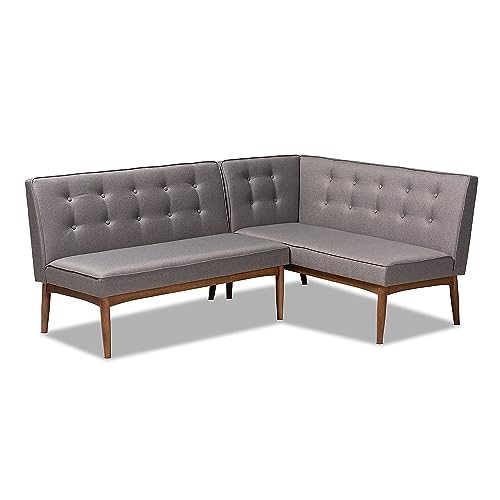
Baxton Studio Arvid Mid-Century Modern Gray Fabric Upholstered 2-Piece Wood Dining Corner Sofa Bench
Check price on Amazon
Andeworld Modern Loveseat Settee Bench Sofa Couch, Faux Leather,White | Upholstered Banquette Dining Bench with Back for Dining Living Room Hallway or Entryway Seating
Check price on AmazonCommon Mistakes to Avoid
Most sofa bench regrets come down to measurement and material mismatches. Watch for these pitfalls:
- Buying before measuring the table height. A bench that is too low or too high ruins the dining experience.
- Choosing a backrest bench for a tight room. It cannot slide under the table and needs extra clearance behind it.
- Ignoring upholstery durability. A beautiful linen bench in a household with toddlers will not stay beautiful for long.
- Oversizing the bench. A bench that spans the full table length crowds end chairs and blocks access.
- Skipping the walkway check. Always leave 30 to 36 inches behind the bench for chairs and traffic.
- Forgetting the table apron. Thick aprons reduce knee clearance and may require a lower bench seat.
Frequently Asked Questions
What is a dining table sofa bench?
A dining table sofa bench is a long, upholstered seating piece that pairs with a dining table, combining sofa-like comfort with bench-style shared seating. It typically seats two to three people on one side of the table.
How much clearance do I need between the sofa bench and the dining table?
Aim for 12 to 15 inches between the bench seat edge and the table edge so guests can slide in and out comfortably, plus 30 to 36 inches of walkway behind the bench.
Can a sofa bench be used with a rectangular dining table?
Yes. A sofa bench works especially well on the long side of a rectangular or oval table, with chairs on the opposite side and at the ends. This is the most common and flexible layout.
How many people does a sofa bench seat?
As a general guide, a 36–42 inch bench seats two, a 48–54 inch bench seats two to three, a 60–72 inch bench seats three to four, and an 84 inch or longer bench seats four to five.
How do I protect an upholstered dining bench?
Choose stain-resistant or performance fabric, apply a fabric protector, blot spills immediately, vacuum weekly, and rotate removable cushions. A bench pad or slipcover adds extra protection in high-traffic homes.
Is a sofa bench comfortable for long meals?
Yes, if it is well made. Prioritize high-density foam, a supportive frame, a comfortable seat height, and an optional backrest for longer dinners and entertaining.
Can I mix a sofa bench with dining chairs?
Absolutely. Mixing a bench on one side with chairs on the other, plus end chairs, is one of the most popular and practical dining layouts. It balances comfort, flexibility, and style.
Final tip: Buy the bench after you have measured your table height, table length, and walkway clearance. A sofa bench is a long-term seating investment — choose the tier and upholstery that match how often you actually dine, and it will serve your household for years. When you are ready, review the recommended picks above and compare features on the retailer page.