
Dining Table and Buffet Set: The Complete Buyer's Guide
A coordinated dining table and buffet set turns an ordinary dining room into a functional, welcoming space. Learn how to pair sizes, materials, and styles so your dining room works as beautifully as it looks.
Explore Recommended SetsWhy this guide matters: Most buyers start by choosing a table, then realize the room still lacks serving space and storage. A buffet solves both problems, but only when it is matched to your table's proportions, finish, and walkway clearance. This guide walks you through every decision so you can buy once and buy right.
What a Dining Table and Buffet Set Includes
A dining table and buffet set pairs two complementary pieces of furniture: the table where meals are shared, and the buffet (also called a sideboard or server) that provides serving surface and concealed storage. Together they form the functional backbone of a dining room.
The table anchors the room and determines seating capacity. The buffet handles everything the table cannot: extra plates, glassware, linens, serving dishes, and a landing spot for food during gatherings. When the two pieces are chosen as a set, they share proportion, finish, and detailing, which gives the room a deliberate, finished feel rather than a collection of unrelated items.
Some sets include chairs, while others focus on the table and buffet pairing. If you are building a full room, start with the table size, then select a buffet that leaves generous walkway clearance before adding seating. Our kitchen dining table set guide is useful if your room doubles as an eat-in kitchen.
Why Buy a Coordinated Dining Table and Buffet Set
Matching furniture is not just an aesthetic choice. A coordinated set delivers practical advantages that become obvious once the room is in daily use.
- Visual cohesion: Shared wood tones and hardware create a calm, unified room without extra styling effort.
- Proportional harmony: Sets are designed so the buffet height and table height relate comfortably, avoiding awkward scale mismatches.
- Serving efficiency: A buffet near the table shortens the path between food and diners during meals and entertaining.
- Hidden storage: Drawers and cabinets absorb clutter that would otherwise end up on the tabletop.
- Simplified buying: Choosing a set removes guesswork from matching finishes across separate purchases.
If you are still deciding on the table itself, our 6-8 person dining table set guide explains how seating capacity affects table dimensions and room requirements.
Sizing the Table and Buffet Together
Size is where most dining room purchases succeed or fail. The table and buffet must be sized as a pair, not in isolation. Start with the table, because it dictates seating and the central footprint of the room.
Table sizing basics
- Allow roughly 24 inches of table width per seated diner for comfortable place settings.
- A rectangular table for six typically runs around 60 to 72 inches long.
- Round tables suit compact rooms and encourage conversation; a round 4-seater dining table and chairs is a strong starting point for smaller households.
- Extendable tables add flexibility for holidays and guests without permanently occupying floor space.
Buffet sizing basics
- Buffet width should generally fall between 40 and 70 percent of the table length to keep the room balanced.
- Standard buffet depth is around 16 to 20 inches; shallower units preserve walkway space in narrow rooms.
- Buffet height typically sits around 30 to 36 inches, with the top surface serving as a comfortable standing work area.
| Room Type | Suggested Table Size | Suggested Buffet Width | Best For |
|---|---|---|---|
| Compact dining nook | Round, 36 to 42 inches | Narrow, up to 40 inches | Small households, apartments |
| Standard dining room | Rectangular, 60 to 72 inches | 48 to 60 inches | Families of four to six |
| Formal dining room | Rectangular, 72 to 84 inches | 60 to 72 inches | Entertaining and hosting |
| Open-plan space | Extendable or large round | Counter-height or double-wide | Multi-use living areas |
For rooms that need to seat larger groups, an extendable 10-person dining table paired with a long buffet creates a hosting-ready setup without sacrificing everyday comfort.
Choosing Matching Materials and Finishes
Material consistency is the fastest route to a cohesive room. You do not need identical pieces, but the dominant material and finish should repeat across the table and buffet.
Solid wood
Solid wood remains the most durable and repairable option. Oak, walnut, teak, and mango each carry distinct grain patterns and tones. Matching the species across the table and buffet keeps the room unified, while a slight sheen difference adds subtle depth. Solid wood sits at the premium and luxury tiers and rewards long-term care.
Wood veneer and engineered wood
Veneer constructions offer consistent grain and stable surfaces at the mid-range and entry-level tiers. They pair well with solid wood tables when the finish color is closely matched. Look for reinforced edges and quality joinery to extend service life.
Stone and glass tops
A marble or glass tabletop can be paired with a wood buffet to balance cool and warm surfaces. This contrast works especially well in modern and transitional rooms. A large white round dining table paired with a natural wood buffet is a classic example of this mixed-material approach.
Metal and mixed media
Metal frames and hardware tie separate pieces together. If the table has black steel legs, repeating black hardware on the buffet creates a visual thread. Industrial and modern farmhouse styles lean heavily on this technique.
Entry-level tier
Engineered wood with laminate or veneer surfaces. Suitable for light use and renter-friendly setups.
Mid-range tier
Veneer over solid core with reinforced joinery. A balanced choice for daily family use.
Premium tier
Solid hardwood construction with quality hardware and hand-finished surfaces.
Luxury tier
Heirloom-grade hardwoods, stone tops, and bespoke detailing built for decades of use.
Style Pairings That Work
Style coordination is about shared design language rather than identical pieces. Match the room's mood, then let one element lead.
Rustic and farmhouse
Distressed finishes, visible grain, and sturdy legs define this pairing. A black rustic dining table set pairs naturally with a dark-stained buffet featuring iron hardware. Our French country style dining table guide covers a softer, more refined variation of this aesthetic.
Modern and contemporary
Clean lines, minimal ornament, and matte finishes dominate. Choose a buffet with handleless drawers or slim metal pulls to echo a modern table's profile.
Traditional and formal
Turned legs, carved detailing, and rich wood tones create a formal dining atmosphere. A dark wood round dining table paired with a symmetrical buffet delivers classic balance.
Transitional
Transitional rooms blend traditional warmth with modern restraint. A wood table with softened edges and a buffet with simple shaker doors is a reliable formula that ages well.
Layout and Walkway Planning
Even a perfectly matched set will feel wrong if the room cannot breathe. Plan clearance before committing to any dimensions.
- Table clearance: Allow 36 inches from the table edge to walls or furniture for chair pull-out and movement.
- Buffet clearance: Leave 36 to 42 inches in front of the buffet so drawers and doors open fully.
- Primary walkway: Keep at least 36 inches for main traffic paths and 44 inches or more where two people pass frequently.
- Placement: Position the buffet on a wall adjacent to the table rather than directly behind seating, so it remains reachable during meals.
In narrow rooms, a shallow buffet along the long wall preserves the central aisle. If the room is long and open, a 60-inch rectangle extendable dining table with a buffet on the far wall creates a natural serving loop.
For a larger round setup, a 60-inch round dining table set works well with a curved or angled buffet that follows the room's traffic flow instead of blocking it.
Buffet Features Worth Prioritizing
The buffet is often treated as an afterthought, but it carries most of the room's storage burden. Evaluate these features carefully.
Storage configuration
- Drawers: Best for flatware, linens, and small serving tools.
- Cabinets: Ideal for larger platters, stacked plates, and glassware.
- Open shelving: Adds display space but requires styling discipline.
- Wine storage: A dedicated rack or cubby suits households that entertain regularly.
Hardware and construction
- Look for metal drawer glides with smooth extension rather than basic friction runners.
- Check that doors align flush and close evenly; misaligned doors signal weak construction.
- Reinforced back panels and solid legs improve stability on uneven floors.
- Solid build and heavy-duty hardware matter more on buffets than tables because drawers and doors take constant load.
Surface and finish
- A durable top finish resists spills and heat marks during serving.
- Matte finishes hide fingerprints; glossy finishes reflect light and suit formal rooms.
- Oiled wood finishes can be refreshed over time, extending the buffet's service life.
Common Buying Mistakes to Avoid
- Buying the buffet before the table. The table sets the room's proportions; the buffet should follow it.
- Ignoring walkway clearance. A beautiful set that blocks traffic will frustrate every meal.
- Matching too literally. Identical finishes everywhere can flatten a room. Vary texture slightly for depth.
- Overlooking drawer depth. Shallow drawers cannot hold stacked plates or large platters.
- Choosing style over durability. A striking finish on weak construction will not last through daily use.
- Skipping measurements. Measure the room, doorways, and stairwell before ordering any large piece.
If you are assembling a full room, our 6-8 person dining table set guide covers seating and table pairing in more detail, which helps when the buffet is one part of a larger purchase.
Recommended Dining Table and Buffet Sets
⚠️ AFFILIATE DISCLOSURE: This website contains affiliate links. As an affiliate Associate, we earn from qualifying purchases. If you make a purchase through these links, we may receive a small commission at no additional cost to you. Read our full affiliate policy.

Best Choice Products 5-Piece Padded Dining Set - Walnut/Moss Green | Compact mid-century modern table & 4 chairs w/ cushioned seats, padded backrests & wooden frame
Check price on Amazon
KATBOC Extendable Dining Table Set for 6, 7 Piece Mid Century Dining Table Set, 43.3" Round to 59“ Oval Expandable MDF Wood Kitchen Table with 6 Upholstered Dining Chairs
Check price on Amazon
Zelurelle 7 Pieces Dining Table Set, Kitchen Table and Chairs Set for 6 | Rectangular Kitchen Dining Table with 6 Upholstered Chairs, Sturdy Construction with Fluted Base, for Kitchen, Natural Table
Check price on Amazon
23.6''-118.11'' Extendable Dining Table with Sideboard for 2-10 People | This Save space Extendable table with Sideboard Storage with glass doors and fluted base Kitchen Table for parties
Check price on Amazon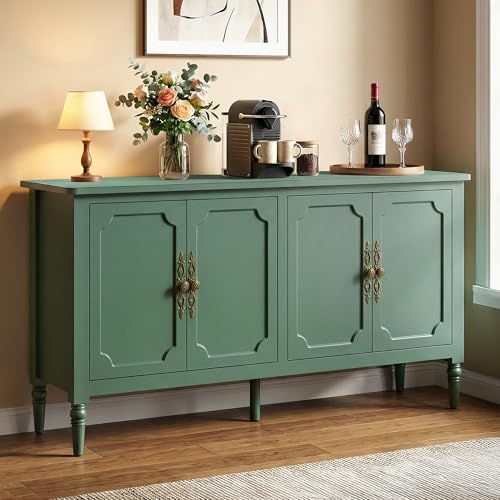
RoyalCraft Buffet Cabinet with Storage, 59" Painted Sideboard Coffee Bar | Vintage Kitchen Storage Cabinet with Adjustable Shelves, Mid Century Modern Credenza for Dining& Living Room, Entryway, Green
Check price on Amazon
HOSTACK Kitchen Buffet Sideboard Storage Cabinet, Coffee Bar Cabinet, White | 55"W Farmhouse Kitchen Cabinet with Doors and Adjustable Shelves, Buffet Cabinet with 3 Drawers for Entryway Living Room
Check price on Amazon
Signature Design by Ashley Extendable Counter Height Dining Table | Hardwood Solids, Mango Wood Veneer, MDF Substrate, Trestle Base, Butterfly Leaf, Seats Up to 8, Wildenauer Series
Check price on Amazon
Modern Farmhouse Buffet Cabinet with Storage, 85" Large Sideboard Storage Cabinet with 6 Barn Doors, Coffee Liquor Bar Cabinet Wood Table Credenza with Adjustable Shelf for Kitchen Dining Living Room
Check price on AmazonFrequently Asked Questions
Should a buffet match the dining table exactly?
A buffet does not need to match the dining table exactly. Coordinating the wood tone, finish, and hardware creates visual cohesion, while a slight contrast in style or material adds depth and prevents the room from feeling flat.
How much space should be left around a buffet?
Leave at least 36 to 42 inches of clearance in front of a buffet so drawers and doors open fully and people can move past comfortably. In tighter rooms, a shallower buffet depth helps preserve walkway space.
What is the ideal buffet height for serving?
A buffet top around 36 inches is comfortable for most standing adults to serve food and reach items. Counter-height buffets work well in open-plan spaces, while taller units suit rooms with generous ceiling height.
Does a buffet set work in a small dining room?
Yes. A shallow, narrow buffet with closed storage or a wall-mounted sideboard can add serving and storage space without crowding a small dining room. Prioritize depth and walkway clearance over width.
Final takeaway: Choose the table first, size the buffet to complement it, keep walkway clearance generous, and repeat one dominant material or finish across both pieces. That simple sequence produces a dining room that serves well and looks intentional for years.