
Dining Room Table Price Guide: What Shapes the Cost
Understand how material grade, size, joinery, and finish quality influence the tier of a dining room table — so you can match your investment to your household, your space, and your long-term plans.
Why this guide matters: Two dining tables can look almost identical yet sit in completely different market tiers. The difference usually comes down to what you cannot see at first glance — the frame, the joinery, the thickness of the top, and how the surface is finished. This guide breaks down the factors that move a table from entry-level to luxury, so you can read a product listing with confidence and choose a table that fits both your room and your expectations.
The Four Universal Table Tiers
Rather than thinking in numbers, it helps to think in tiers. Every dining room table on the market falls into one of four broad categories, and each tier reflects a different balance of material, construction, and craftsmanship.
Entry-Level Tier
Engineered wood cores, veneer surfaces, and simpler joinery. Suitable for starter homes, rentals, and light-duty use. Expect a clean look and reasonable durability with modest refinishing options.
Mid-Range Tier
Solid wood components mixed with engineered panels, reinforced frames, and better hardware. A balanced choice for families who want lasting quality without stepping into premium territory.
Premium Tier
Full solid hardwood construction, refined joinery, and durable finishes. Often includes extendable mechanisms, pedestal bases, or stone tops. Built for daily use over many years.
Luxury Tier
Flagship materials such as solid walnut, marble, or quartz, with hand-finished details and precision joinery. These tables are designed as long-term centerpieces for the home.
What Actually Drives the Tier of a Dining Room Table
Behind every tier is a set of concrete factors. When you compare two tables, look at these five elements — they explain most of the difference between an entry-level piece and a premium one.
1. Material Grade and Construction
The top material is the single largest driver of tier. Solid hardwoods such as oak, walnut, and teak sit at the premium end because they are dense, repairable, and age well. Veneers over engineered cores can look nearly identical but are limited in how many times they can be refinished. Stone tops like marble and quartz push a table into the premium or luxury range due to weight, fabrication, and sealing requirements. If you are still deciding between materials, our breakdown of dining table materials and finishes walks through the trade-offs in detail.
2. Size and Seating Capacity
Larger tables require more material and stronger support structures. A four-seater can often use a simple apron and four legs, while a six- or eight-seater may need a pedestal base, trestle frame, or reinforced aprons. If you are working within a compact room, a small dining table and chairs for four is often the most efficient way to get a well-built table without overcommitting on size.
3. Joinery and Frame Engineering
Look at how the legs attach to the top and how the apron connects. Entry-level tables often rely on simple bolts and brackets, while premium tables use mortise-and-tenon joints, corner blocks, and cross-bracing. These details determine how stable the table feels after years of daily use — and they are the first thing to check when comparing tiers.
4. Finish and Surface Treatment
Finishes range from basic sprayed lacquer to multi-layer oiled or matte coatings. A high-quality finish resists water rings, heat marks, and everyday scratches, and it can often be spot-repaired. For households that want a warm, natural look with easier upkeep, an white country dining table style often pairs a painted or washed finish with solid construction, giving you both character and durability.
5. Mechanisms and Special Features
Extendable tables, drop-leaf designs, and convertible pieces add mechanical complexity. A well-engineered extension mechanism — with smooth glides and secure locking — is a hallmark of mid-range and premium tables. If you have a small room but need flexibility, a convertible coffee-to-dining table can be a smart way to gain seating without committing to a full-size dining table.
Tier Comparison at a Glance
| Tier | Typical Materials | Best For | Long-Term Outlook |
|---|---|---|---|
| Entry-Level | Veneer over engineered core, basic hardware | Rentals, starter homes, light daily use | Good for a few years; limited refinishing |
| Mid-Range | Solid wood legs and aprons, veneer or solid top | Family dining, everyday use | Solid choice for the tier; some refinishing possible |
| Premium | Full solid hardwood, reinforced joinery, quality finish | Long-term family tables, extendable setups | Worthwhile investment; refinishable multiple times |
| Luxury | Solid walnut, marble, quartz, hand-finished details | Design-focused dining rooms, heirloom pieces | Flagship tier; built to last for decades |
Matching Tier to Your Space and Lifestyle
The best table is the one that fits your room, your household, and your routine. Here is how to translate the tier system into a practical decision.
Small Rooms and Apartments
In compact spaces, shape matters as much as tier. A round or small rectangular table with a solid build can outperform a larger entry-level table in both comfort and durability. A small corner dining table set is a smart option for tight layouts because it tucks into unused corners while keeping the walkway clear. For a modern, neutral look that still feels substantial, a small gray dining table set often pairs a mid-range build with a versatile finish.
Flexible Hosting and Multi-Use Rooms
If your dining area doubles as a workspace or a hosting zone, flexibility is worth prioritizing over raw material grade. A folding dining table for four lets you reclaim floor space between meals, while a bench-based setup can seat more people in the same footprint. An L-shaped bench dining table is particularly effective in open-plan rooms where you want a built-in, sociable layout.
Style-Driven Dining Rooms
For design-led spaces, tier and style should work together. A vintage or mid-century look often calls for a 50s dining table and chairs set, where character and construction quality matter more than surface trends. If you are protecting a glass top from daily wear, a glass dining table cover is a practical add-on that preserves the surface without changing the aesthetic.
A Quick Checklist Before You Commit
- Measure twice: Confirm the table's footprint plus at least 30 inches of clearance on all walkway sides.
- Check the frame: Look for corner blocks, reinforced aprons, and stable leg attachment.
- Read the finish spec: Matte lacquer, oiled wood, and sealed stone each need different care routines.
- Confirm seating math: Allow about 24 inches of width per person for comfortable dining.
- Plan for care: Wood needs periodic oiling; stone needs resealing; glass needs streak-free cleaning.
Frequently Asked Questions
What determines the tier of a dining room table?
The tier is shaped by material grade, joinery quality, finish durability, mechanism complexity for extendable models, and brand positioning. Entry-level tables typically use veneers and simpler joints, while premium and luxury tiers use solid hardwoods, reinforced frames, and refined finishes.
Is a solid wood dining table a better long-term investment than veneer?
Solid hardwood tables generally offer better long-term durability and can be refinished multiple times, making them a worthwhile investment for households that plan to keep the table for years. High-quality veneers can look excellent and perform well, but refinishing options are more limited.
How does table size affect the tier and complexity of a dining room table?
Larger tables require more material, stronger frames, and often additional support structures like pedestals or aprons. Extendable designs add mechanical components that raise complexity. As a result, bigger and more complex tables usually sit in higher tiers within the same material category.
Which material is easiest to maintain in a busy dining room?
Glass, quartz, and sealed stone surfaces are generally the easiest to wipe clean and resist stains well. Oiled wood requires periodic re-oiling, while matte lacquered finishes balance easy cleaning with a warmer look. The best choice depends on your household habits and tolerance for routine care.
Recommended Dining Room Tables by Tier
⚠️ AFFILIATE DISCLOSURE: This website contains affiliate links. As an affiliate Associate, we earn from qualifying purchases. If you make a purchase through these links, we may receive a small commission at no additional cost to you. Read our full affiliate policy.

IRONCK Dining Table Set for 4, Rustic Brown | Wood Kitchen Table with Upholstered Chairs for Kitchen Room and Small Spaces
Check price on Amazon
Rectangle Dining Table for 4-6 People,Wooden Table with Heavy Duty Legs
Check price on Amazon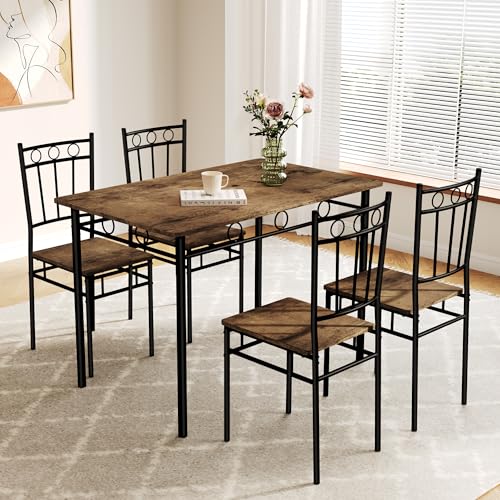
AMICLIBER Dining Table Set for 4, 5-Piece Kitchen Table and Chairs, Rectangular Dining Room Table Set with 4 Chairs, Space-Saving Kitchen Table Set for Small Space,Dinette,Apartment,Retro Brown
Check price on Amazon
Jocoevol Round Dining Table for 4,Kitchen Dining Room Circle Dinner Pedestal Table,Space Saving Wood Kitchen & Dining Room Furniture (Vintage, 46In)
Check price on Amazon
Garvee 71" Wood Dining Table for 2/4/6/8, Large Rectangular Kitchen Table | Anti-Collision Curved Corner Dinner Table with Recessed Footrest for Dining Room, Study & Home Office, Walnut Brown & Black
Check price on Amazon
Tribesigns 63" Dining Table for 4 to 6, White and Gold Kitchen Table | Modern Large Rectangular Dinner Table Kitchen & Dining Room Furniture with Faux Marble Tabletop and Geometric Legs
Check price on Amazon
Dining Table for 4 People Kitchen Table with Wood Legs Dinner Table for Apartment Living Room Dining Room Office Kitchen Home Furniture Rectangular Modern, Brown
Check price on Amazon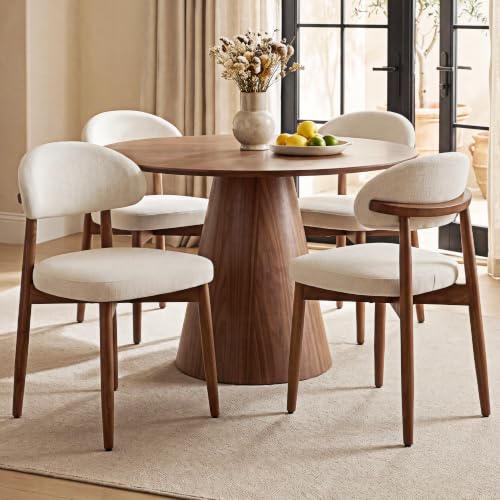
GRUSIGN Dining Chairs Set of 4,Upholstered Wooden Kitchen Chairs,Beige | Ergonomic Curved Backrest, Solid Wood Legs, Soft Fabric Seat, Mid Century Modern, for Dining Kitchen Living Room, Beige
Check price on AmazonReady to Choose Your Dining Room Table?
Explore our full library of buying guides, material breakdowns, and setup tips to make a confident, well-informed decision.
Start Exploring Dining Tables