
Dark Brown Rectangular Dining Table: The Complete Guide
Everything you need to know before choosing a dark brown rectangular dining table — wood species, finish behavior, sizing, seating, and long-term care — so you can buy with confidence.
EXPLORE RECOMMENDED TABLESWhy dark brown rectangular tables remain a favorite: A dark brown finish brings warmth, depth, and a grounded anchor to a dining room. Combined with the classic rectangular silhouette, it fits formal dining rooms, open-plan kitchens, and modern farmhouse spaces alike. This guide walks you through the practical decisions — from wood grain to clearance measurements — that separate a table you love for years from one you regret.
Recommended Dark Brown Rectangular Dining Tables
⚠️ AFFILIATE DISCLOSURE: This website contains affiliate links. As an affiliate Associate, we earn from qualifying purchases. If you make a purchase through these links, we may receive a small commission at no additional cost to you. Read our full affiliate policy.

LITTLE TREE Dining Table for 4-6 People, Wooden Table, Rectangle Furniture with Heavy Duty Legs, Modern Kitchen Table for Home, Dining Room, Brown
Check price on Amazon
Dining Table for 4 People Kitchen Table with Wood Legs Dinner Table for Apartment Living Room Dining Room Office Kitchen Home Furniture Rectangular Modern, Brown
Check price on Amazon
GarveeHome Farmhouse Dining Table for 6 People, 63" Long Kitchen Tables | Wooden Sturdy Frame, 5 ft Large Rectangular Dinner Table for Dining Room, Kitchen, Black, Brown Non-extendable
Check price on Amazon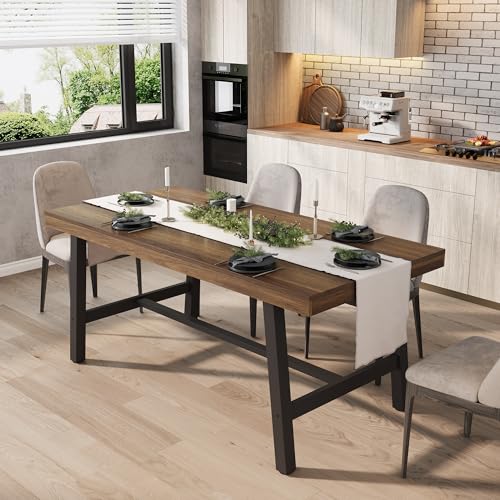
GarveeHome Industrial Dining Table for 4-6 People, 63" Long Large Kitchen Table with Sturdy Metal Frame, Rectangular Counter for Dinner, Kitchen, Dining Room (Brown, 63" Non-extendable)
Check price on Amazon
Garvee 71" Wood Dining Table for 2/4/6/8, Large Rectangular Kitchen Table | Anti-Collision Curved Corner Dinner Table with Recessed Footrest for Dining Room, Study & Home Office, Walnut Brown & Black
Check price on Amazon
Garvee Farmhouse Dining Table 71", Rustic Kitchen Table for 6-8, Brown | Rectangular Dining Room Table, Heavy Duty Metal Frame & 2" Thick Legs, Sturdy Wood Top,for Dining Room Kitchen Living Room
Check price on Amazon
71-87 Inch Extendable Dining Room Table, Rustic Wooden Kitchen Table 6-10 | STHOUYN Expandable Dining Table, Farmhouse Rustic Style, Rectangular Wooden Top, Seats 6-10, Brown Kitchen or Dining Room
Check price on Amazon
WOODTIME 86.6" W Dining Table for 8-10 People, Versatile Modern Wooden Dinner Table Kitchen Table for Dining Room Conference Room, Black & Brown
Check price on AmazonWhat Defines a Dark Brown Rectangular Dining Table
A dark brown rectangular dining table is more than a color choice — it is a combination of wood species, stain depth, and finish sheen that together determine how the table looks, ages, and behaves in daily use. The rectangular shape offers the most efficient seating per square foot, making it a practical pick for households that often host four to eight people. Dark brown tones add visual weight, which can make a large room feel cozier and a small room feel more intentional.
Before comparing specific models, it helps to understand the three variables that shape every dark brown table: the underlying wood, the stain or dye, and the protective finish. Each of these influences durability, maintenance, and how the table interacts with your lighting.
Wood Species Behind the Color
Not every dark brown table starts dark. Many are lighter hardwoods stained to a rich chocolate, espresso, or mahogany tone. Others — like walnut — are naturally dark. Understanding the base wood helps you predict how the table will wear over time.
- Walnut: Naturally rich brown with subtle grain movement. A premium choice that ages gracefully and often needs only an oil or matte finish to shine.
- Stained oak: Dense and durable; takes dark stains evenly. A frequent pick for mid-range rectangular tables that need to handle daily family use.
- Mango wood: Fast-growing hardwood with bold grain; often used for rustic and farmhouse dark brown tables. Lighter in weight but decorative.
- Acacia: Strong contrast between grain lines; popular for entry-level and mid-tier tables with a warm, earthy look.
- Mahogany-toned hardwood: Deep reddish-brown; classic in formal dining rooms and traditional interiors.
Stain and Finish: The Real Difference
Two tables of the same wood can look completely different depending on the finish. A high-gloss lacquer reflects light and looks modern but shows dust and fingerprints quickly. A matte or oiled finish absorbs light, hides small scratches better, and suits rustic or contemporary interiors. Satin finishes sit in between and are the most forgiving for family homes.
If you want to learn how different finishes behave on wood, our guide to walnut and white dining table pairings explains how dark wood tones interact with lighter finishes in the same room.
Sizing a Rectangular Table Correctly
Rectangular tables are the easiest shape to plan around because seating is linear. The main rule is to allow roughly 24 inches of table width per seated person along the long side, and about 12 to 15 inches of depth per person at the ends. Leave at least 36 inches of clearance between the table edge and any wall or furniture so chairs can pull out comfortably.
| Seats | Typical Length | Typical Width | Best For |
|---|---|---|---|
| 4 | 48–54 in | 30–36 in | Small dining nooks, apartments |
| 6 | 60–72 in | 36–40 in | Everyday family dining |
| 8 | 78–96 in | 38–42 in | Formal dining rooms, hosting |
| 10 | 96–108 in | 40–44 in | Large families, entertaining |
If your room is on the smaller side but you still want the presence of a dark brown table, consider a compact option such as a 36 x 48 dining table with leaf — the leaf lets you extend for guests while keeping the footprint modest day to day. For households that host larger groups regularly, a 7 foot dining table set offers comfortable seating for six to eight without feeling oversized.
For rooms where flexibility matters, a table with a removable center section — like a dining table with insert — preserves the rectangular silhouette while adapting to different occasions.
Placement and Room Fit
Dark brown tables anchor a room visually, which means placement matters more than with lighter finishes. A few guidelines help:
- Center the table: Symmetry is the safest choice in a formal dining room; offset placement works better in open-plan spaces where the table doubles as a work surface.
- Mind the walkway: Keep at least 36 inches on the sides used for traffic and 42 inches where chairs pull out behind the table.
- Balance the visual weight: Pair a dark table with lighter chairs, a lighter rug, or a pale wall treatment to prevent the room from feeling heavy.
- Check the rug: The rug should extend at least 24 inches beyond the table edge on all sides so chairs stay fully on the rug when pulled out.
If your dining area is narrow, a narrow rectangular dining table layout can be adapted to indoor use and shows how a slim rectangular footprint works in tight spaces.
Caring for a Dark Brown Finish
Dark finishes are beautiful but less forgiving than light tones — dust, water rings, and light scratches show up more clearly. The good news is that a consistent, simple routine keeps the finish looking rich for years.
- Dust weekly: A microfiber cloth removes dust before it becomes abrasive.
- Wipe spills promptly: Dark stains from red wine, coffee, or oil can set into open-grain woods if left too long.
- Use coasters and placemats: Heat and moisture are the two most common causes of finish damage on dark tables.
- Re-oil or re-wax annually: Oiled finishes benefit from a light reapplication once or twice a year; lacquered finishes need only occasional polish.
- Control humidity: Wood expands and contracts with humidity; keep the room between 40 and 60 percent relative humidity to avoid cracks.
For a broader look at protecting wood surfaces, our article on walnut and white dining table combinations also touches on finish care and how to keep contrast surfaces looking sharp.
Comparing Dark Brown Tables by Tier
Dark brown rectangular tables span a wide range of construction quality. Instead of comparing by numbers, use these tiers to understand what each class typically delivers.
| Tier | Typical Construction | Best For |
|---|---|---|
| Entry-level | Veneered top, engineered wood core, basic hardware | First homes, rental spaces, light daily use |
| Mid-range | Solid hardwood top, reinforced apron, smoother extension mechanism | Family dining, moderate hosting |
| Premium | Thick solid slab or edge-glued hardwood, hand-finished, sturdy joinery | Daily family use, long-term ownership |
| Luxury | Single-slab or book-matched hardwood, artisan finish, precision hardware | Formal dining rooms, design-led interiors |
Mid-range models typically offer smoother extension mechanisms and more consistent grain matching than entry-level tables. Premium and luxury tiers focus on joinery quality and finish depth — features that hold up best over a decade or more of daily use.
Sets, Combinations, and Extensions
If you are furnishing a dining room from scratch, a coordinated set reduces decision fatigue. A 8 piece dining table set pairs a rectangular table with matching chairs and often includes a bench, which works well with dark brown finishes because the repeated tone creates a cohesive, formal look.
For outdoor-adjacent spaces or mixed indoor-outdoor layouts, a outdoor dining table with bench on one side configuration shows how a one-bench-plus-chairs arrangement can work with a rectangular table — the same principle applies indoors when you want a less formal seating mix.
Round and glass options are also worth comparing if you host fewer people or want a lighter visual footprint. Our guide to a 54 round glass dining table and a round dining table for 4 with leaf explains when a round shape outperforms a rectangular one in the same room.
And if you are considering a wicker or woven pairing for a sunroom or covered patio, the wicker outdoor dining table set guide covers how to combine natural textures with a dark rectangular table indoors.
Final Buying Checklist
Before you commit to a dark brown rectangular dining table, run through this checklist:
- Measure the room and confirm at least 36 inches of clearance on all sides.
- Confirm the seating capacity you actually need, not just the maximum.
- Check whether the table extends — and how smoothly the mechanism operates.
- Ask about the base wood, not just the finish color.
- Match the finish sheen to your lifestyle: matte and oiled for families, satin for balanced durability, gloss for formal rooms.
- Verify the table's weight and whether it can be moved without disassembly.
- Confirm the warranty terms on finish, joinery, and hardware.
With these checks complete, you will be ready to choose a dark brown rectangular table that fits your room, your household, and your long-term plans.
Frequently Asked Questions
What woods are used for dark brown rectangular dining tables?
Common options include walnut, stained oak, mango wood, acacia, and mahogany-toned hardwood. Each offers different grain patterns and durability characteristics, so it helps to match the species to your expected usage level.
How do I size a dark brown rectangular dining table?
Allow roughly 24 inches of table width per seated person on the long side, and keep at least 36 inches of clearance around the table for chair pull-out and walkways. A 60–72 inch table typically seats six comfortably.
Does a dark brown finish show scratches easily?
Dark finishes can reveal light scratches and dust more visibly than lighter tones, but matte and oiled finishes tend to hide wear better than high-gloss surfaces. Prompt wiping and coasters go a long way toward preserving the finish.
Can a dark brown rectangular table work in a small room?
Yes, provided the footprint is proportionate. A compact 36 x 48 inch table with a leaf gives you a small everyday footprint plus the option to extend for guests.
Should I choose a matte or glossy finish?
Matte and oiled finishes hide small scratches and fingerprints and suit rustic or contemporary interiors. Glossy finishes look more formal but show dust and smudges more readily. Satin is the most forgiving middle ground.