
China Cabinet and Dining Table Set: Complete Buying Guide
A coordinated china cabinet and dining table set brings storage, display, and dining together in one cohesive look. This guide explains how to match the pieces, plan the layout, and choose materials that hold up for years.
START READINGWhy this pairing matters: A china cabinet and dining table set is more than two pieces of furniture placed in the same room. The cabinet handles display and storage for dinnerware, linens, and serving pieces, while the table anchors the room's seating. When the two are chosen together, the dining room feels intentional rather than assembled piece by piece.
What a China Cabinet and Dining Table Set Includes
Most buyers use the phrase "china cabinet and dining table set" to describe a coordinated group: a dining table, matching chairs, and a tall storage-and-display piece often called a hutch, china cabinet, or server. Some sets ship as a single package from the same collection, while others are assembled by pairing a table from one line with a cabinet from another.
Understanding the two components separately makes the buying decision easier:
- The dining table set usually includes the table and four to eight chairs. It defines the seating capacity and the main traffic pattern in the room.
- The china cabinet is a vertical storage piece, typically with glass-front upper doors for display and solid lower doors or drawers for concealed storage. Its depth and height affect how much floor space remains.
If your room is on the smaller side, a round table often works better than a long rectangular one because it keeps circulation open. Our guide to a round white dining table for 4 explains how a compact footprint can still feel generous in a dining room with a cabinet.
Why Buy a Coordinated Set Instead of Separate Pieces
Buying the table, chairs, and cabinet as a coordinated group removes a lot of guesswork. Wood tones, edge profiles, hardware styles, and leg shapes already agree with each other. That consistency is the main reason buyers choose a set over piecing the room together over time.
There are practical benefits beyond appearance:
- Finish consistency: Stains and paints from the same collection are matched at the factory, so the cabinet does not read as an odd addition to the table.
- Proportion harmony: The cabinet's height and width are designed to sit comfortably beside the table rather than overpower it.
- Simpler delivery and assembly: Sets often arrive with matching hardware and instructions, which reduces the chance of mismatched parts.
- Clearer planning: You know the full footprint before delivery, so you can measure once and place everything with confidence.
That said, a coordinated look does not require an identical finish. A painted hutch paired with a natural wood table can look deliberate when the proportions are right. The key is to keep the wood tone in the same family and let one piece lead the style.
Recommended China Cabinet and Dining Table Sets
⚠️ AFFILIATE DISCLOSURE: This website contains affiliate links. As an affiliate Associate, we earn from qualifying purchases. If you make a purchase through these links, we may receive a small commission at no additional cost to you. Read our full affiliate policy.

Signature Design by Ashley Langwest 6-Piece Dining Table Set with Bench | Seats up to 6, 60.38 in W Dining Table, Reverse Diamond Patterned Veneer, Tapered Legs, Light Beige Polyester Fabric
Check price on Amazon
HSH 63" Modern White Faux Marble Dining Table for 6 with Storage Cabinet | Rectangular Kitchen Dinner Table with 3-Tier Shelves and an Acrylic Door, Seats 4-6,Table Only for Dining Room and Apartment
Check price on Amazon
IRONCK Dining Table Set for 2, Rustic Brown | Small Kitchen Table with Upholstered Chairs, Compact Dining Set for Small Spaces, Kitchen & Dining Room
Check price on Amazon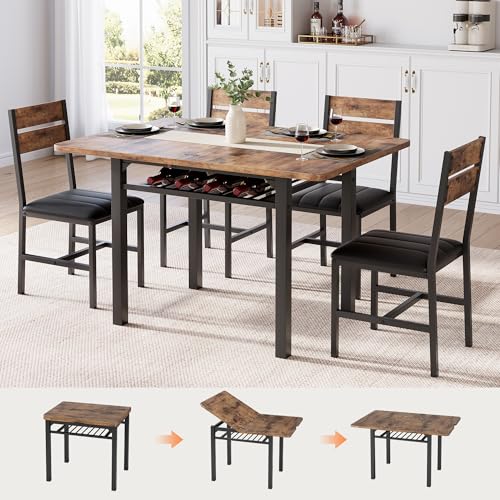
MapleGrace Extendable Dining Table Set for 4 with Built-in Shelf Rack Brown | Kitchen Table Set with 4 PU Leather Upholstered, Wood Dining Room Chairs for Dining & Small Spaces
Check price on Amazon
AMERLIFE 7-Piece Dining Table Set, 71" Faux Marble Modern Table, Dark Brown | Dining Table Set with 6 PU Leather Upholstered Chairs, Heavy-Duty Solid Wood Set for Kitchen & Dining Room
Check price on Amazon
IRONCK Dining Table Set for 4, 47.2 inch Round Kitchen Table and 4 Chairs | 47-inch Circle Kitchen Table, 4 Upholstered Chairs. Under-Table Storage Shelf. for Dining Room and Small Space. Grey.
Check price on Amazon
Sophia & William Solid Wood Kitchen Table and Chairs Set for 4, Walnut | Solid Wood, Farmhouse Charm, Handle Chairs, Space Saving, Easy Assembly, Small Dining Table Set for Kitchen
Check price on Amazon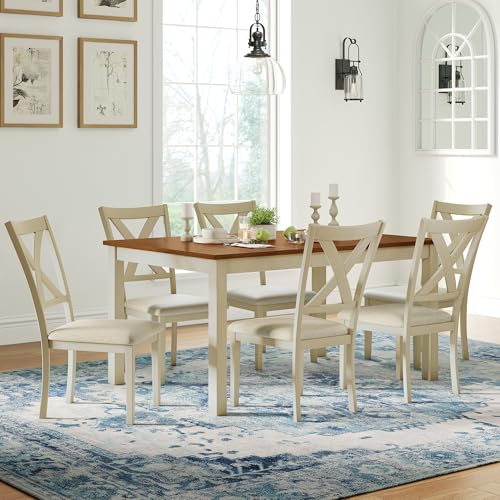
AMERLIFE 7-Piece Farmhouse Solid Wood Dining Table Set for 6, Rustic Cream | 60" Solid Wood Table, 6 Upholstered Chairs, Space-Saving Design, Rustic Dining Set, Dining Room and Kitchen
Check price on AmazonHow to Match the Cabinet to the Table
Matching is about more than color. Four elements decide whether a china cabinet and dining table set looks like a single design or two unrelated purchases:
- Wood tone and grain. Oak, walnut, and rubberwood all have distinct grain patterns. Keep the cabinet and table in the same species family unless you are intentionally mixing painted and natural finishes.
- Finish sheen. A high-gloss lacquer cabinet next to a matte oiled table creates an uneven look. Match the sheen level or choose a neutral mid-sheen finish for both.
- Hardware style. Knobs, pulls, and hinges should repeat the same metal tone and shape language. Brass on the cabinet with black steel on the table legs can work, but only when the contrast is clearly intentional.
- Proportion. A tall, narrow hutch suits a long rectangular table better than a wide buffet does. A low, wide server works well with a round table because it does not compete for vertical space.
For buyers who prefer a natural wood look, a rubberwood dining table set is a practical anchor because its tone pairs easily with both painted and stained cabinets. If you are leaning toward a larger seating count, a 7-piece dining table and chairs set leaves the cabinet as the single storage piece without crowding the room.
China Cabinet Types Compared
| Cabinet Type | Best For | Typical Depth | Storage Style |
|---|---|---|---|
| Full hutch and buffet | Formal dining rooms with wall space | 18–20 in | Glass display above, closed storage below |
| Corner china cabinet | Small or oddly shaped rooms | 16–18 in | Angled display shelves, compact footprint |
| Low buffet / server | Open dining areas and round tables | 16–18 in | Drawers and cabinet doors, flat serving top |
| Wall-mounted display unit | Narrow rooms and renters | 10–14 in | Open or glass shelves, no floor footprint |
The right type depends on how much wall space your dining room offers and how much you need to store. A full hutch is the most traditional choice and gives the most display area, but it also demands the most clearance. A low buffet keeps sightlines open and works well in open-plan layouts.
Space Planning: Fitting Both Pieces in One Room
Floor space is the most common reason a china cabinet and dining table set feels cramped after delivery. Measure before you buy, and plan around three clearances:
- Chair pull-out: allow about 36 inches between the table edge and the nearest wall or cabinet front so chairs can slide out comfortably.
- Cabinet door swing: add the depth of the open door to the cabinet's footprint. A 20-inch-deep hutch with a 20-inch door swing needs roughly 40 inches of clear floor in front of it.
- Walkway: keep at least 36 inches of clear path between the table and the cabinet if people need to walk past while others are seated.
In a narrow room, place the cabinet on the long wall and orient the table perpendicular to it. That arrangement keeps the walkway along the table's length rather than squeezing it between the table and the cabinet. For larger rooms, a 10-foot long dining table can anchor a long wall, with the cabinet placed on the opposite wall to balance the visual weight.
If you are considering an oval or extendable table, the cabinet placement should account for the extended footprint. Our guide to a unique oval dining table covers how the curved shape changes clearance needs compared with a rectangular table.
Materials: What Holds Up in a Dining Room
Dining rooms see spills, heat, and daily handling, so material choice matters for both the table and the cabinet. The table surface takes the most abuse, while the cabinet mostly needs to resist dust, moisture, and sunlight fading.
Solid wood
Durable and repairable. Oak and walnut are the most common choices for tables, while cabinets often use solid frames with veneered panels. A mid-tier solid wood set is a long-term investment that can be refinished if the surface wears.
Wood veneer
Common in cabinets because it allows consistent grain across large panels. Quality veneer over a stable core is a solid choice for the tier. Check that edges are banded to prevent lifting.
Glass
Used for display doors on china cabinets. Tempered glass is the standard for safety. Glass fronts let you show dinnerware but require more frequent cleaning to keep the display looking sharp.
Engineered stone tops
Found on some buffet and server pieces. Resistant to stains and heat, but heavier than wood. Confirm that the cabinet frame is reinforced for the added weight.
For the table itself, an oak dining table for 4 is a balanced choice because oak resists dents well and takes a stain evenly, which makes it easier to match with a cabinet in the same tone family. If the room gets strong afternoon light, place the cabinet away from direct sun to slow fading on both the wood and any displayed textiles.
Display and Storage: Getting the Cabinet Layout Right
How you use the cabinet depends on what you store. A few layout principles keep the piece useful rather than decorative only:
- Upper glass section: reserve for dinnerware you want visible, such as plates, glasses, and serving bowls. Adjustable shelves let you fit taller items.
- Lower closed section: use for linens, larger serving pieces, and anything you do not want on display. Drawers near the top of the lower section are easier to reach.
- Flat top surface: a buffet or server top doubles as a landing spot for serving dishes during meals. Keep it clear of permanent clutter so it stays functional.
- Interior lighting: optional but useful. Battery puck lights are an easy addition if the cabinet does not come with built-in lighting.
If you host often, a cabinet with a flat serving top and drawers is more practical than a tall hutch with only display shelves. If you mainly want to show a collection, a hutch with adjustable glass shelves gives more display area per square foot.
Choosing the Right Table for Your Cabinet Setup
The table you choose should match the cabinet's visual weight and the room's seating needs. A few common pairings work well:
- Extendable table plus low buffet: the extendable table handles holiday seating, while the low buffet keeps sightlines open during everyday meals. A dining table set with leaf is a practical way to add seating without changing the room layout.
- Square table plus corner cabinet: a 60 square dining table that seats 8 pairs well with a corner china cabinet because both pieces use the room's edges efficiently.
- Round table plus wall-mounted display: keeps the floor open and works in compact dining nooks.
Seating count should match how often you host. A four-seat set is enough for daily use in most homes, while a six- or eight-seat set makes sense if the dining room is also the main gathering space. Our guide to the six seater dining table size explains how to check that the table fits alongside a cabinet without blocking circulation.
Style Directions for a Coordinated Set
China cabinet and dining table sets appear in nearly every furniture style, but a few directions are especially common:
- Traditional: dark wood, carved details, glass-front hutch with brass hardware. Works well in formal dining rooms with generous wall space.
- Farmhouse: painted or distressed finishes, open shelving, and a trestle table. The cabinet often has beadboard backing or open plate racks.
- Modern: clean lines, minimal hardware, and a low buffet rather than a tall hutch. Wood tones are lighter, and glass is used sparingly.
- Transitional: mixes traditional cabinet shapes with modern table legs. This is the most flexible direction if you plan to update other pieces later.
An epoxy or resin table brings a very different look, and pairing it with a traditional hutch can feel mismatched unless the cabinet is simplified. If you are drawn to that direction, read our guide to an epoxy dining table to understand how the finish interacts with surrounding wood tones.
Buying Checklist Before You Order
Run through this list before committing to a set. It catches the most common reasons buyers return or regret a purchase:
- Measure the room twice. Record wall lengths, doorways, and window positions. Note where outlets and light switches sit.
- Check delivery path. Confirm the cabinet and table fit through doorways, hallways, and stairwells. A tall hutch may need to be assembled on site.
- Confirm seating capacity. Count how many people sit at the table on a normal evening, then add one or two for guests.
- Decide on storage needs. Count the dinnerware, glassware, and linens you plan to store in the cabinet so you choose the right shelf and drawer mix.
- Verify materials and finish. Check whether the table top is solid wood, veneer, or stone, and whether the cabinet uses tempered glass.
- Review assembly and hardware. Sets that ship with matching hardware and clear instructions are easier to assemble and less likely to arrive with missing parts.
- Plan for care. Wood tables need periodic conditioning, and glass doors need regular cleaning. Factor in the upkeep before you buy.
Frequently Asked Questions
Should a china cabinet match the dining table set exactly?
It does not need to match exactly. A coordinated look works best: keep the wood tone in the same family and let one piece lead the style. Mixing a painted hutch with a solid wood table can look intentional when proportions and finishes are consistent.
How much floor space does a china cabinet and dining table set need?
Plan for the table footprint plus roughly 36 inches of clearance on all seating sides for chair pull-out and walkway. The china cabinet needs about 18 to 20 inches of depth against a wall, plus door swing or drawer clearance in front of it.
What is the difference between a china cabinet and a buffet?
A china cabinet typically has glass-front upper doors for displaying dishes and closed lower storage. A buffet is a lower, wider server with a flat top for serving, and it usually lacks a tall display section. Many sets combine both functions in one hutch-and-server piece.
Are china cabinet and dining table sets suitable for small dining rooms?
Yes, when you choose a compact hutch with a shallow depth and pair it with a round or extendable table. Corner hutches and wall-mounted display units free up floor space and keep circulation clear in smaller rooms.
Final Thoughts
A china cabinet and dining table set is one of the few furniture purchases that solves both seating and storage in a single decision. The best set is the one that fits your room's measurements, matches the way you actually use the space, and uses materials that will hold up over time.
Start with the room measurements and seating count, then narrow the cabinet type and table shape. Once those are settled, style and finish choices become much easier. Browse the recommended sets above to compare options that fit the plan you have built.