
Ceramic Top Outdoor Dining Table: The Complete Buyer's Guide
Everything you need to know about ceramic tabletop dining tables for patios, decks, and gardens — durability, weather resistance, styles, and how to choose the right one for your outdoor space.
Explore Top PicksWhy choose a ceramic top outdoor dining table? Ceramic tabletop dining tables combine the refined look of stone with the resilience needed for outdoor living. Unlike natural stone that can stain or crack, and unlike glass that shatters, ceramic tops are engineered for weather exposure, UV rays, and daily use. This guide walks you through everything — from construction and finish options to sizing and care — so you can make a confident decision for your patio or garden dining area.
What Makes a Ceramic Tabletop Different?
A ceramic top is a fired, sintered surface — often made from porcelain or a porcelain-stone blend — that is bonded to a substrate such as aluminum, steel, or a composite frame. The manufacturing process fuses minerals at very high temperatures, producing a non-porous, dense surface that resists moisture, stains, and fading far better than many traditional outdoor tabletop materials.
This construction is why ceramic tops have become a favorite in the outdoor furniture category. They offer the visual depth of stone or marble while remaining lighter and more uniform in quality. If you are comparing materials, it helps to understand how ceramic sits alongside alternatives like a slate top patio dining table or a teak and metal outdoor dining table — each brings a different balance of texture, weight, and maintenance needs.
Key advantages of ceramic tops for outdoor use
- Weather resistance: Non-porous surfaces resist rain, humidity, and temperature swings.
- UV stability: Colors and patterns hold up under direct sunlight without fading quickly.
- Scratch and heat tolerance: High-grade ceramic resists scratching from plates and heat from serving dishes.
- Low maintenance: Wipe-clean surface requires no sealing or seasonal treatment.
- Design variety: Available in marble-look, concrete-look, wood-grain, and solid-color finishes.
Potential trade-offs to weigh
- Ceramic tops are generally heavier than glass or resin tops, which affects portability.
- Edge chipping is possible if a heavy object strikes the rim, so frame protection matters.
- Quality varies significantly between entry-level and premium tiers — substrate and bonding quality are the deciding factors.
Construction and Durability: What to Look For
Not all ceramic tops are built the same. The most durable outdoor ceramic dining tables combine a thick, fully vitrified ceramic slab with a reinforced frame — typically powder-coated aluminum or stainless steel. The bonding layer between the ceramic and the substrate is critical: a poor bond can lead to delamination over seasons of weather exposure.
When evaluating construction, pay attention to these factors:
- Ceramic thickness: Thicker tops resist impact and thermal stress better than thin veneers.
- Frame material: Aluminum frames resist rust and are lighter; steel frames offer more weight and stability.
- Edge profile: Rounded or beveled edges reduce chipping risk and are safer around children.
- Weather-resistant coating: A rust-proof finish on the frame extends the table's usable life outdoors.
- Bonding quality: Look for full-surface adhesion rather than spot bonding.
If you are also considering how your table pairs with seating, our guide to an outdoor dining table with sling chairs explains how frame weight and table height interact with chair choice. For larger gatherings, a 14-person outdoor dining table in ceramic can anchor a full patio layout without the maintenance burden of natural stone.
Ceramic Top Outdoor Dining Tables by Tier
To help you navigate the market without relying on numeric comparisons, we classify ceramic outdoor dining tables into three quality tiers. Each tier reflects construction quality, material grade, and finish precision — not a specific figure.
Essential Tier
Basic ceramic veneer over a lightweight frame. Suitable for covered patios and occasional use. Solid choice for the tier when weather exposure is limited.
Balanced Tier
Thicker ceramic slab with a powder-coated aluminum frame. Good weather resistance and a wider range of finishes. Competitive within its class for year-round outdoor use.
High-End Tier
Fully vitrified porcelain top with reinforced frame, precision edge finishing, and superior bonding. Well-specified for the category and built as a long-term investment.
In general, mid-range and high-end ceramic tables offer noticeably better resistance to thermal shock and impact than entry-level models. The step up in frame quality also improves stability on uneven patio surfaces — an important detail if your outdoor area is paved with stone or brick.
Choosing the Right Size and Shape
Outdoor spaces vary widely, so sizing deserves careful thought. A ceramic top outdoor dining table should leave at least 36 inches of clearance around the perimeter for chair pull-out and walkways. For round tables, this clearance applies to the widest point of the tabletop.
Shape considerations:
- Rectangular: Best for narrow patios and long decks; seats more people along a wall or railing.
- Round: Encourages conversation and works well in square or compact patio zones. A round outdoor dining table with umbrella is a popular configuration for shaded seating.
- Oval: Softens traffic flow and suits long, narrow garden layouts.
If you are planning a smaller balcony or courtyard setup, compare the footprint guidance in our outdoor deck dining table guide. For expansive gardens, a 10-person round outdoor dining table in ceramic creates a strong focal point without the weight concerns of solid stone.
Ceramic vs. Other Outdoor Tabletop Materials
The table below compares ceramic tops against common outdoor alternatives across the factors that matter most for patio and garden use.
| Material | Weather Resistance | Maintenance | Best For |
|---|---|---|---|
| Ceramic / Porcelain | Excellent — non-porous, UV-stable | Wipe-clean, no sealing | Year-round outdoor use |
| Natural Stone (Slate) | Good — requires sealing | Seasonal sealing, stain care | Rustic, heavy-duty settings |
| Teak Wood | Good — needs oiling | Regular oiling, sanding | Warm, natural aesthetic |
| Glass | Moderate — frame-dependent | Frequent cleaning, streak care | Covered patios, modern looks |
| Aluminum | Excellent — rust-proof | Minimal | Lightweight, portable setups |
For a deeper material comparison, see how a slate top patio table and a teak and metal outdoor table approach outdoor durability differently. Ceramic tends to land in the sweet spot between natural-stone beauty and low-maintenance practicality.
Care and Maintenance for Ceramic Outdoor Tables
One of the strongest arguments for ceramic is how little it asks of you. Routine care is straightforward:
- Wipe the surface with a damp cloth and mild soap after meals.
- Rinse and dry after heavy rain to prevent mineral spotting in hard-water areas.
- Avoid abrasive pads or strong solvents that can dull the glaze.
- Inspect the frame and bonding seams seasonally for signs of wear.
- Use a fitted cover during off-season storage to extend the frame's finish life.
Because ceramic does not require sealing, it stays consistent from season to season. This is a meaningful advantage for anyone who wants a patio table that looks the same in spring as it did when purchased — especially when paired with a durable frame like those found on a faux teak outdoor dining table or an extendable outdoor aluminum dining table.
Recommended Ceramic Top Outdoor Dining Tables
⚠️ AFFILIATE DISCLOSURE: This website contains affiliate links. As an affiliate Associate, we earn from qualifying purchases. If you make a purchase through these links, we may receive a small commission at no additional cost to you. Read our full affiliate policy.
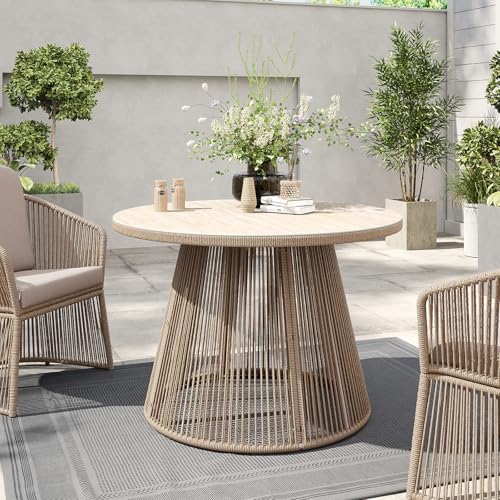
SUNSITT 43" Round Patio Dining Table for 4, Modern Wicker Outdoor Table | Beige Rattan Design, Tempered Glass Top with Ceramic Coating, Metal Frame for Garden Backyard Lawn
Check price on Amazon
Ciays 43″ Fire Pit Table, Outdoor Propane Fire Pit Table with Premium Ceramic Tabletop, Glass Wind Guard, Lid, Glass Rock, 50,000 BTU CSA-Certified Gas Fire Pits for Outside Patio, Party, Deck
Check price on Amazon
Round Outdoor Side Table Patio Bistro Ceramic Mosaic Patterned Design Tile Top Round Table Outdoor Garden 24 Inch Metal Furniture Dining Table for Yard Balcony Porch Poolside Terrace Blue Flower
Check price on Amazon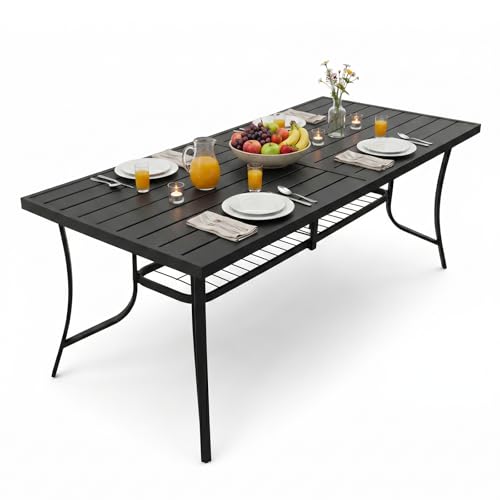
VOYSIGN 77" Extra Large Outdoor Metal Dining Table, Rectangular Wrought Iron Patio Table for 8 People, Weather-Resistant Steel Slatted Table with Umbrella Hole for Party & Backyard
Check price on Amazon
Festival Depot Metal Steel Outdoor Side Table Patio Bistro Square Dining Table Ceramics Top with Steel Legs (1pc Dining Table, Ceramics)
Check price on Amazon
SUNSITT 5-Piece Outdoor Open-Weave Wicker Dining Set with Swivel Chairs | Modern Design 62.8” Oval Ceramic Glass Top Table, 4 All-Weather Rattan Armchairs with 360° Swivel & Anti-Slip Cushions, Beige
Check price on Amazon
LDAILY 24" Mosaic Patio Bistro Table with Ceramic Tile Top, Black | Round Outdoor Metal Dining Table for Backyard Garden Porch Balcony | Heavy Duty X-Frame Base
Check price on Amazon
Flash Furniture 31.5x55 in Tempered Glass Table, with Umbrella Hole | Tempered Glass
Check price on AmazonFrequently Asked Questions
Is a ceramic top suitable for year-round outdoor use?
Yes, provided the table uses a fully vitrified ceramic or porcelain top and a rust-resistant frame. Ceramic is non-porous and UV-stable, making it one of the more forgiving outdoor materials. Entry-level veneers are better suited to covered patios.
Does a ceramic top get too hot in direct sun?
Ceramic absorbs less heat than metal or dark stone and cools quickly in shade. Light-colored finishes stay noticeably cooler than dark ones, so consider finish color if your table sits in full sun.
Can ceramic chip or crack?
High-grade ceramic resists impact well, but a heavy blow to the edge can chip the rim. Choosing a table with a rounded or beveled edge profile significantly reduces this risk. The frame also provides structural support that prevents cracking.
How does ceramic compare to a stone top?
Ceramic is generally lighter, more uniform in quality, and requires no sealing. Natural stone offers unique veining but demands seasonal maintenance. For a low-maintenance outdoor setup, ceramic is usually the more practical choice. See our comparison of a stone top rectangular dining table for the alternative perspective.
What size ceramic outdoor table fits a standard patio?
A 6-seat rectangular table works for most mid-sized patios, while round tables suit compact or square spaces. Always budget at least 36 inches of clearance around the table for comfortable seating and movement.
Ready to Choose Your Ceramic Outdoor Table?
Review our top recommended ceramic top outdoor dining tables above and compare their features to find the right fit for your patio, deck, or garden.
View Recommendations