
Beach Dining Table: The Complete Coastal Buying Guide
Everything you need to choose a beach dining table that survives salt air, humidity, and sandy feet — while keeping that relaxed coastal look you love.
Explore Recommended TablesWhy a dedicated beach dining table matters: A beach home or coastal-inspired dining room faces conditions that ordinary dining tables simply aren't built for — salt-laden air, high humidity, strong UV exposure, and frequent use by guests in wet swimwear. Choosing the right table means matching the material, finish, and design to your actual environment, not just the aesthetic. This guide walks you through every decision so you can buy with confidence.
What Makes a Dining Table "Beach-Ready"?
A beach dining table is more than a table painted white and paired with rattan chairs. It is a table engineered — or at least carefully selected — to handle the realities of coastal living. That means three things working together: weather-resistant materials, a finish that repels moisture and salt, and proportions that suit relaxed, often open-plan seaside spaces.
Coastal homes range from fully enclosed dining rooms a few blocks from the shore to open-air patios directly on the sand. The further you are from the water and the more shelter you have, the more material options open up. But if your table lives on a covered porch, in a sunroom facing the sea, or in a home where windows stay open most of the year, you need to treat it like an outdoor piece.
This guide covers both scenarios — indoor coastal dining rooms and semi-exposed beach spaces — so you can match the table to your real conditions rather than guessing.
Best Materials for a Beach Dining Table
Material choice is the single most important decision for a beach dining table. Here is how the main options compare in coastal environments.
Teak and Acacia Wood
Teak is the gold standard for coastal furniture. Its natural oils make it highly resistant to moisture, rot, and salt, and it develops a beautiful silver-gray patina over time if left untreated outdoors. Acacia is a strong, dense alternative with a warmer tone and a more accessible position in the market. Both hold up well in humid air, though teak edges out acacia in fully exposed settings. If you want a warm wood look that can handle sea air, look at solid wood options such as a solid pine wood dining table for indoor coastal rooms, or step up to teak for semi-outdoor use.
Powder-Coated Aluminum and Stainless Steel
Metal tables are lightweight, easy to move, and — when powder-coated — highly resistant to rust and salt corrosion. They pair beautifully with coastal interiors and are the most practical choice for open patios. Look for marine-grade stainless steel or a thick powder coating; thin coatings chip and expose the metal to corrosion. Metal tables also pair well with glass tops, which brings us to the next point.
Glass Tops
Tempered glass is a classic coastal look because it reflects light and keeps a space feeling airy. It works well in covered areas but requires frequent cleaning to remove salt film, and it can show water spots quickly. Pair glass with a rust-resistant metal or wood base rather than a painted steel frame. For fully exposed seaside patios, solid wood or metal is generally more forgiving.
Rattan, Wicker, and Synthetic Weave
Natural rattan and wicker deliver an unmistakable beach aesthetic, but natural fibers degrade in direct sun and moisture. Synthetic resin weave mimics the look with far better weather resistance and is the smarter pick for anything beyond a sheltered interior. A rattan or woven base topped with a solid surface gives you the coastal look without the maintenance headaches.
Concrete and Stone
Concrete and stone tops are heavy, stable, and virtually unaffected by humidity, making them a strong choice for windy coastal patios. They stay cool in shade and are extremely durable, though they are heavy to move and can crack if poorly reinforced. Pair them with a metal base for a modern coastal-industrial look.
| Material | Salt & Humidity Resistance | Best Setting | Maintenance Level |
|---|---|---|---|
| Teak | Excellent | Covered patio, sunroom, indoor | Low (occasional oiling) |
| Acacia | Very good | Indoor coastal, covered porch | Moderate |
| Powder-coated aluminum | Excellent | Open patio, balcony | Low |
| Stainless steel | Excellent (marine grade) | Open coastal patio | Low |
| Tempered glass | Good (frame dependent) | Covered, sheltered areas | High (cleaning) |
| Synthetic rattan | Very good | Semi-exposed, indoor | Low |
| Concrete / stone | Excellent | Windy patios, shaded areas | Low |
Beach Dining Table Styles and Shapes
Coastal design favors light, airy, and relaxed shapes. Here is how the main styles translate to a beach dining table.
Round and Oval Tables
Round tables are a natural fit for beach homes because they encourage conversation and fit neatly into compact spaces. A round dining table set for small spaces works beautifully in a beach cottage or breakfast nook, while a larger round table suits an open coastal dining room. Oval tables offer the same sociable feel with more seating capacity — ideal for a long seaside dining room.
Rectangular and Square Tables
Rectangular tables are the most versatile for larger coastal homes and open-plan layouts. A square table works well in a compact beach kitchen or a symmetrical dining nook. If you want a square silhouette with flexibility, a square dining table with butterfly leaf lets you shrink the footprint when the house is quiet and expand it when guests arrive.
Extendable and Multi-Purpose Tables
Beach homes tend to host — family visits, weekend guests, long summer dinners. An extendable table gives you everyday compactness with hosting capacity when you need it. If you have a large coastal dining room and regularly seat a crowd, a 10-seater oak dining table is a strong long-term anchor piece.
Sizing Your Beach Dining Table
Coastal spaces are often open-plan, which makes sizing more forgiving — but you still need to get the basics right.
- Seating capacity: Allow about 24 inches of table width per person. A 4-seater needs roughly 36–42 inches of table, a 6-seater about 60–72 inches, and an 8-seater about 84–96 inches.
- Clearance: Leave at least 36 inches between the table edge and walls or furniture so chairs can pull out and people can walk behind them.
- Shape vs. room: Round tables suit square or compact rooms; rectangular tables suit long rooms and open-plan layouts; oval tables suit narrow dining areas.
- Height: Standard dining height is 28–30 inches. Counter-height (34–36 inches) and bar-height (40–42 inches) tables give a more casual, resort-like feel but need matching seat heights.
If you are pairing a table with a full set of chairs, a complete dining table and chairs pine set can simplify the process and guarantee proportional seating.
Beach Dining Table Quality Tiers
To help you compare options without getting lost in specifications, here is how beach dining tables generally segment by quality tier. Use this as a mental map, not a ranking — the right tier depends on your exposure and how often the table is used.
Entry-Level Tier
Basic powder-coated metal or painted wood frames with simpler joinery. Best for sheltered indoor coastal rooms and occasional use. Expect solid function with lighter construction.
Mid-Range Tier
Solid acacia or pine with reinforced joinery, or thicker powder-coated aluminum. A strong all-round choice for covered patios and active family coastal homes.
Premium Tier
Teak, marine-grade stainless steel, or high-density synthetic weave. Built for semi-exposed seaside settings with smoother mechanisms and finer finishes.
Top-Tier / Flagship
Fully weather-rated teak or commercial-grade metal with precision joinery and premium hardware. Designed for exposed coastal patios and heavy year-round use.
In general, mid-range and premium tiers offer noticeably better salt and humidity resistance than entry-level models, and the gap in longevity is most visible in coastal environments where moisture is constant.
Protecting a Beach Dining Table from Salt and Humidity
Even the best beach dining table needs some care. Salt air is relentless, and humidity accelerates wear on any material. These habits make a real difference:
- Seal wood regularly: Apply a marine-grade sealant or teak oil every few months for wood tables in coastal settings. Reapply more often if the table is semi-exposed.
- Wipe after use: Remove salt film and water spots promptly, especially on glass and metal surfaces.
- Cover when idle: A fitted cover protects against salt spray, bird droppings, and UV fade during off-seasons.
- Avoid standing water: Wipe up puddles and dry the underside of items placed on the table. Standing water is the main cause of wood staining and metal corrosion.
- Inspect hardware: Check bolts and joints seasonally. Coastal humidity loosens and corrodes fasteners faster than in dry climates.
- Manage UV exposure: Move the table into shade during peak sun hours, or use a UV-resistant finish to slow fading and drying.
For a deeper dive into protecting and maintaining a wood surface, see our dining table care and maintenance hub.
Styling a Beach Dining Table
Coastal styling is about restraint and texture. A few guidelines keep a beach dining table looking intentional rather than cluttered:
- Palette: Whites, sand tones, soft blues, and natural wood tones. Add one accent color — seafoam, navy, or coral — rather than several.
- Texture over pattern: Linen runners, woven placemats, and natural fibers bring coastal warmth without visual noise.
- Centerpiece: Keep it low and airy — a bowl of shells, a small vase of coastal greenery, or a simple candle grouping.
- Lighting: Pendant lights with woven or rope shades reinforce the coastal feel and frame the table as the room's focal point.
- Chairs: Mix materials — a solid wood or metal table with woven or rattan chairs — to keep the look relaxed and layered.
If you want a complete coordinated look, a light oak dining table and 6 chairs set provides a neutral coastal base that is easy to style with linens and accessories.
Common Beach Dining Table Mistakes to Avoid
- Choosing natural rattan for exposed patios. Natural fibers degrade quickly in sun and moisture — use synthetic weave for anything semi-exposed.
- Ignoring the finish. A beautiful wood table with a thin indoor finish will fail outdoors. Confirm the finish is rated for humidity before buying.
- Underestimating wind. Lightweight tables on open patios need weight, anchoring, or a heavier top. Concrete or stone tops and weighted bases help.
- Buying for looks only. A glass-top table in a windy, salt-sprayed patio will demand constant cleaning. Match the material to the exposure.
- Skipping clearance measurements. Coastal rooms are often open-plan, but furniture still needs breathing room for chairs and walkways.
How to Choose the Right Beach Dining Table for Your Space
Use this quick decision path to narrow your options:
- Fully enclosed indoor dining room: Acacia, pine, oak, or glass-top tables all work. Choose based on style and seating needs.
- Covered patio or sunroom: Teak, powder-coated aluminum, or synthetic rattan. Prioritize humidity resistance.
- Open seaside patio: Teak, marine-grade stainless steel, concrete, or stone. Avoid natural fiber and thin finishes.
- Compact cottage or nook: Round or square tables in the 36–48 inch range, ideally with an extendable option.
- Large coastal home with frequent hosting: Extendable rectangular tables or a 10-seater for permanent seating capacity.
If you are building a full dining set from scratch, a 9-piece square dining table set or a 48-inch round dining table with chairs can anchor a coastal room with a single coordinated purchase.
Recommended Beach Dining Tables
⚠️ AFFILIATE DISCLOSURE: This website contains affiliate links. As an affiliate Associate, we earn from qualifying purchases. If you make a purchase through these links, we may receive a small commission at no additional cost to you. Read our full affiliate policy.

Devoko 6 Person Acacia Wood Dining Table for Kitchen,Natural | Farmhouse Kitchen Table for 6 for Indoor Outdoor Mesa De Comedor
Check price on Amazon
LinkRomat Dining Room Table Set with 2 Benches, Dining Table Set for 4-6, Dinner Table Set for 4, Faux Marble Breakfast Table Set & PU Leather Upholstered Benches for Small Spaces, Apartment, White
Check price on Amazon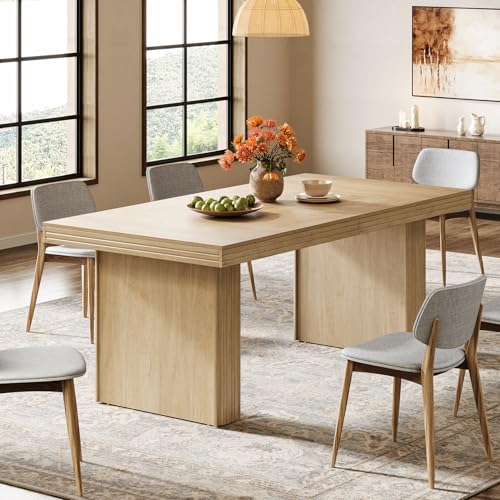
Tribesigns 63 Inches Farmhouse Dining Table for 6, Modern Kitchen Table with Fluted Line for Dining Room, Living Room, Natural
Check price on Amazon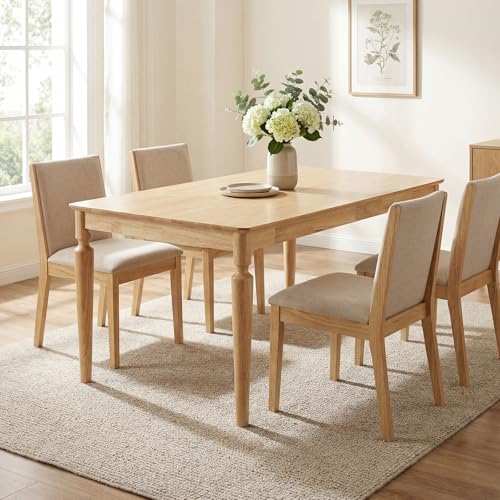
chairus 59" Solid Wood Dining Table for 4-6 People, Farmhouse Kitchen Table with Turned Legs, Sturdy Rectangular Wooden Dining Room Table for Kitchen, Dining Room & Family Gatherings, Natural Finish
Check price on Amazon
Folding Picnic Table with Table Runner, Portable Boho Low Picnic Table for Indoor Outdoor, 60" x 30" Wooden Table with Adjustable Heights for Camping, Wedding, Beach, Garden, Party(Large Size for 6)
Check price on Amazon
OFIKA Dining Table for 6-8 People, 70" Acacia Wood Rustic Rectangular Dinner Table with Metal Frame, Sandblast Finish, Natural Stained, Indoor Outdoor Kitchen Dining Room Table Large 70x33.2x30 inch
Check price on AmazonFrequently Asked Questions
What is the best material for a beach dining table?
Teak, acacia, and powder-coated aluminum are among the best choices. Teak resists moisture and salt naturally, acacia offers a warm coastal look with solid durability, and powder-coated aluminum is lightweight and rust-resistant for humid coastal climates.
How do I protect a beach dining table from salt and humidity?
Apply a weather-resistant finish or marine-grade sealant, wipe the surface after use, and keep the table covered when not in use. Avoid leaving wet items on the surface and reapply protective oil or sealant periodically, especially for wood tables in salt-air environments.
What size beach dining table fits a coastal home?
A 4-seater round or square table suits compact beach cottages, while a 6-seater rectangular table fits most coastal dining rooms. For open-plan seaside spaces, an 8-seater extendable table gives flexibility for guests. Always allow at least 36 inches of clearance around the table for chair pull-out and walkways.
Can I use a glass beach dining table outdoors?
Tempered glass tables can work in covered coastal areas, but they require regular cleaning to remove salt residue and should be paired with a rust-resistant frame. For fully exposed seaside patios, solid wood or powder-coated metal is generally more practical.
How often should I reseal a wood beach dining table?
In coastal environments, reseal wood tables every two to four months if semi-exposed, and at least twice a year indoors. Signs that it is time include water no longer beading on the surface, a dull or dry appearance, and light gray discoloration on the finish.
Are black round beach dining tables a good choice?
Yes. A black round dining table for 4 creates a strong contrast that works well in bright coastal rooms, and the round shape fits compact beach spaces. Pair it with lighter woven chairs to keep the overall look relaxed rather than heavy.
Ready to Choose Your Beach Dining Table?
Browse our curated selection of coastal-ready tables, then use the sizing and material guidance above to confirm the right fit for your space.
View Recommended Tables