
Acacia Wood Extendable Outdoor Dining Table: The Complete Buyer's Guide
Everything you need to choose a durable, weather-ready acacia table that adapts from everyday family meals to full outdoor gatherings.
Why this guide matters: An acacia wood extendable outdoor dining table solves one of the biggest patio dilemmas — how to seat a small household on ordinary days while still hosting a crowd when guests arrive. Acacia brings natural density, warm grain, and moisture resistance, while the extension mechanism adds flexibility that a fixed table simply cannot match.
Below we break down the wood itself, how extension systems compare, what to inspect before buying, how to size the table for your space, and how to keep it looking sharp season after season. If you want to browse actual models first, jump to the recommended acacia extendable outdoor tables section.
What Makes Acacia a Smart Outdoor Wood
Acacia is a dense, tight-grained hardwood native to warm climates. That origin matters because trees that grow in heat and dry conditions tend to develop harder, more dimensionally stable timber. For outdoor furniture, this translates into three practical benefits:
- Natural moisture resistance. Acacia absorbs water slowly compared with softer woods, which reduces swelling and warping when the table is exposed to rain or humidity.
- Density and durability. The wood resists dents and surface wear reasonably well, so it holds up to plates, serving dishes, and everyday patio use.
- Rich grain character. Acacia shows striking contrast between light and dark grain lines, giving it a warm, slightly rustic look that suits both modern and farmhouse patios.
Acacia vs. Other Common Outdoor Woods
| Wood Type | Moisture Resistance | Grain Character | Best For |
|---|---|---|---|
| Acacia | High — naturally dense and slow to absorb water | Bold contrast, warm tones | Balanced tier outdoor tables with strong visual appeal |
| Teak | Very high — natural oils resist decay | Fine, even grain | Premium and luxury tier outdoor furniture |
| Eucalyptus | Moderate to high | Straight, subtle grain | Entry-level to mid-range outdoor sets |
| Pine | Low unless treated | Soft, visible knots | Starter tier tables that need heavy sealing |
Acacia sits in an appealing middle ground: it offers more natural durability than pine or basic eucalyptus, without the premium positioning of teak. That makes it a strong choice for buyers who want a long-term investment in outdoor furniture without stepping into the top-tier range. If you are comparing wood options more broadly, our solid oak dining table guide explores another dense hardwood that performs well indoors and in covered outdoor spaces.
How Extendable Mechanisms Work on Outdoor Tables
The extension system is the heart of an extendable table, and it is where quality differences between tiers become most obvious. There are two main designs to understand:
1. Butterfly Leaf (Self-Storing)
A butterfly leaf folds in half and stores inside the table body when not in use. To extend the table, you pull the two ends apart and unfold the leaf into the gap. This design is convenient because the leaf never gets lost or stored separately, and it is common on compact extendable tables. The trade-off is that the folding seam introduces a joint in the middle of the tabletop, so build quality at that hinge matters.
2. Separate Sliding Leaves
Separate leaves slide onto a metal track or support rail beneath the tabletop. You pull the ends apart, drop the leaf or leaves in, and push the table back together. This system often allows for larger extensions and is common on bigger eight-seater models. It requires somewhere to store the leaf when it is not in use, but the extended top tends to feel more continuous.
If you are also considering fixed versus expandable formats for a covered patio, our guide to the extendable large dining room table covers how extension sizing plays out in bigger rooms and covered outdoor spaces.
Recommended Acacia Wood Extendable Outdoor Dining Tables
⚠️ AFFILIATE DISCLOSURE: This website contains affiliate links. As an affiliate Associate, we earn from qualifying purchases. If you make a purchase through these links, we may receive a small commission at no additional cost to you. Read our full affiliate policy.

Christopher Knight Home Hawoo Acacia Wood Extendable Dining Table, Rectangular Expandable Dining Room Table, Farmhouse Outdoor Kitchen Table, Teak
Check price on Amazon
Christopher Knight Home Eric Outdoor Expandable Acacia Wood Dining Table, Natural Finish
Check price on Amazon
Tangkula 55"-71" Acacia Wood Extendable Patio Dining Table for 6-8 People | Large Expandable Outdoor Table, Slatted Tabletop, Rectangular Outdoor Dinner Table for Garden, Lawn, Yard and Poolside
Check price on Amazon
Sophia & William Teak Outdoor Table, Expandable Wood Table w/Umbrella Hole | Large rectangle acacia wood table for 6-8. Perfect for patio, deck, porch, backyard.
Check price on Amazon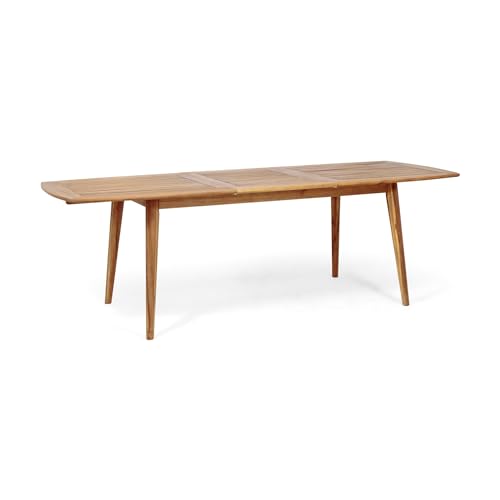
Christopher Knight Home Stamford Outdoor Acacia Wood Expandable Dining Table, Teak
Check price on Amazon
SUNSITT 7-Piece Outdoor Patio Dining Set w/55-71" Expandable Table | Acacia Wood Outdoor Table Set with Umbrella Hole, 6 Curved Patio Arm Chairs w/Removable Cushions for Backyard, Porch, Deck
Check price on Amazon
Amazonia Berlin Patio Extendable Table | Teak Finish | Durable and Ideal for Indoors and Outdoors
Check price on Amazon
Christopher Knight Home Archie Acacia Wood Extendable Dining Table Set for 6, Solid Wood Outdoor Dining Set for 6, 7 Piece Patio Dining Table and Chair Set with Cushion, Teak+Beige
Check price on AmazonWhat to Inspect Before You Buy
Outdoor furniture lives a harder life than indoor furniture, so a few details deserve close attention before you commit. Use this checklist as a quick pre-purchase audit:
- Finish type: Look for an exterior-grade oil, sealer, or UV-resistant coating. A bare or lightly finished surface will weather and gray faster.
- Hardware material: Stainless steel or galvanized metal resists rust far better than untreated steel. Check hinges, glides, and bolts.
- Top thickness: Thicker tops resist flex better, especially on extended models. A thin top can bow at the seam under heavy serving dishes.
- Apron and support rails: Reinforced aprons keep the table rigid when extended. Look for cross-bracing or support beams under the top.
- Leg design: Splayed or pedestal legs save legroom, while straight legs offer more stability. Check that legs have leveling feet for uneven patios.
- Gap tolerance: The seams between leaves should sit flush. Large gaps trap crumbs, water, and debris.
- Weight and portability: Acacia is heavy. If you plan to move the table often, confirm whether it folds or disassembles.
Tier Guide: What Each Class Typically Delivers
| Tier | Typical Build | Best For |
|---|---|---|
| Entry-level | Thinner tops, basic glides, lighter sealing | Covered patios and occasional use |
| Mid-range | Thicker tops, smoother metal tracks, reinforced aprons | Year-round outdoor use in moderate climates |
| Premium | Heavy-duty hardware, exterior-grade finishes, tighter joinery | Frequent entertaining and exposed patios |
| Luxury | Flagship-grade materials, precision mechanisms, refined detailing | Design-led outdoor spaces and long-term investment |
The jump from entry-level to mid-range is usually the most meaningful upgrade for an extendable outdoor table, because that is where the mechanism and sealing improve most noticeably. If you are pairing the table with matching seating, our guide to a dining table set with upholstered chairs explains how to balance comfort and weather resistance in seating choices.
Sizing the Table for Your Patio
Extension flexibility is only useful if the extended table actually fits your space. Plan around three measurements:
- Closed length: This is your everyday footprint. It should leave comfortable walkway clearance around the table.
- Extended length: This is your hosting footprint. Confirm it still allows chairs to pull out and guests to move around.
- Seating depth: Allow at least 24 inches of table edge per seated person, and roughly 30 to 36 inches of clearance behind chairs for comfortable movement.
For round or oval alternatives that pair well with small patios and sociable layouts, our oval pedestal dining table guide and 72-inch round dining table with leaf article cover how curved shapes change seating flow. If your space is tight and needs a table that works harder, the comfortable dining table set overview covers ergonomic seating arrangements.
Seating Capacity at a Glance
| Configuration | Typical Seating | Best For |
|---|---|---|
| Closed, compact | 4 to 6 | Everyday family meals |
| Single leaf extended | 6 to 8 | Weekend gatherings |
| Full extension | 8 to 10 | Holiday hosting and large parties |
Weather Care and Long-Term Maintenance
Acacia is resilient, but it is not maintenance-free. A simple routine keeps the surface protected and prevents the gray weathering that outdoor wood eventually develops when left untreated.
- Oil or reseal annually. Apply an exterior-grade oil or sealer at the start of each outdoor season. This replenishes the protective layer and keeps the grain rich.
- Clean with mild soap and water. Avoid harsh chemical cleaners that strip the finish. Wipe spills promptly, especially from acidic foods and drinks.
- Cover or store in harsh weather. A breathable weatherproof cover protects the table during long rainy spells. In freezing climates, store the table indoors or in a garage if possible.
- Check hardware seasonally. Tighten bolts and inspect glides for rust or stiffness. A few drops of lubricant on metal tracks keep the extension mechanism smooth.
- Use coasters and placemats. Heat and moisture are the two biggest threats to any wood finish. Coasters prevent ring marks and protect the seal.
Styling an Acacia Outdoor Table
Acacia's warm, contrasting grain pairs naturally with earthy palettes. Charcoal, sage, terracotta, and cream all work well against its tones. A few styling principles help the table feel intentional rather than cluttered:
- Keep centerpieces low. Outdoor tables are for conversation, so choose low bowls, lanterns, or a slim planter so guests can see across the table.
- Layer textiles sparingly. Outdoor-rated runners and placemats add warmth without trapping moisture against the wood.
- Mix materials. Pair acacia with metal chairs, woven accents, or stoneware to create visual contrast that suits modern patios.
- Use a lazy Susan for shared meals. A rotating centerpiece tray keeps condiments and serving dishes within reach — our lazy Susan on dining table guide covers placement and sizing.
For a broader look at how wood tones interact with surrounding furniture, the charcoal dining table guide shows how darker finishes can anchor an outdoor or indoor dining space. If you love a relaxed, textured aesthetic, the farmhouse dining table and chairs set overview explores how acacia fits into that style family.
Ready to Compare Acacia Extendable Tables?
Browse curated models selected for outdoor durability, smooth extension mechanisms, and strong grain character.
Explore Recommended TablesCommon Buying Mistakes to Avoid
- Ignoring the extended footprint. Many buyers size for the closed table and then discover the extended version does not fit their patio.
- Choosing based on looks alone. A beautiful grain means little if the hardware rusts within a season. Inspect the mechanism and finish first.
- Skipping the cover. Leaving an acacia table uncovered through winter accelerates weathering and can lead to cracking.
- Overlooking chair clearance. Even a perfectly sized table needs room behind the chairs for guests to sit and stand comfortably.
- Assuming all acacia is equal. Wood grade, drying quality, and finish application vary widely between tiers, so build quality matters more than the species name alone.
If you are furnishing a full outdoor living area, our outdoor sofa set with dining table guide explains how to coordinate lounging and dining zones on the same patio.
Frequently Asked Questions
Is acacia wood suitable for an outdoor dining table?
Yes. Acacia is a dense hardwood with natural resistance to moisture and decay, which makes it one of the more practical wood choices for outdoor furniture. Quality pieces are usually finished with an exterior-grade oil or sealer that further protects the surface from sun, rain, and temperature swings.
How does an extendable outdoor dining table work?
Most extendable outdoor tables use one of two systems: a butterfly leaf that folds and stores inside the table, or separate leaves that slide onto a metal track under the top. You pull the table ends apart, insert or unfold the leaf, then lock the mechanism. Better-built models use smooth metal glides and reinforced aprons to keep the top rigid when extended.
Can an acacia extendable table stay outside all year?
It can handle outdoor exposure, but long-term durability depends on care and climate. In harsh winters or heavy rain regions, a weatherproof cover and storage during the coldest months are recommended. Regular oiling or resealing also helps prevent drying, cracking, and gray weathering.
How many people can an extendable acacia outdoor table seat?
A compact extended table typically seats four to six, while larger models with a full leaf can seat eight or more. Always check the extended length and allow extra room for chairs to pull out, plus walkway clearance around the table.
Does the extension leaf affect table stability?
A well-engineered mechanism keeps the top rigid, but entry-level models may flex slightly at the seam when extended. Mid-range and premium tables usually add reinforced aprons, thicker tops, and sturdier glides to minimize wobble and flex.