
Acacia Patio Dining Table: The Complete Outdoor Buying Guide
Acacia has become one of the most trusted hardwoods for outdoor dining furniture. This guide explains why, how to evaluate quality, and how to keep an acacia patio table looking its best season after season.
Explore Recommended TablesWhy this guide matters: An acacia patio dining table is a long-term outdoor investment. Buyers who understand wood grading, joinery, finish systems, and climate considerations consistently end up with tables that last far longer than those who choose on appearance alone. This guide gives you the framework to evaluate any acacia table with confidence.
What Is Acacia Wood and Why It Suits Outdoor Dining
Acacia is a dense hardwood harvested primarily from fast-growing trees in tropical and subtropical regions. Its natural density, tight grain structure, and high oil content make it inherently resistant to moisture, rot, and insect damage — qualities that matter enormously for furniture exposed to rain, sun, and temperature swings.
Compared to softer woods used in entry-level outdoor furniture, acacia holds screws and joinery more securely, resists warping better under humidity, and develops a rich, warm grain pattern that reads as premium in any patio setting. This is why acacia has moved from a niche material to a mainstream choice for outdoor dining sets across every market tier.
If you are still deciding between outdoor and indoor formats, our guide to a 4-person patio dining table explains how outdoor sizing and material expectations differ from interior furniture.
Acacia Wood Grades: How Quality Varies Across Tiers
Not all acacia is equal. The market segments acacia patio dining tables into distinct quality tiers, and understanding these tiers is the single most useful skill for a buyer. The differences show up in board thickness, knot frequency, joinery method, and finish quality.
| Tier | Typical Characteristics | Best For |
|---|---|---|
| Entry-level | Thinner boards, visible knots and color variation, basic butt joints, light factory finish | Occasional use, covered patios, seasonal setups |
| Mid-range | Consistent board thickness, fewer knots, mortise-and-tenon or dowel joinery, multi-coat finish | Regular family use, mixed sun and shade exposure |
| Premium | Kiln-dried select boards, tight grain matching, reinforced joinery, UV-stabilized finish systems | Full-sun patios, year-round outdoor use, design-focused spaces |
| Luxury / commercial-grade | Furniture-grade heartwood, precision joinery, multi-layer marine-grade sealing, engineered stability | Hospitality settings, exposed coastal environments, long-term installations |
Mid-range and premium tiers typically offer noticeably better stability and finish longevity than entry-level models. The jump from entry-level to mid-range is usually the most meaningful upgrade for a residential buyer.
Key Features to Evaluate Before You Buy
Beyond wood grade, several structural and design details separate a table that lasts a decade from one that struggles after two seasons.
- Board thickness: Thicker tabletop boards resist cupping and warping far better than thin planks.
- Joinery type: Mortise-and-tenon and dowel joints outperform simple butt joints in outdoor conditions.
- Frame material: Stainless steel or powder-coated aluminum hardware resists rust; untreated steel does not.
- Finish system: Look for multi-coat oil or UV-stabilized sealant rather than a single thin factory coat.
- Umbrella compatibility: If you plan to add shade, confirm the table includes a pre-drilled umbrella hole and stable base support.
- Expandability: Tables with leaf options add flexibility for hosting; our guide to a 60-inch dining table with leaf covers how extension systems work.
- Shape and footprint: Rectangular tables suit long patios; round tables improve conversation flow in compact spaces.
Pros and Cons of Acacia Patio Dining Tables
Advantages
- Naturally dense and moisture-resistant
- Attractive grain with warm, varied tones
- Holds joinery and hardware securely
- Widely available across all quality tiers
- Ages gracefully with proper care
Considerations
- Requires periodic re-sealing to stay protected
- Color variation between boards is normal
- Lower-tier boards may contain visible knots
- Heavier than aluminum or resin alternatives
- UV exposure gradually fades the original tone
Matching Your Acacia Table to Your Patio Layout
Material quality only pays off if the table fits your space. Clearance around the table is the most commonly overlooked factor — guests need room to pull chairs out and walk behind seated diners. Our detailed guide on how much space you should have around a dining table breaks down the exact clearance zones to plan for.
Shape matters too. A round dining table with a coastal aesthetic pairs naturally with an acacia patio setting and works well on compact decks or near poolside areas where corner clearance is tight. For larger patios, rectangular formats align better with the geometry of most outdoor spaces and accommodate bench seating on one or both sides.
If you are furnishing an indoor dining room in parallel, our guide to a rectangular pedestal dining table explains how pedestal bases free up legroom — a principle that also applies to some outdoor designs.
Seating Options for an Acacia Patio Table
Acacia tables pair well with a range of seating formats. Cushioned chairs add comfort for long outdoor meals, while benches maximize seating density on one side. Our overview of a dining table with cushioned chairs covers how to match seat height and cushion materials for outdoor resilience. A modern bench setup, as described in our modern bench dining table set guide, can also translate well to patio use when the bench is built from the same weather-resistant hardwood.
For buyers who prefer a complete coordinated look, a raw wood dining table set demonstrates how matching table and seating materials create visual cohesion — a principle that applies equally to acacia patio collections.
Care and Maintenance for Long-Term Performance
An acacia patio dining table will last many seasons with a simple maintenance routine. The core tasks are cleaning, re-oiling, and protecting against prolonged moisture.
- Clean regularly: Wipe with mild soap and water; avoid harsh chemical cleaners that strip the finish.
- Re-oil or re-seal annually: Apply a hardwood oil or UV-stabilized sealant once or twice a year depending on exposure.
- Address spills promptly: Standing water and food residue degrade finishes faster than sun exposure.
- Cover or store in extreme weather: In freeze-thaw climates or heavy snow regions, cover the table or move it to shelter during winter.
- Inspect hardware: Tighten bolts and check for rust on metal components each season.
Tables built with engineered stability features — similar to those found in a birch extendable dining table — tend to hold their alignment better over years of seasonal expansion and contraction.
Common Buying Mistakes to Avoid
Buyers new to outdoor hardwood furniture frequently make avoidable errors. The most common is choosing on appearance alone without checking board thickness or joinery. A visually beautiful table with thin boards and butt joints will not last. The second is underestimating sun exposure — a table placed in full afternoon sun needs a stronger UV finish than one under a covered pergola. The third is skipping the clearance measurement before purchase, which leads to cramped seating and constant chair collisions.
Finally, many buyers forget to plan for shade. If your patio gets intense midday sun, confirm the table supports an umbrella before you commit.
Frequently Asked Questions
Is acacia wood good for a patio dining table?
Yes. Acacia is dense, naturally resistant to moisture and insects, and performs well outdoors when properly sealed and maintained. It is one of the most popular hardwoods for patio dining furniture.
How often should I seal an acacia patio dining table?
Most acacia patio tables benefit from re-sealing once or twice a year, depending on climate and exposure. Tables in harsh sun or heavy rain may need more frequent attention.
Can an acacia patio dining table stay outside all year?
Solid acacia tables can remain outdoors year-round in most climates when sealed properly. In regions with extreme freeze-thaw cycles or heavy snow, covering or storing the table during winter extends its lifespan.
Does acacia wood fade in the sun?
Acacia will naturally lighten to a silvery patina over time when exposed to UV. Applying a UV-resistant sealant and periodic oiling slows this process and preserves the original tone.
Recommended Acacia Patio Dining Tables
⚠️ AFFILIATE DISCLOSURE: This website contains affiliate links. As an affiliate Associate, we earn from qualifying purchases. If you make a purchase through these links, we may receive a small commission at no additional cost to you. Read our full affiliate policy.

Tangkula 79" Acacia Wood Patio Dining Table for 8, Large Outdoor Table | 1.9" Umbrella Hole, Metal Legs, Adjustable Foot Pads, Rectangular 8-Person Outside Table for Garden, Poolside, Deck & Yard
Check price on Amazon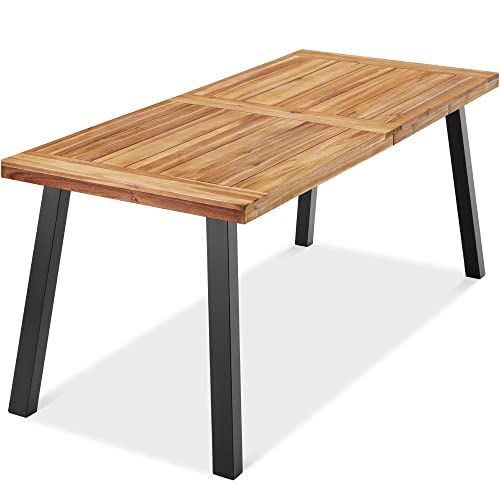
Best Choice Products Acacia Wood Outdoor Dining Table for 6, Natural | Weather Resistant Acacia Wood Dining Table, Powder-Coated Steel Legs, 350lb Capacity for Indoor or Outdoor Entertaining
Check price on Amazon
Tangkula Acacia Wood Outdoor Dining Table for 4-6 | Rectangular Slatted Tabletop, For Patio, Garden, Balcony, Deck and Backyard
Check price on Amazon
Wisteria Lane 69"×32" Acacia Outdoor Patio Dining Table with Umbrella Hole
Check price on Amazon
Tangkula 58" Rectangular Wood Patio Dining Table for 6 | Acacia Wood Slatted Top, 1.97" Umbrella Hole, Heavy Duty Metal Frame, For Porch, Garden, Yard, Deck and Poolside
Check price on Amazon
Devoko 7 PCS Acacia Wood Patio Dining Set, Black Rattan | Outdoor Patio Furniture Set, Patio Dining Table Set for 6, Patio Table and Chairs Set For Garden Backyard Pool Side
Check price on Amazon
Christopher Knight Home Eric Outdoor Expandable Acacia Wood Dining Table, Natural Finish
Check price on Amazon