
72 x 48 Dining Table: The Complete Sizing & Buying Guide
A 72 x 48 dining table is one of the most versatile rectangular sizes on the market. Learn exactly how many people it seats, how much room it needs, which materials hold up best, and how to pick the right one for your home.
Explore Recommended TablesQuick summary: A 72 x 48 inch dining table measures roughly 6 feet long by 4 feet wide. It seats six adults comfortably (up to eight with narrow chairs), fits rooms of about 10 x 12 feet, and works best as a rectangular or oval table for family dining, holiday hosting, and everyday meals. It is the sweet spot between a compact four-seater and a sprawling eight-seater.
What Does 72 x 48 Mean for a Dining Table?
The numbers 72 and 48 refer to the tabletop dimensions in inches — 72 inches (about 183 cm) long and 48 inches (about 122 cm) wide. This is a classic "six-seater plus" footprint that has become a standard for families who want room to spread out plates, serving dishes, and centerpieces without turning the dining room into a banquet hall.
Compared with smaller rectangular tables, the extra width of 48 inches is the key advantage. Many six-seater tables are only 36 to 40 inches wide, which leaves little room for a centerpiece plus place settings. At 48 inches wide, you get a genuinely generous surface that feels balanced in the room and gives each diner elbow room without crowding.
If you are mapping out the rest of your dining room, our dining room table set of 6 guide pairs naturally with this size, since a 72 x 48 table is one of the most common anchors for a six-person set.
How Many People Fit at a 72 x 48 Dining Table?
Seating capacity depends on chair width and how tightly you want to pack the table. As a rule of thumb, each diner needs about 24 inches of table edge to eat comfortably. Here is how the numbers break down:
| Configuration | Seats | Comfort Level | Best For |
|---|---|---|---|
| 2 per long side + 1 per end | 6 | Very comfortable | Everyday family dining |
| 3 per long side (narrow chairs) | 6 | Comfortable | Formal dining with slim seating |
| 3 per long side + 1 per end | 8 | Tight but workable | Holiday gatherings and guests |
| Benches on long sides + 1 per end | 8+ | Flexible | Casual family-style meals |
For most households, six is the realistic everyday number. If you regularly host eight or more, consider an extendable design or a larger oval. Our large round dining table guide is worth reading if you want to compare round seating dynamics against a rectangular 72 x 48 layout.
What Room Size Do You Need?
The table itself is only half the equation. You also need clearance for chairs to pull out and for people to walk past. The standard recommendation is:
- 36 inches of clearance on all sides where chairs are used, so diners can slide in and out.
- 42 to 48 inches along main walkways to keep traffic flowing without bumping chairs.
- At least 10 x 12 feet of floor space for a 72 x 48 table with standard chairs.
If your room is on the smaller side, an oval or rounded-corner rectangular table makes it easier to move around the corners. Our square dining table that expands article shows how a flexible footprint can solve tight layouts, and our fold-out dining table and chairs guide covers compact alternatives when space is the priority.
Shape Options for a 72 x 48 Footprint
Most 72 x 48 tables are rectangular, but the same overall footprint can be softened in other ways. Each shape has a distinct personality and practical trade-off.
Rectangular
The classic choice. Maximum usable surface, clean lines, and the easiest shape for pairing with benches or a mix of chairs. Best for formal dining rooms and open-plan spaces.
Oval
Same dimensions but with rounded ends. Softer look, no sharp corners, and easier traffic flow in a busy room. Ideal for families with young children.
Rounded-Corner Rectangular
The best of both worlds. Keeps the generous rectangular surface while removing the sharp corners that cause bruises and snags in tight spaces.
Materials: Which Works Best at This Size?
A 72 x 48 table is large enough that material choice becomes a real design statement. Here is how the main options compare for durability, maintenance, and visual weight.
| Material | Tier | Best For | Maintenance |
|---|---|---|---|
| Solid wood (oak, walnut, teak) | Mid-range to premium | Family homes, long-term investment | Occasional oiling or waxing |
| Wood veneer over engineered core | Entry-level to mid-range | Modern apartments, stable surface | Wipe clean, avoid moisture |
| Marble or stone top | Premium to luxury | Formal dining, statement rooms | Seal periodically, avoid acids |
| Glass top | Entry-level to mid-range | Small rooms, visual lightness | Frequent cleaning, fingerprints |
| Metal and composite | Starter to mid-tier | Industrial and modern styles | Very low maintenance |
Solid wood remains the most popular choice at this size because it can be refinished and repaired over time, making it a genuine long-term investment. A chestnut dining table offers a warm, character-rich look that suits farmhouse and traditional interiors, while a gray wash dining table set leans coastal and contemporary. For a lighter, more airy feel, a 60 inch glass top dining table shows how glass can visually shrink a large footprint.
Choosing the Right Tier for Your Needs
Rather than shopping by any single number, it helps to think about where a table sits in the market by quality tier. This keeps your decision stable over time and focused on build quality rather than fluctuating figures.
Essential Tier
Engineered wood or veneer tops with basic frames. Suitable for starter homes, rentals, or occasional use. Expect simpler joinery and lighter construction.
Balanced Tier
Solid wood or quality veneer with reinforced frames and smoother extension mechanisms. The sweet spot for most families who want durability without flagship construction.
High-End Tier
Kiln-dried hardwoods, precision joinery, and premium finishes. Built to be refinished and handed down. Best for households that want a long-term centerpiece.
Mid-range tables usually offer the most balanced combination of durability, finish quality, and design flexibility at this size. Entry-level options are perfectly serviceable for light use, while premium and luxury tiers reward buyers who plan to keep the table for decades.
Base and Leg Styles That Suit a 72 x 48 Top
A large top needs a base that supports it visually as well as structurally. The two main families are:
- Four-leg frames: The most common and the most stable for rectangular tables. Look for legs set close to the corners and an apron that ties them together.
- Pedestal or trestle bases: Free up legroom at the corners and often look more architectural. A double-pedestal base is a natural fit for a 72-inch span because it prevents the center from bowing.
For outdoor or covered-patio dining, a heavier base helps resist wind and movement. Our rectangular fire pit dining table guide explores how large rectangular tops are engineered for outdoor use, and the 10 seater dining table outdoor article shows how seating scales up beyond the six-person footprint.
Height and Chair Pairing
Standard dining tables sit at about 30 inches high. A 72 x 48 table at that height pairs with chairs whose seat height is roughly 18 inches, leaving a comfortable 10 to 12 inch gap between seat and tabletop. If you prefer a more casual, bar-style setup, a white high top dining table shows how counter-height and bar-height versions change the feel of a room.
When pairing chairs, allow about 24 inches of width per person along the long sides. Slimmer chairs let you seat three per side; wider upholstered chairs work best with two per side plus one at each end.
Common Mistakes to Avoid
- Ignoring chair clearance: A table that fits the room on paper can still feel cramped once chairs are pulled out. Always measure with chairs in place.
- Choosing a top that is too wide for the room: 48 inches is generous, but in a narrow room it can block walkways. Consider a 40-inch width if the room is under 10 feet wide.
- Underestimating the base: Large tops need sturdy frames. A flimsy base will wobble and sag over time.
- Forgetting extension needs: If you host eight or more regularly, plan for an extendable model from the start rather than adding a second table later.
Styling a 72 x 48 Table
The extra surface area is a styling opportunity. A table runner down the long axis anchors the space, and a low centerpiece keeps sightlines open across the table. For everyday use, a simple vase or bowl works beautifully; for holidays, layer in candles, greenery, and seasonal accents without crowding the place settings. Keep at least 12 inches of clear space in front of each diner so plates and glasses never feel squeezed.
Ready to Choose Your 72 x 48 Dining Table?
Browse our curated selection of recommended tables matched to this exact footprint, from essential-tier picks to premium solid-wood designs.
See Recommended TablesRecommended 72 x 48 Dining Tables
⚠️ AFFILIATE DISCLOSURE: This website contains affiliate links. As an affiliate Associate, we earn from qualifying purchases. If you make a purchase through these links, we may receive a small commission at no additional cost to you. Read our full affiliate policy.

Plank+Beam Classic 72 Inch Dining Table, Rectangular, Pecan Wirebrush | Non-Toxic Finishes, Versatile Design, Farmhouse Design, Elegant Details, Easy Assembly, Quick Setup, Solid Wood
Check price on Amazon
Tribesigns Modern Dining Table for 6 to 8 People, 71" Large Kitchen Dining Table with Wood Pedestal Base, Rectangular Long Dinner Table for Kitchen, Dining Room, Living Room, Rustic Brown
Check price on Amazon
East West Furniture YAT-AWA-T Yarmouth Rectangle Modern Dining Table, 30x48 Inch, Walnut
Check price on Amazon
LovePads Clear Table Cover Protector 48 x 72 Inch, 1.5mm Thick Plastic Mat | Non-slip Waterproof PVC Table Protector, Cut to Size, Spill-Stain-Scratch Proof, Fits Kitchen, Dining Table, Dresser, Desk
Check price on Amazon
Black Table Cover Protector 48x72'', Waterproof 1.5mm Christmas Table Pad | Thick Heavy Duty PVC Desk Mat Dining Tablecloth Cut to Fit for Kitchen, Office Desk Game Night Party
Check price on Amazon
Whirltique Clear Table Cover Protector 48 x 72 Inch, 2mm Thick Table Protector for Dining Room Table, Clear Plastic Table Cover, Pad Mat for Kitchen, Writing Desk Pad for Desktop
Check price on Amazon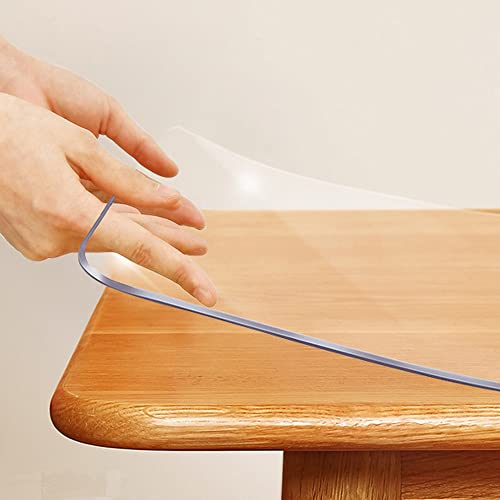
48x72 Inch 4FT Clear Plastic Dining Table Protector PVC Vinyl Tablecloth Desk Pad Mat Wooden Furniture Coffee Glass End Side Pub Table Cloth Top Protection Countertop Cover Waterproof Rectangular
Check price on AmazonFrequently Asked Questions
How many people can sit at a 72 x 48 dining table?
A 72 x 48 dining table comfortably seats six adults, with room for two on each long side and one at each end. For tighter gatherings it can accommodate eight with narrower chairs, though comfort drops at the ends.
What size room do I need for a 72 x 48 dining table?
Plan for a room at least 10 feet by 12 feet. You need roughly 36 inches of clearance around the table for chairs to pull out and 42 to 48 inches along main walkways for comfortable circulation.
Is a 72 x 48 table big enough for six people?
Yes. Each person needs about 24 inches of table edge, and a 72-inch length offers enough space to place two diners per long side and one at each end comfortably.
Should I choose a rectangular or oval 72 x 48 table?
Rectangular gives you the most usable surface and a clean modern look, while oval softens corners for easier traffic flow in tighter rooms. Choose rectangular for formal dining and oval for family spaces with walkways nearby.
Can a 72 x 48 table work in an open-plan space?
Absolutely. Its rectangular footprint defines a dining zone without dominating an open-plan room. Position the long side parallel to the main walkway and leave at least 42 inches of clearance to keep traffic flowing.