
2 Person Rectangular Dining Table: The Complete Buying Guide
Everything you need to choose a compact two-seater rectangular dining table — from ideal dimensions and seating clearance to materials, frames, and layout planning for small spaces.
Start With DimensionsWhy a two-person rectangular table works: A rectangular table for two is one of the most space-efficient dining solutions available. It lines up neatly against a wall, fits into narrow kitchen nooks, and provides a defined serving zone in the center. This guide walks you through the measurements, materials, and design decisions that determine whether a compact rectangular table will feel comfortable for daily meals — or cramped after the first week.
Ideal Dimensions for a Two-Person Rectangular Table
The single most important decision is size. A table that is too small leaves no room for plates, glasses, and serving dishes. A table that is too large overwhelms a compact room and blocks movement. For two diners seated across from each other, the standard reference point is roughly 24 inches of linear table edge per person, plus a central zone for shared items.
| Configuration | Typical Dimensions | Best For |
|---|---|---|
| Compact two-seater | Around 30 x 42 inches | Breakfast nooks, balconies, studio apartments |
| Standard two-seater | Around 30 x 48 inches | Daily meals with room for serving dishes |
| Extended two-seater | Around 30 x 60 inches | Dual-purpose dining and workspace |
| Square alternative | Around 36 x 36 inches | Corner placement with balanced proportions |
If you are weighing a longer surface that doubles as a work area, our guide to the 30 x 60 dining table explains how that footprint behaves in real rooms. For tighter spaces, the 30 x 42 dining table layout is a strong reference point for a true two-person setup. And if you are considering a squarer proportion that still seats two comfortably, the 4 foot square dining table is worth comparing side by side.
Height and Seating Clearance
Standard dining height sits at roughly 28 to 30 inches, which pairs with chairs featuring a seat height of about 17 to 19 inches. The clearance between the tabletop underside and the seat should allow legs to cross comfortably — generally 10 to 12 inches. If you are planning the full seating arrangement, our dining table chair height guide covers the pairing rules in detail.
Room Clearance and Layout Planning
Dimensions of the table itself are only half the equation. The clearance around it determines whether the room feels usable. As a working rule:
- 30 inches between the table edge and a wall or furniture so chairs can pull out without scraping.
- 36 inches minimum for walkways behind seated diners.
- 42 to 44 inches for comfortable passage when people move through the room during meals.
For a full walkthrough of measuring and positioning, see our dining table space planning guide and the dining table walkway clearance guide. In narrow rooms, placing the long edge parallel to the wall usually preserves the most floor space — a technique explored in our narrow dining room furniture layout article.
Choosing the Right Material
Material affects durability, maintenance, and how the table ages in daily use. The classification below uses consistent tier language so you can compare options without relying on transient market figures.
Solid Wood — Premium & Luxury Tiers
Oak, walnut, and teak offer repairability and long-term durability. Solid wood can be sanded and refinished, making it a worthwhile investment for a table used daily.
Engineered Wood — Entry & Mid-Range Tiers
MDF or particleboard cores with quality veneer deliver consistent surfaces at accessible tiers. Look for sealed edges and moisture-resistant finishes on starter tier models.
Glass Tops — Mid to High-End Tiers
Glass visually lightens small rooms and resists staining. Tempered glass is essential; pair it with a sturdy frame since glass cannot be repaired once chipped.
Stone & Marble — High-End & Luxury Tiers
Marble and quartz tops resist heat and scratches but are heavy. They suit fixed placements rather than rooms where furniture is rearranged often.
Our dining table materials and finishes hub compares these options in depth. For a head-to-head look at two popular wood species, read oak vs walnut dining table. If a lighter visual footprint appeals to you, the wood vs glass dining table comparison covers the trade-offs.
Frame and Leg Construction
On a compact table, the frame carries more proportionate stress because the span between legs is shorter and weight is concentrated. Reinforced aprons and corner blocks reduce wobble over time. Our dining table frame guide explains what to inspect, and the dining table leg guide covers leg styles that suit small rectangular tops. If you notice movement after assembly, the wobbly dining table fix guide walks through the common causes.
Seating Options for Two
Two chairs are the default, but a bench on one side can increase flexibility — it tucks fully under the table when not in use, freeing floor space. Our dining bench seating guide covers dimensions and pairing rules. If you prefer chairs, the dining chair selection guide and the stackable dining chair guide are useful references for compact rooms where chairs may need to be stored away.
Compact and Space-Saving Designs
Not every two-person table needs to occupy the same footprint all day. Several design categories reduce the table's presence when it is not in use:
- Folding tables collapse flat for storage — covered in our folding dining table guide.
- Drop-leaf tables keep one or both leaves down to shrink the footprint — see the drop-leaf dining table guide.
- Extendable tables stay small for two but expand for guests — explained in the extendable dining table guide and compared in extendable vs fixed dining table.
- Nesting tables allow a secondary surface to slide away when not needed — see the nesting dining table guide.
Placement Ideas for Small Rooms
Where the table sits shapes how the room feels. Common placements for a two-person rectangular table include:
- Against a wall with bench seating on the wall side and a chair on the open side — maximizes floor space in kitchens.
- In a breakfast nook where a window seat or built-in bench replaces one side of seating.
- Floating in an open-plan space behind a sofa, using the table as a visual divider between living and dining zones — see our open concept dining layouts guide.
- In a compact nook with a corner arrangement — explored in the compact dining nook arrangement guide.
Lighting placement also matters more in small rooms, since a single fixture often illuminates the entire dining zone. Our dining table lighting placement guide covers hanging height and fixture sizing.
Care and Maintenance for Compact Tables
A table used every day accumulates wear faster than one reserved for occasional hosting. Basic habits extend its life considerably:
- Wipe spills promptly, especially on wood and stone surfaces.
- Use placemats or a protective pad under hot dishes — see the dining table pad protection guide.
- Re-oil or wax wood surfaces periodically — covered in wood dining table wax and polish.
- Address scratches early with the dining table scratch touch-up guide.
- Keep humidity stable in the room to prevent wood movement — see the dining table humidity care guide.
For a full seasonal routine, the dining table routine upkeep guide and seasonal deep cleaning guide provide step-by-step checklists.
Common Buying Mistakes to Avoid
Most dissatisfaction with compact tables traces back to a small number of planning oversights:
- Measuring the table but not the room. Always measure wall-to-wall and account for chair pull-out space before ordering.
- Underestimating the serving zone. A table that seats two but has no central space for dishes forces plates to the edge.
- Ignoring the frame. A beautiful top on a weak frame will wobble within months of daily use.
- Choosing a finish that does not match your habits. Glossy finishes show fingerprints; matte finishes hide minor scratches better.
- Forgetting future needs. If guests visit regularly, consider an extendable model from the start.
Our dining table buying mistakes article expands on each of these points, and the first dining table checklist provides a structured pre-purchase review.
Frequently Asked Questions
What size should a 2 person rectangular dining table be?
A comfortable two-person rectangular table typically measures around 30 inches wide and 42 to 48 inches long. This provides roughly 24 inches of linear space per person plus room for tableware, while a 30 x 60 inch option offers extra surface for serving dishes or occasional laptop work.
How much clearance do I need around a small rectangular dining table?
Allow at least 30 inches of clearance between the table edge and walls or furniture so chairs can pull out easily. For walkways behind seated diners, plan for 36 to 44 inches so people can pass comfortably while others are eating.
Is a rectangular table better than a round table for two people?
Rectangular tables use wall space efficiently and provide a defined serving zone in the middle, which suits narrow rooms and kitchen nooks. Round tables can feel more sociable in tight corners, so the right choice depends on room shape and traffic flow. Our round vs rectangular dining table comparison covers the trade-offs.
Which material is best for a two-person dining table?
Solid wood offers durability and repairability for long-term use, while engineered wood with quality veneer suits starter tiers. Glass and stone tops resist staining but need careful maintenance, and metal frames pair well with compact tops in modern layouts.
Can a 2 person rectangular dining table work in a small apartment?
Yes. Compact rectangular tables fit well along a wall or in a breakfast nook, especially with bench seating on one side. Folding and drop-leaf designs further reduce footprint when the table is not in use.
Ready to Compare Your Options?
Explore curated two-person rectangular dining tables across material tiers and space-saving designs.
Explore OptionsRecommended 2 Person Rectangular Dining Tables
⚠️ AFFILIATE DISCLOSURE: This website contains affiliate links. As an affiliate Associate, we earn from qualifying purchases. If you make a purchase through these links, we may receive a small commission at no additional cost to you. Read our full affiliate policy.

Kmax Small Dining Table for 2-4, Solid Wood Dining Table for Small Spaces 2 Person Rectangle Kitchen Table Space Saving Dinner Table for Apartment - Walnut Top, Black Legs
Check price on Amazon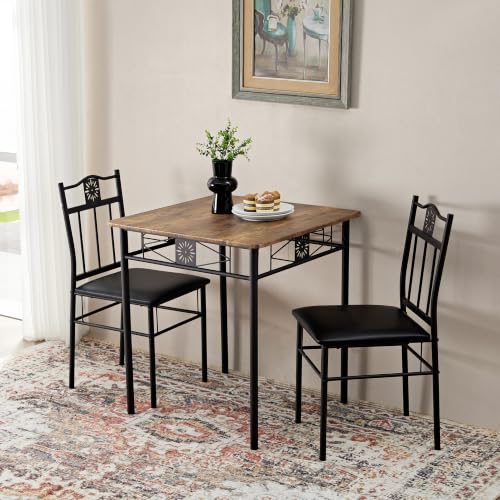
VECELO 3 Piece Small Dining Table Set for 2 with Upholstered Chairs, Brown | Wood Tabletop, Faux Leather Padded Seat, for Kitchen, Breakfast Nook, Small Space
Check price on Amazon
AWQM 3 Piece Dining Table, Small Kitchen Table Set for 2 with Chairs(Brown) | Wood Breakfast Nook Table and Chairs Set of 2,Dinette Set for Small Space,Dining Room,Office, Apartment
Check price on Amazon
DONGMUWUJEE Solid Wood Small Dining Table for 2-6, 23.6"L-47.2"L Expandable Kitchen Table, Designed for Small Spaces, Easy Assembly, Suitable for Kitchen, Dining Room, Living Room, Apartment (Walnut)
Check price on Amazon
LITTLE TREE Dining Table,Small Dining Table for 2-4 People with Fluted Base | 35.43" L x 31.5" W Small Kitchen Table, Modern Farmhouse Dinner Table for Dining Room Kitchen Living Room
Check price on Amazon
HOMCOM 3-Piece Dining Table Set for 2 Built-in Storage Rack Rustic Brown | Small Kitchen Table and Chairs, Steel Frame, for Breakfast Nook and Small Space
Check price on Amazon